Written for nursing school: Self-concept is the capability of being able to see ourselves "from the outside"; the picture we gain of how other see us.
SELF-CONCEPT
Self-concept is the capability of being able to see ourselves "from the outside"; the picture we gain of how other see us. This picture affects the way in which we take care of ourselves physically, emotionally, and in the way we treat others. People who have a low self-concept may feel that they are not worth others attention or care. The development of self-concept does not always depend on accurate evaluations. Even if we grossly misinterpret our self-image those misjudgments become part of our everyday lives.
Self-concept consists of four components, body image, self -esteem, identity, and role performance. These components are influenced by: 1) how others react to our bodies, and behaviors. 2) Our own expectations of ourselves. 3) Prior experiences. 4) Present feelings about self. 5) Spiritual identity. 6) Personality structure. 7) Perceptions of stimuli that have an input on the self. 8) Relationships with self, and others. (Perry, Potter 2001). A person's self-concept can be altered by stressors affecting any or all of the four components. If a person cannot overcome or adapt to these stressors illness may result.
BODY IMAGE
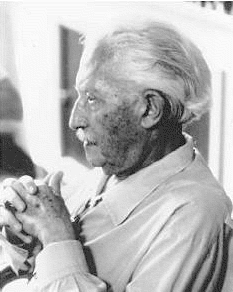
When you stand in front of the mirror do you like what you see? Body image is how you see, and feel about your physical appearance. Your perceptions are affected by cognitive growth and physical development. Normal developmental changes such as growth and aging have a great impact on body image. Puberty is an especially difficult time for teens dealing with body image. The body goes through many changes when puberty starts. These changes make it difficult for teens to judge whether they are normal or not. Our perceptions of body image are also affected by aging. Wrinkles, gray hair, impaired vision, decrease in hearing, and mobility are just a few examples of the changes...
Reviews of: "Written for nursing school: Self-concept is the capability of being able to see ourselves "from the outside"; the picture we gain of how other see us."
:
More Mental Health
essays:
Avoidant personality disorder
... have feelings of being personally unappealing, socially inept and inadequacy. Such patients usually have poor self esteem and have exaggerated fears of criticism, disapproval or rejection. Sometimes this disease ...
Biceps and Body Image: The Relationship Between Muscularity and Self-Esteem, Depression, and Eating Disorder Symptoms
... other performance-enhancing substances abuse. The most important concept addressed in this study is the idea of body image and how the individualÂ’s self-perception can ...
Addressing the issue of self Esteem.
... of self esteem. This article emphasizes to take action. If you do nothing to improve your self esteem then it won't improve. Life is too short to go through it with your chin down. Every one is their own identity ...
Experiences that define Homosexuality.
... Was this another self fulfilling prophecy? Perhaps but again my view has changed and I have in turn evolved into a person that ... a girl because I have big eyes and soft bone structure. My belief in the views of my peers drove me ...
Depression.
... of untreated depression are beyond measure. They include loss of self-esteem, "self-medication" with alcohol and drugs, family and career disruption, chronic ...
Using a Zen Approach to Life as a Personality Theory
... previous experiences, it is simply explained by Erim (2000) in this way: If a person looks negatively upon their self, their world and their future, the persons prevailing ... and behavior are largely determined by the way he/she structures the world and used for cases ranging from depression and ...
Causes and Symptoms of Schizophrenia
... a misinterpretation of perceptions or experiences) and hallucinations, especially of the auditory variety. Victims may also exhibit disturbed emotions and thinking; poor or no function in work, social relations, or self-care ...
The Therapeutic Intervention of Antipsychotic Medication and the Process of a Patient Changing to a New Medication to Hopefully Improve His Quality of Life
... to any new places or making changes to his daily structure. When a patient is accepted onto a community mental health teams caseload they generally should have a personal recovery plan of some type either written or verbally discussed ...
Excellent.
This was a very thought out paper. And gave myself some very interesting ideas. Very high ratings from me!!!!
5 out of 5 people found this comment useful.