Analysis of literary devices used in the book of Zora Hurston, an African-AMerican book title: Dust Tracks on a Road: An Autobiography (1942).
Living in the South during 1942, Zora Hurston gives the reader a first-person point of view of her valued yet constricted childhood as an African-American. By using diction from a young girl's perspective and her manipulation of point of view, Zora enriches our sense of her childhood. Most importantly, the time period of a belligerent WWII foreshadows Zora's conflict to try to break free from authority and her audacity to speak her mind.
From the beginning of the narrative, Zora shows a sense of nostalgia as she relates back to the abundance of the nature scenery: "I loved the fleshy, white, fragrant blooms as a child." Even a profound amount of food was growing right beside her: "We had a five-acre garden with things to eat growing in it, and so we were never hungry." Zora's childhood shows an opulence of food that was always plentiful in her surroundings. The diction of adjectives she uses of her physical surroundings: "five-acre", "hundreds" and "plenty" give the reader a sense of upper class standards indicating that the family was well-off. Zora's outlook of her affluence is innocuous and naive; she uses this childish innocence to manipulate the reader into believing she lives a life of jubilation.
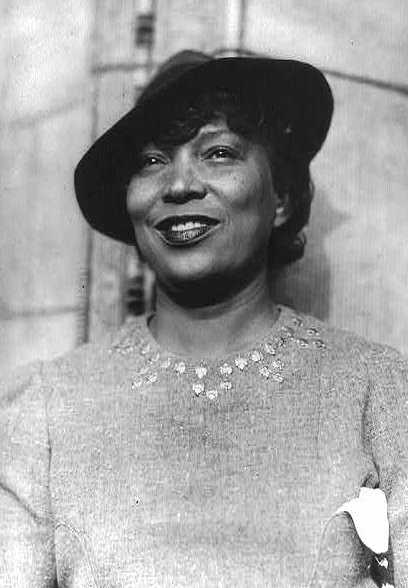
On the contrary, Zora Hurston struggles with social tensions and conflicts within her family. The teaching from her parents stress that they should live by the rules following conformity. "Zora's mother feels that she needs to constrict her children's outdoor social play because she believes that there is no desire to live like "no-count Negroes and poor-white trash. The manipulation of language used by Zora indicates the slang used by African-Americans to express their emotions. Throughout the end of the narrative, the grammar errors begin to flourish. This indicates the type of slang language used between...
More African Studies - History
essays:
The Slave Trade in Africa: Eric William's thesis "Capitalism and Slavery" a study of slavery's role in the English Economy. The changing status of the African State
... elements of capitalism, such as buying and selling of goods, were present prior to the slave trade, this was the first point in ...
History becomes "Her-story" in West Africa: Representations of the female gender's role in the past, present, & future of West Africa
... systems of administration had profound effects on these women, yet that did not stop them from joining in anti-colonialism struggles and producing changes in gender and power relations from the colonial period to ...
The Evolution of African-American Gospel Music in America
... the first, and possibly not the finest, gospel singer, but it was largely through her compelling contralto voice and her personality that people of all ...
They Say: Ida B. Wells and the Reconstruction of Race, by James W. Davidson. Ida B. Wells as a parallel to African Americans trying to gain empowerment in post-emancipation America
... concern of disenfranchisement of blacks during this time period. Ida ... dialogue of race struggles between whites and blacks, while her personal narratives, including two diaries, a travel journal, and an autobiography, recorded the personal struggle of a ...
Five Journal Entries written in the voice of former president of South Africa; Nelson Mandela. Each covering a month. Details included and referenced to actual facts and events.
... ideal of a democratic and free society in which all persons live ...
Five Journal Entries written in the voice of former president of South Africa; Nelson Mandela. Each covering a month. Details included and referenced to actual facts and events.
... ideal of a democratic and free society in which all persons live ...
This essay vividly illustrates the hardships of childhood education in West Africa.The title is "Education in Africa : A Matter of Survival of the Fittest".
... African children are still going to be left without education? Of course, these are valid questions to be spelled before African leaders, and all Africans, young and old, must be given some explanation. Cause and Effect ...
The Situation of African-Americans in America
... at first seemed to change. But the Reconstruction period failed, although Blacks were now called "citizens", they still had no civil rights. Many Whites, who after the end of slavery ...