Ancient egyptian culture
Ancient Egypt
Egyptians in the ancient times had a very different culture than today's society. In order to understand the culture of ancient Egypt, one must know about their religion, arts, and language. In the ancient times, the people of Egypt believed in many different things that would bewilder most people. Their artists were some of the best ever to live. And their language is still not completely comprehended.
"The religious beliefs of the ancient Egyptians were the dominating influence in the development of their culture." The religion consisted of many gods and goddesses, and they believed in life after death. To understand the religion, one should know about the gods and the afterlife.
Ancient Egyptians believed there were many Gods and Goddesses that controlled their life and everything around them. Each city in Egypt worshiped the own deity, or god, as well as all the other deities. Many deities were thought of to have human bodies and animal heads. The temples of the ancient Egyptians were regarded as the home of a deity or it was dedicated to a dead king. Egyptians prayed at home most of the time because the temple did not offer regular services. The main god was the sun god Re. They relied upon him for good harvest. Amon, the sun god of Thebes, was recognized with Re and they renamed Re --Amon-Re. Their most important goddess was Isis who represented the faithful mother and wife. Osiris, Isis' husband and brother, was the ruler of vegetation and the dead. The god of the sky, Horus, was the son of Isis and Osiris. People called him the lord of heaven and pictured him with the head of a falcon. The gods played a significant role in the afterlife.
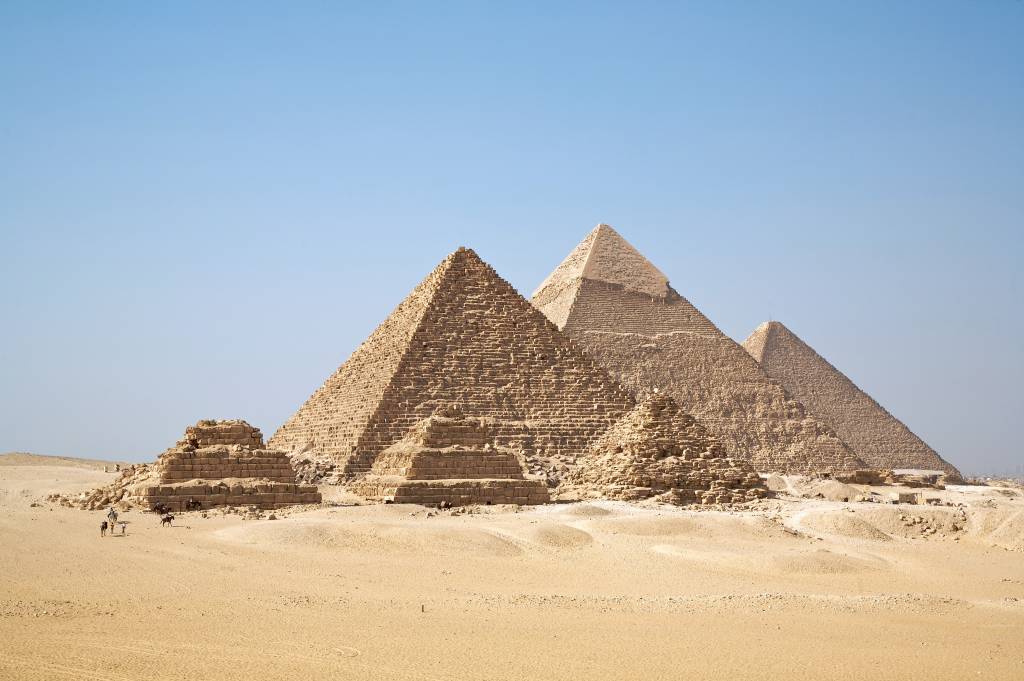
During life the Egyptians prepared for the afterlife.
More Middle Eastern History
essays:
Roman Mythology: The Gods and Goddesses
... sacred thing that ruled the livelihood of the followers of that religion. The Gods and Goddesses of ancient Rome all had different roles, personalities, and characteristics ... their deities by portraying them as humans, both in the physical like, and in personality. The major Gods and Goddesses will ...
"Assess the contributions and impact of Amenhotep III"- a prominent king of the 18th dynasty of ancient egypt
... the religious aspects of his successor's reign, yet after Akhenaton's reign Egyptian religious beliefs evolved ... his entire country into an imperial showplace..." He honoured the gods and goddesses on a scale much larger than anybody before him had ...
Ancient Egypt
... small. Religion appeared in every part of life in ancient Egypt. The Egyptians believed that gods and goddesses took part in every human activity from birth to death. For the Egyptian, the good life depended ...
Beliefs of the ancient egyptians.
... body he would hack it into thirteen pieces and scatter then over Egypt. Isis would locate twelve of the thirteen pieces and magically assembled and resurrected Osiris. The story would answer the question of life after death for the ancient Egyptians ...
Ancient Egypt
... time. Ancient Egyptians took the seasons to mean life was a cylindrical process, and that there was life after death (David 81). There were two distinct groups of gods: local and state, and household ...
EGYPT--Description of Egyption culture, mummification, government and religion of ancient egypt--also a comparison with modern Egypt
... early Egyptians by the writing on the tombs and the different objects and possessions found by the bodies. Chapter 2 GREAT PHARAOHS OF EGYPT Many great pharaohs ruled over ancient Egypt. These kings were known for all sorts of different things ...
Ancient Egypt. Talks about the history of ancient egypt
... of ancient Egypt is its religion. The depth of Egyptian thinking and rich imagination displayed in the creation of ideas and images of the gods and goddesses is beyond compare. On elaborating their beliefs, the Egyptians were ...
Report on Ancient Egypt
... Osiris and Isis, later defeated Set in a great battle and became king of the earth. The Ancient Egyptians also believed in life after death, in ...