prue evolution A
More than a century after his death, and four generations
after the publication of his chief work, 'The Origin of Species',
Charles Darwin may still be considered the most controversial
scientist in the world. His name is synonymous with the debate
that continues to swirl around the theory of evolution, a theory
that deeply shook the Western view of humanity and its place in
the world.
We tend to speak simply of the theory of evolution, leaving
off the explanatory phrase, 'through natural selection.' At most,
perhaps, the general public has heard of 'survival of the
fittest' a poor phrase as far as I'm concerned, since fitness in
everyday usage is associated with physical conditioning and
athletic ability. 'Survival of the most suited to its
environment' would be a more accurate, and convincing expression
for this pedicular concept. But to most of us, 'evolution' simply
means that human beings are descended from apes, a slight
misunderstanding, since both humans and modern apes are
descendants of a mutual ancestor that is now extinct.
 The modern theory of natural selection derives fro...
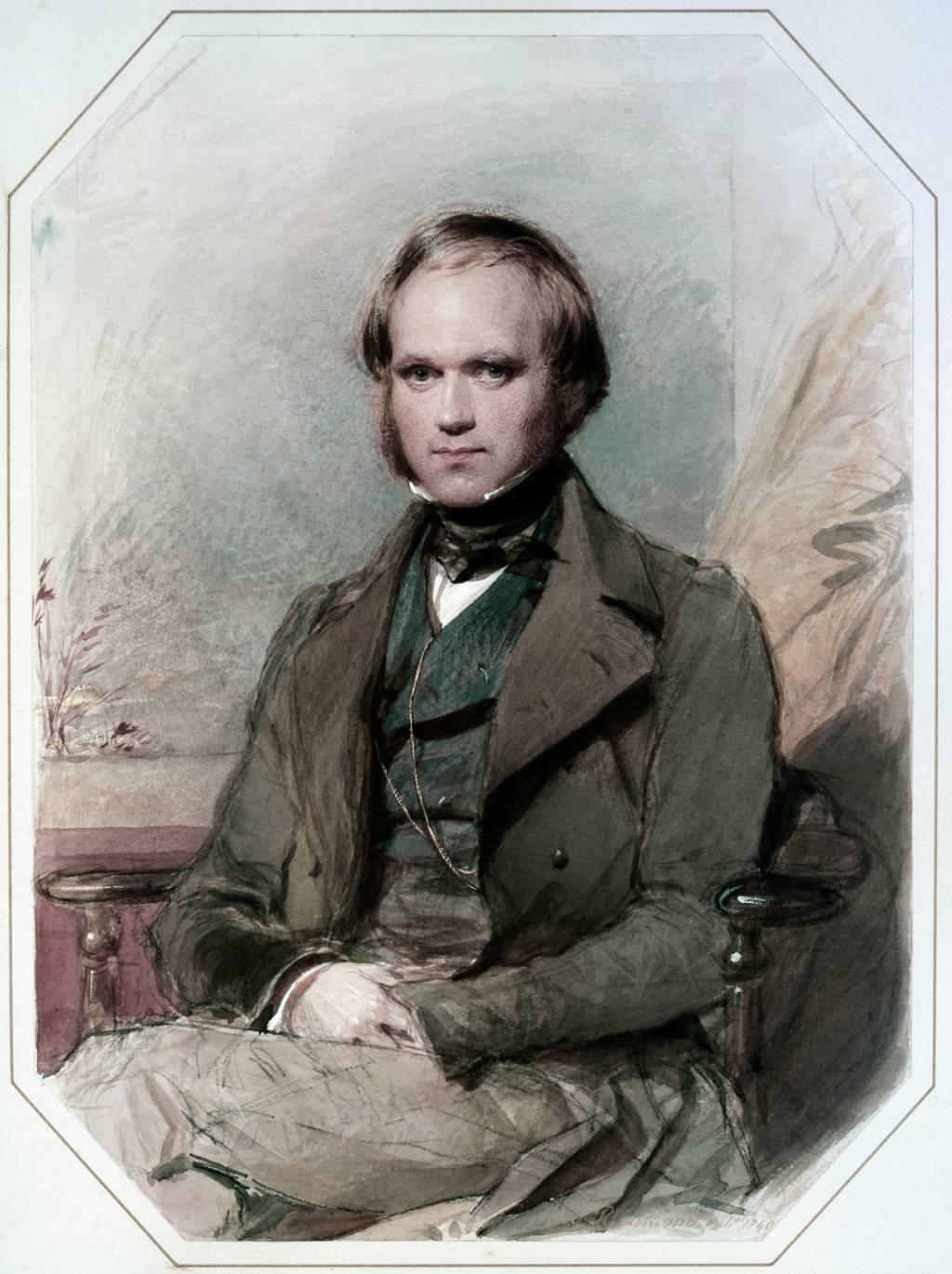 Charles Darwin as a young man, probably subsequent...
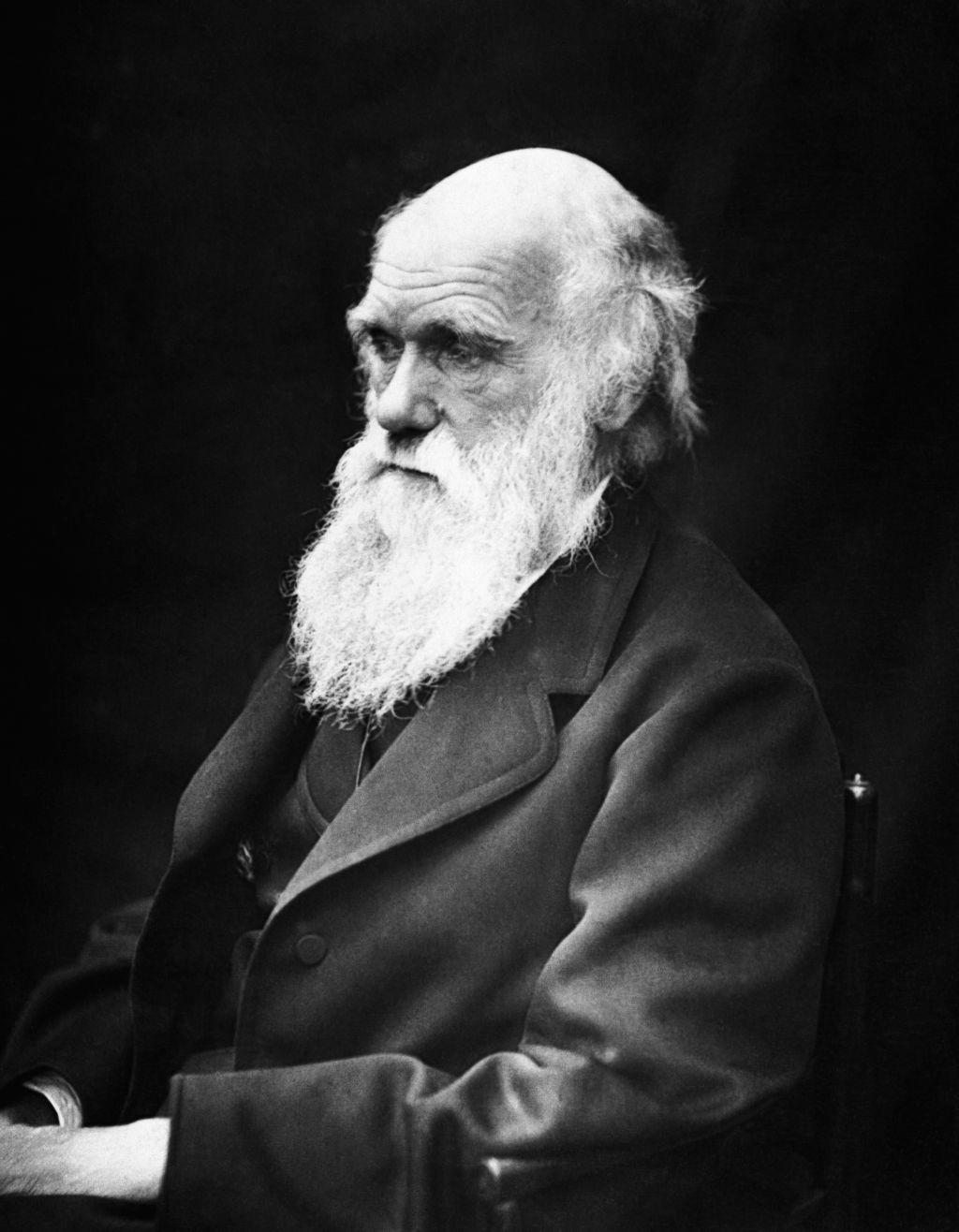 English: Charles Darwin (1809-1882) in his later y...
It's not
evolution but the theory of natural selection and the evidence he
collected to prove to fellow scientists, peers, students, and
most importantly the masses of public and the church that were at
the heart of Darwin's contribution to biological science.
Charles Darwin did not invent the concept of evolution. A
number of prominent scientists and other thinkers during the
eighteenth century and the first half of the nineteenth century
(among them Charles Darwin's grandfather, Erasmus Darwin) had
offered detailed theories of evolution (Clark, 1984, pg.24-25).
Therefor the idea of evolution went very far back in Western
history.
At that time this concept was referred to as The Great Chain
Of Life and was conceived in the middle ages, based on a mixture
of classical and Biblical ideas. The ranking order ranged from
the 'lowest' forms of life to 'higher' living beings (lion),
through the various classes of human beings from peasants to
nobles to Popes, and upwards through the hierarchy of angles to
God.
This concept, in and of itself, has nothing to do with
evolution, in fact it seems to be anti-evolutionary, since every
member is fixed in its own place. This chain was created in a
time when the world was considered to be more static rather than
a diverse collection of dynamic ideas.
But the Newtonian revolution of the seventeenth century
replaced the old static world with a new world view in which
everything was naturally in motion. In the course of the
eighteenth century the notion of progress, of gradual but
relentless pursuit of betterment, began to take hold in western
thought. It was only natural that the ideas of change and of
progress should eventually be applied to the Great Chain of
Being. The natural implication of a 'dynamic' chain of being was
a sort of tree of life, gradually sprouting upward from basic
primordial ooze, branching outward into all the varied species on
our fine planet, ending with, of course, eighteenth century Man.
This could be called evolutionary, but it does not offer a
theory of evolution, an order in which evolution took place. It
was no longer acceptable to say 'God did it'. Therefor, if
evolution was to ever become a science, a rational explanation
had to be offered.
Such an explanation was proposed by Jean Babtiste Lamarck
toward the end of the eighteenth century, and Lamarck became best
known for his pre-Darwin theory of evolution. According to
Lamarck, the acquired characteristics of the parents could be
handed down to their offspring. Suppose, to take the most over
used example, that the first generations of giraffe had a neck of
ordinary length. Because the lower branches of the trees they fed
off were easily striped, these early giraffes stretched out their
necks to reach higher branches. In doing so, they caused their
offspring to be born with slightly longer necks, until the
ultimate result was the giraffe of today.
This theory had virtues far beyond the necks of giraffes.
Taking this concept to its extreme one would now be under the
impression that all that the past European forefathers have
passed on all their acquired traits to the younger generations
following them. The reasoning powers of the great philosophers,
the valour of Crusading knights should have been endowed in all
rather than a meagre few. According to this theory of evolution
descendants could one day attain the heights Europeans had
already scaled.
The Lamarckian evolution had only one crucial defect, it was
entirely untrue. One could cut off a rat's tail, but its
offspring would have normal tails. The rules of genetics were not
known in Lamarck's day, and were not known until long after
Darwin's, when the pioneering work of Mendel was rediscovered at
the turn of the twentieth century. But animal breeders had long
since discovered certain principles of breeding for desired
characteristics, and acquired characteristics played no part in
this process. Only through proper training could one find out if
a hunting dog had favourable qualities. But the training did not
create those characteristics in the dog's offspring.
Lamarckianism was now discredited, and the question of
evolution remained a mystery. Many scientists rejected evolution
and the Great Chain of Life feeling that its concepts had no
place in biological science. The key was produced by the theorist
of the 'dismal science' of economics, Thomas Malthus. Malthus
said that human (and animal) populations increased at a geometric
rate, whereas food supply increased only at an arithmetic rate.
Therefore population was continually outstripping food supply,
and was kept in check only by starvation, or by indirect acts
such as war and diseases.
Malthusianism raised a very good question which is not easily
noticed. Which individuals survived in hard times, and which
died? Luck was probably the largest factor, but not the only one,
other factors applied, such as the strong, the courageous, or the
adaptable had a somewhat better chance of surviving than those
who lacked those characteristics. To the degree that strength,
drive, or adaptability were acquired characteristics, they would
have no effect on future generations since Lamarckianism had been
proven wrong. But to the degree that some individuals inherited
these characteristics, they were more likely to survive, to hand
down these same characteristics to their descendants. As the
lower branches of the ancient African trees were plucked bare,
the longer-necked ancestral giraffes were more likely to survive
than their shorter-necked cousins, and they handed down the
tendency toward long necks to their descendants. The modern,
long-necked giraffe thus evolved through countless generations of
natural selection.
A few people may have stumbled upon this idea before Darwin
did, but Darwin was the first to develop it. The development was
indeed more crucial to the ultimate acceptance than was the
insight alone. By itself, evolution by natural selection is an
amazing theory, and although this might explain a great deal, it
does not prove that it is true. Lamarckianism was amazing in its
time but it did not stand up close to scrutiny.
Before offering his insight to the world, Charles Darwin
determined that he would subject it to close scrutiny. He spent
the next two decades of his life collecting masses of evidence,
from the distribution of natural species to the experience of
pigeon breeders, to develop and support his argument. As far as
he was concerned, Darwin was nowhere near ready to present his
theory when, in 1858, Alfred Lord Wallace, sent a paper to him.
Wallace's paper stated the very theory that Darwin had been
labouring on for two decades. Soon a joint paper was written and
published , and the theory of evolution through natural selection
was at least presented to the scientific world (Darwin and
Wallace, 1858). Two years later Darwin published his full theory
in The Origin of Species.
If Thomas Edison said that invention was one percent
inspiration and ninety-nine percent perspiration, Darwin showed
that the same was true of discovery. Evolution through natural
selection was a brilliant idea, and one that might be debated
endlessly.
The process through which one species evolved into a
distinctly different species was far too time consuming to be
directly demonstrated. All the naturalists had available, apart
from bones, was an understanding of the state of life as it is on
earth today. Essentially, The Origin of Species approached the
problem of evolution through two lines of argument and
interpretation, both rooted in the concept of inherited
variation. Darwin showed that the distinction between species was
not hard and fast. There are varieties of a given intricately
adapted to different conditions, that routinely interbred along
the boundary between their home territories, but the mixed
varieties tend to remain confined to the boundary area, since
they are less adapted than either of the base varieties to their
own home territories. Specification in nature did not require
dramatic jumps, but could emerge out of gradually widening
variation.
Darwin examined variation under domestication to demonstrate
that the deliberate selection of breeders could produce varieties
as markedly different from the root stock as the varieties found
in nature. Deliberate selection through breeding was obviously a
much faster and 'efficient' process than natural selection
through differential rates of survival in the face of
environmental pressures, but the end result would be essentially
the same, the variety of a given species that was most adapted to
a given environment would gradually replace the root stock in
that environment.
The theory of evolution through natural selection would most
certainly have appeared, even without Darwin, it would have
appeared at the same time, since it was Wallace's independent
development of the theory that prompted his and Darwin's joint
paper. The idea of natural selection was circulating in the mid-
nineteenth century, just as the idea of evolution had been
circulating in the eighteenth.
But had the century of evolution through natural selection
appeared only in outline form, it might have been many more years
in winning general acceptance. The collected evidence of The
Origin of Species was sufficient to persuade most biologists that
this was the key that they had been looking for. Quite a few
scientists held out, notably Louis Agassiz, but the younger
generation of students coming into the field seem almost without
exception to agree to the adopted theory. Within a few decades,
evolution through natural selection was a fundamental paradigm of
biological thought.
The development of biology through the century since that time
has not essentially altered the situation. Alot of changes have
been introduced, or at least debated. Once genetics was more
fully understood, it was realized that major steps in
specification might just owe more to favourable mutations than to
the regular process of variation. But the introduction of
mutation did not change the principle of natural selection.
Natural selection, as Darwin saw it, simply can not be
ignored. For just as a largely barren earth is re-colonized by
the survivors descendants, which must adapt through either
variation or mutation to fill the ecological niches left empty by
the prior extinctions. Just as an area devastated by a forest
fire are filled by an evolution of new forms, not by the existing
ones from unburned areas. We may not be able to see the entire
history of evolution but from our viewpoint we have hundreds of
examples of natural selection taking place all around us each and
every second of each and every day. Fortunately, Charles Darwin
(and maybe I should credit Alfred Lord Wallace) had the insight
and boldness to conceive and develop a theory so controversial to
his time and culture.
Chad Galloway
Clark, R.W. (1984). The Survial of Charles Darwin. New York:
Random House
Sproule, Anna (1990). Charles Darwin. Concord:Irwin
Warburton, Lois (1992). Human Origins-Tracing Humanity's
Evolution. San Diego:Lucent Books
Howell, F.C. (1980). Early Man. Virginia:Time-Life Books
Nouvelle, C (1885). The First People. Paris:Silver Burdett Co.