Cheek and Onion Cell Experiment
The aim of this experiment will be to show that different cells have different structures and textures.
Hypothesis
I believe that viewing these different cell types under the microscope will show more detail and variations between the cells.
Method
Apparatus
All apparatus was collected and setup as shown in the table below.
CHEEK CELL
ONION CELL
Microscope
Microscope
Slide
Slide
Methylene Blue
Iodine
Spatula
Microscopic Cover Slip
Microscopic Cover Slip
Forceps
Forceps
Tile
Tile
Cheek Cell
*A sample was taken using a spatula, gently scraping the inside of the cheek
*The fluid from the spatula was then placed onto a slide and one drop of methylene blue was dropped onto the sample.
*A microscopic cover slip was then placed o top of the sample using the forceps to avoid bubbles.
*The sample was then viewed under the microscope at various magnification settings 4x10, 10x10 and 40x10, which can be seen on the following page.
 Cell Biology
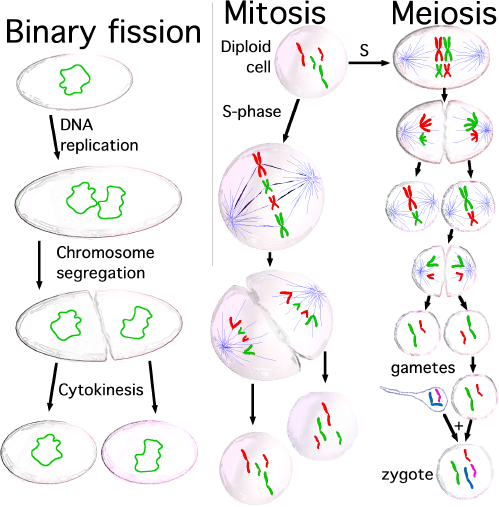 Three types of cell division: binary fision (takin...
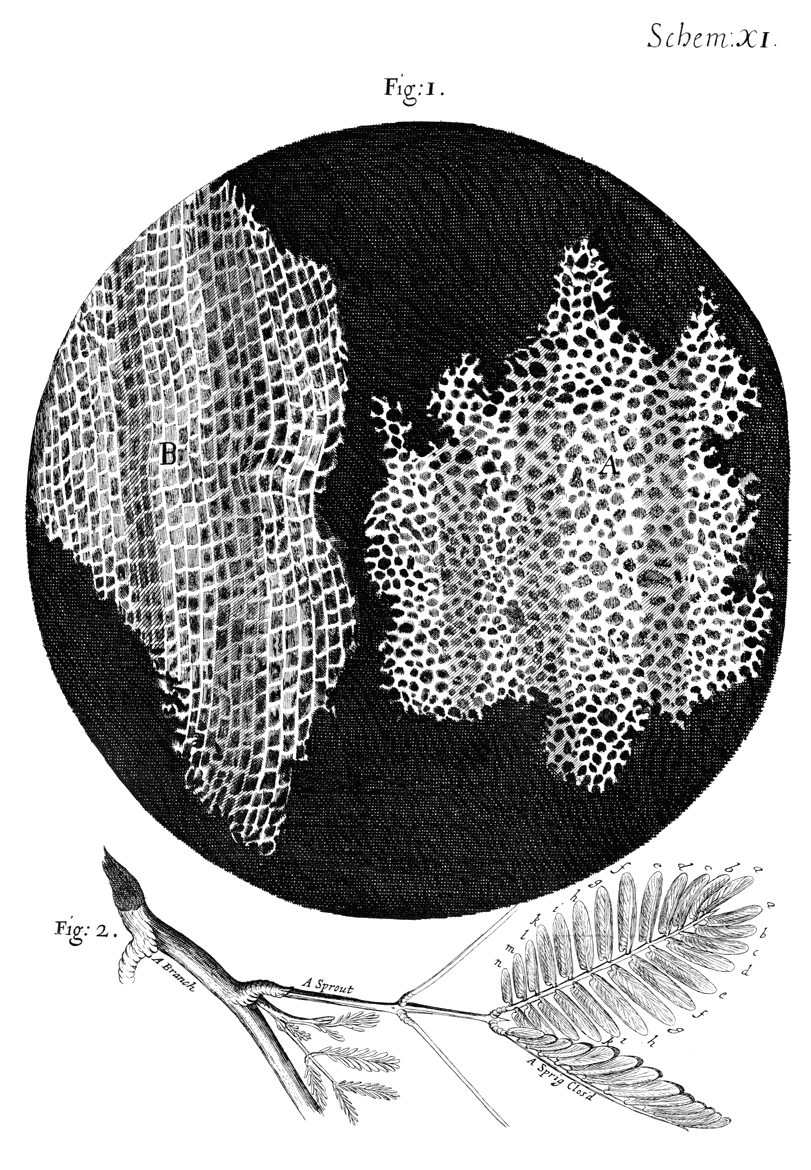 The cork described in "Micrographia" by Robert Hoo...
Onion Cell
*A thin later was peeled from the inside of the onion (dull side) with the forceps.
*The sample was then placed onto a slide, one drop of Iodine was dropped onto the sample and a microscopic cover slip placed on top.
*The sample was then viewed under the microscope at various magnification settings 4x10, 10x10 and 40x10, which can be seen on the following page.
*The onion cell structure looked like a cobble/snakeskin effect.
Results
The table below shows results of both cells viewed under the microscope at various magnification settings.
SAMPLEMICROSCOPE
SETTINGSCell MembraneCell WallCytoplasmNucleusVacuole
Cheek4 x 10"ÃÂ"ÃÂ"ÃÂ
Cheek10 x 10"ÃÂ"ÃÂ"ÃÂ
Cheek40 x 10"ÃÂ"ÃÂ"ÃÂ
Onion4 x 10"ÃÂ"ÃÂ
Onion10 x 10"ÃÂ"ÃÂ"ÃÂ
Onion40 x 10"ÃÂ"ÃÂ"ÃÂ"ÃÂ
Conclusion
The experiment showed that a plant cell and human cell have some similarities, they differ in shape size and structure.
 A little sample of music
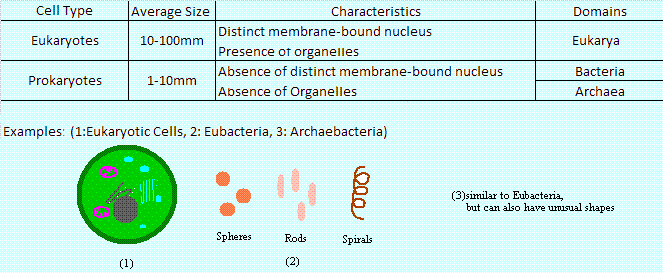 English: Cell Types
 Mundschleimhautzelle
More imagery
The Essay itself had not enough detail.
This essay needs more imagery
2 out of 2 people found this comment useful.