The word "clone" was coined by a man named J.B.S Haldane in 1963, however the first men to actually clone a living organism were Briggs and King who successfully cloned tadpoles in 1952. However, none of these men could ever imagine the attention and publicity their newly discovered science would receive 30 years later. Cloning has always been a fantasy living in many minds and silver screens, but until 1997 no one had actually realized how real it was (Waite, G. www.reproductivecloning.net/hosting/waite).
Dolly, the first mammal cloned from adult cells, was born in 1996, it took a year to be announced publicly. Clinton, president at the time, quickly reacted by proposing a five-year moratorium on cloning. The executive order prohibited the use of any federal funds for human cloning. With the federal funds not being an option the science of cloning faced a very hard challenge. However, that challenge turned out to be just a bump on the road once a few privately owned biotechnology corporations announced they were willing to pay for the research.
 Clone Trooper vs. Spider-Man Clone (93/365)
 Human Cloning Raëlian
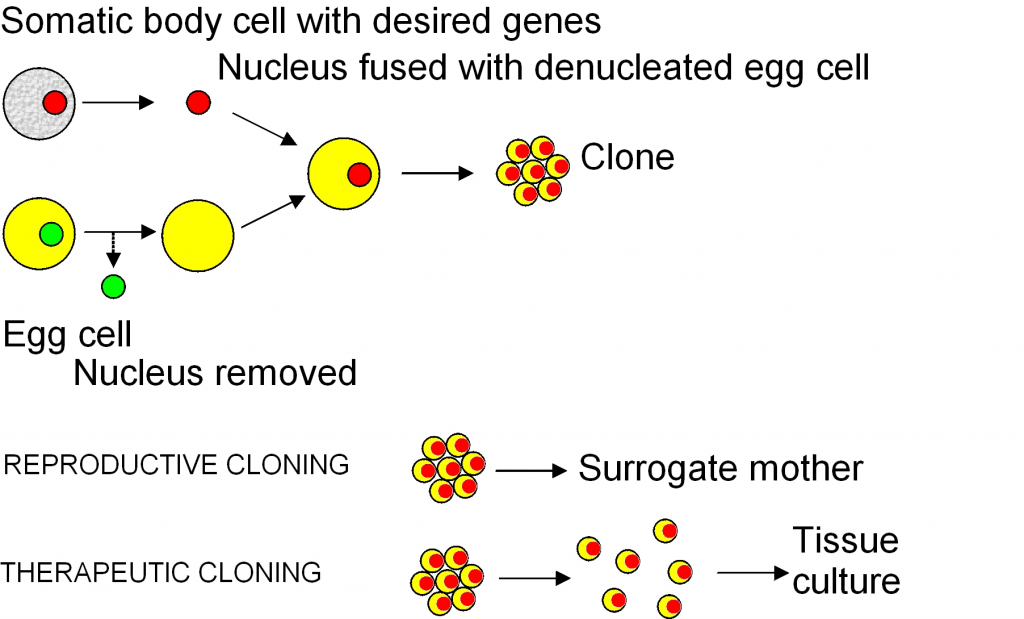 en: Reproductive and therapeutic cloning english d...
Anti-abortion activists and bioethicists took the lead in protests against human cloning. A CNN/Time poll taken soon after the Dolly incident reported 89 percent of Americans agreed, "human cloning to be morally unacceptable." The biotechnology companies were prepared to do everything in their power to ensure that no laws were passed that would wipe out their once in a 100 year opportunity to come up with a scientific breakthrough. The anti-abortion, religious, and academic groups were mainly concerned with moral repercussions that human cloning would drag along.
The cloning issue soon became Congress' top priority. Soon enough two competing bills were introduced in the Senate. The first was introduced by the Democratic Party, in which Sen. Feinstein happened to be one of the key sponsors.
Nice
Good overview this will help out alot in the essay I have to write for chemistry(I know, why am I writing a cloning essay for chemistry? Well, you see, my teacher is gay.) But, on a sidenote, I thought that democrats were the ones who were lobbying against cloning???
3 out of 5 people found this comment useful.