"Concentric eyewall cycles" (or "eyewall replacement cycle" ) naturally occur in intense tropical cyclones, major hurricanes (winds: 50 m/s, 100 kt, 115 mph) or Catories 3, 4, and 5 on the Saffir-Simpson scale. As tropical cyclones reach this threshold of intensity, they usually - but not always - have an eyewall and radius of maximum winds that contract to a very small size, around 10 to 25 km [5 to 15 mi]. At this point, some of the outer rainbands may organize into an outer ring of thunderstorms that slowly moves inward and robs the inner eyewall of its needed moisture and momentum. During this phase, the tropical cyclone is weakening (i.e. the maximum winds die off a bit and the central pressure goes up). Eventually the outer eyewall replaces the inner one completely and the storm can be the same intensity as it was previously or, in some cases, even stronger.
 From his vantage point high above the earth in the...
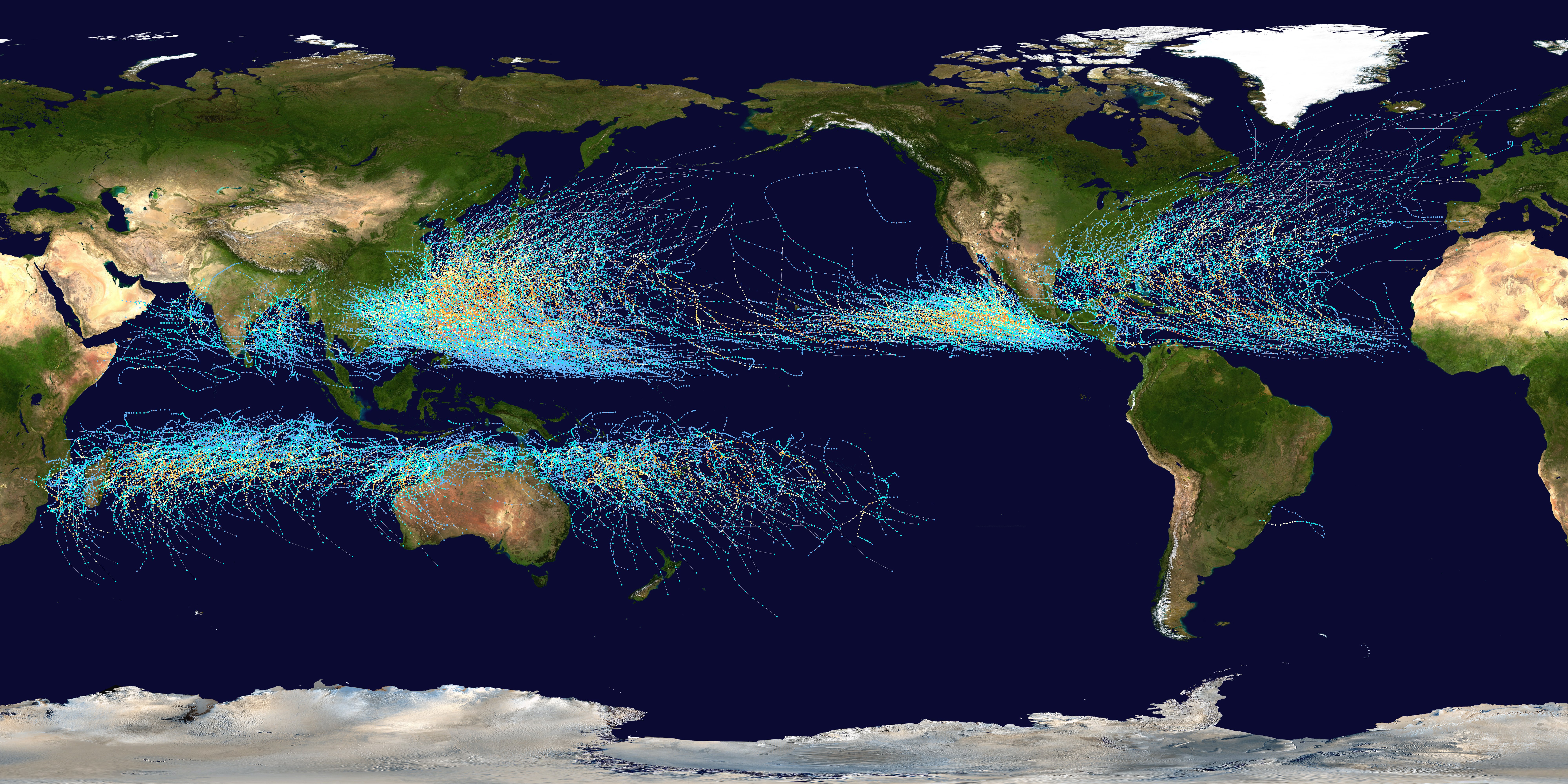 Worldwide Tropical cyclones from 1985 to 2005
 Concentric eyewalls seen in Hurricane Katrina as i...
A concentric eyewall cycle occurred in Hurricane Andrew (1992) before landfall near Miami: a strong intensity was reached, an outer eyewall formed, this contracted in concert with a pronounced weakening of the storm, and as the outer eyewall completely replaced the original one the hurricane reintensified. Another example is Hurricane Allen (1980) which went through repeated eyewall replacement cycles -- going from Categrory 5 to Category 3 status several times.
It was the discovery of concentric eyewall cycles that was partially responsible for the end of the U.S. Governements's hurricane modification experiment Project STORMFURY, since what the scientists had hoped to produce through seeding was happening frequently as a natural part of hurricane dynamics.
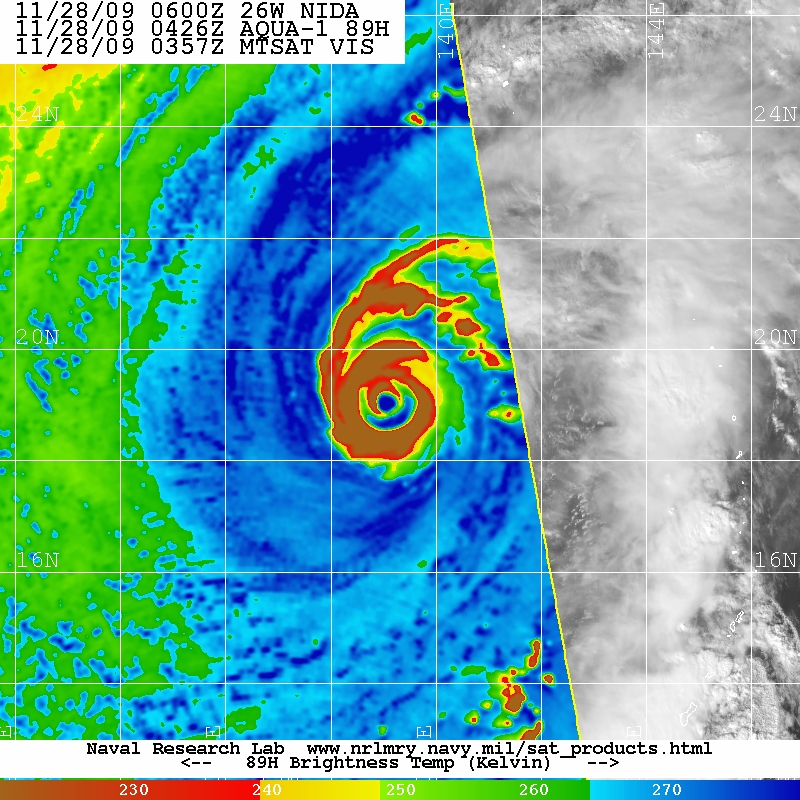 English: Shows 2 concentric eyewalls and the eyewa...
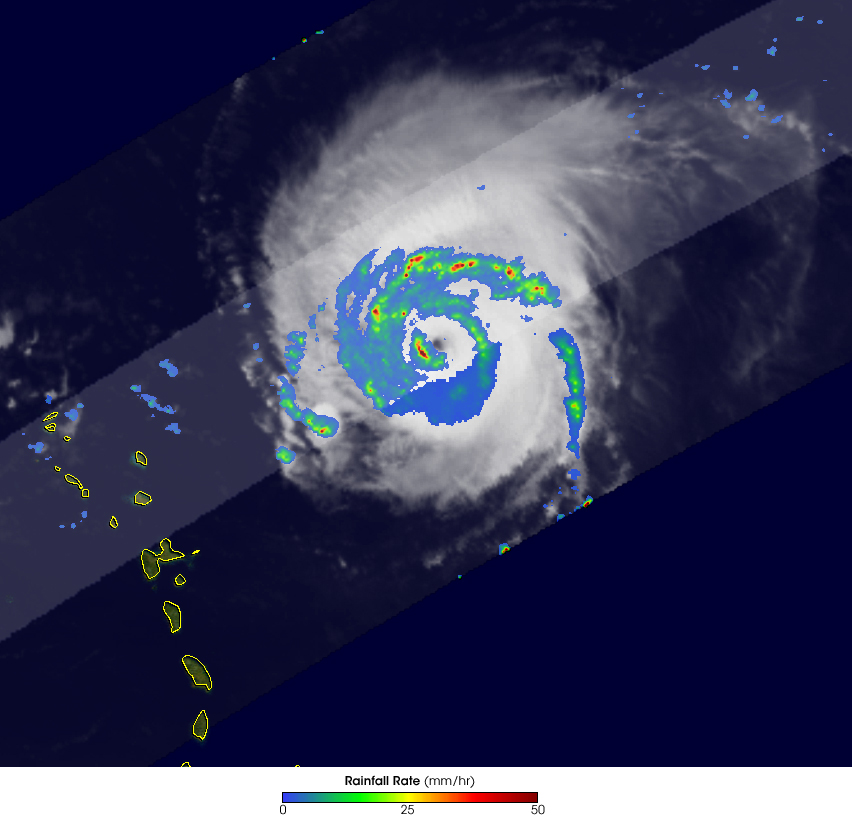 English: TRMM shows the very beginning of an eyewa...
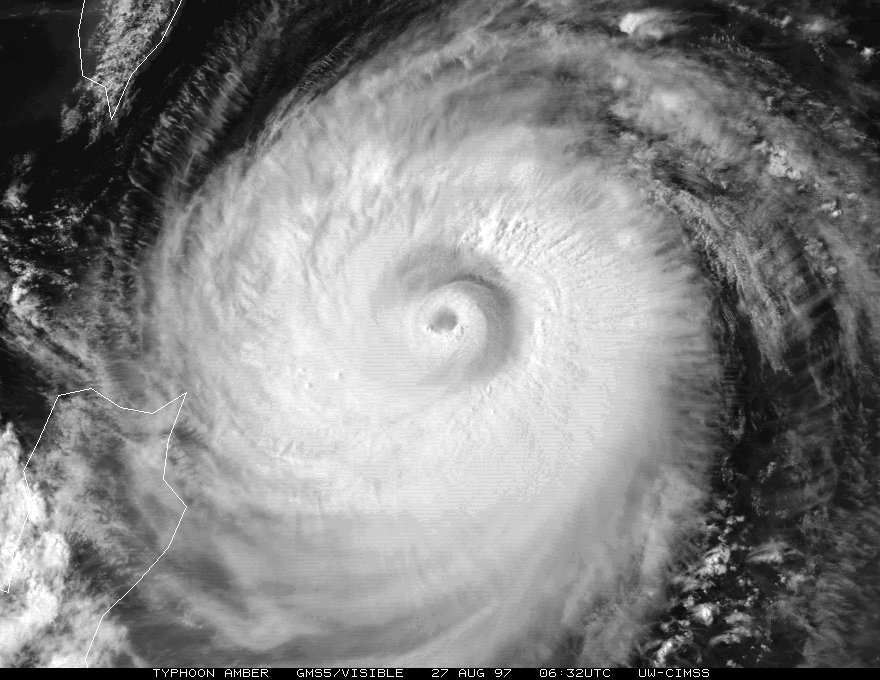 A satellite photo of Typhoon Amber, exhibiting an ...