The town of Pisa is located in the Tuskany region on the western coast of Italy. From the 11th to the 13th centuries Pisa was the commercial empire of southern Italy, expanding Italy's power over the islands of Corsica, Sicily, and Sardinia and controlling most of the Tuscan coast. During this time and subsequent centuries, Pisa built up its power and economic fortitude, and its wealth allowed for the construction of the gleaming white marble complex of religious buildings known as the Campo dei Miracoli, the Field of Miracles. This assembly of magnificent construction is the most important example of Italian medieval architecture, and in this one location one can visit the Cathedral, the Baptistery, the monumental cemetery of the Campo Santo, and of course, the Leaning Tower of Pisa.
The Cathedral
The plan of the Cathedral is a Latin cross, but the interior of the church is as much a work of art as the outside, rich with precious decorations and works created by important artists of the period.
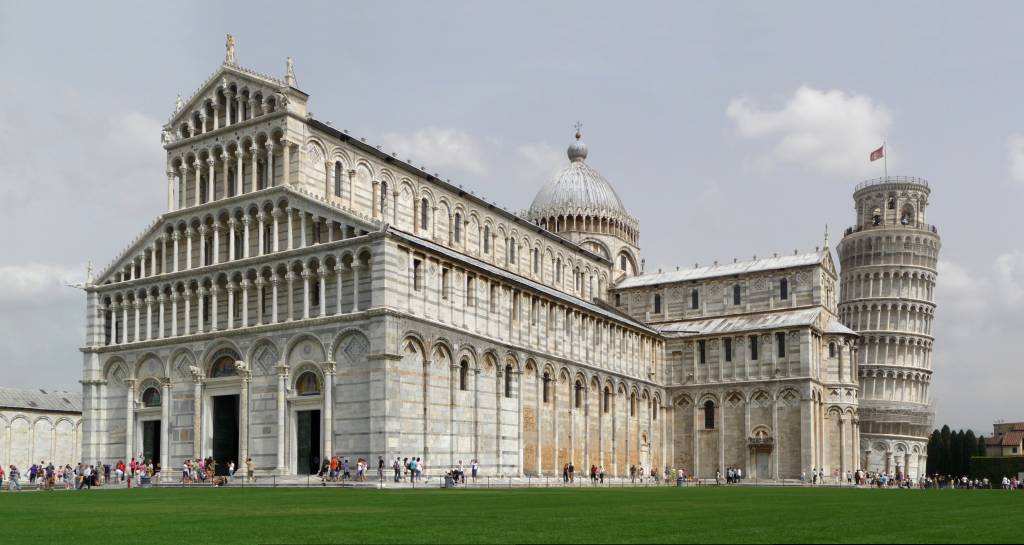 English: Cathedral of Pisa (Duomo di Pisa), Pisa, ...
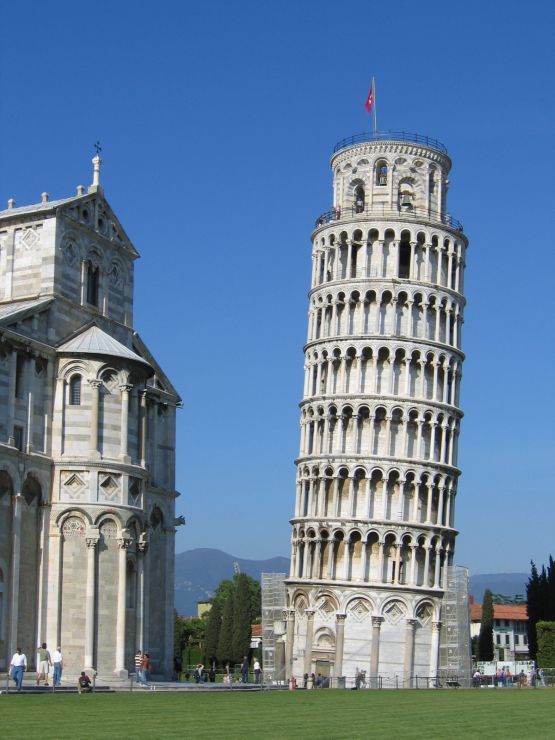 English: Leaning Tower of Pisa, Italy. The lean of...
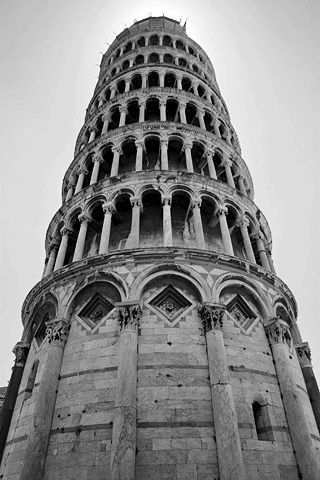 Leaning Tower of Pisa
Of important note is the marble pulpit, made by Giovanni Pisano, an exquisite example of Italian Gothic sculpture. So grand did the cathedral's architect Buscheto believe his masterpiece to be, that he did not hesitate to inscribe in Latin in the far left arch, "This marble church has no equal."
The Baptistery
The Baptistery, a lovely circular building, contains the most important work of art in Pisa--a hexagonal marble pulpit built by Nicola Pisano, father of Giovanni. The pulpit represents the transition from Romanesque to Gothic art, and its polygonal form is quite rare for its period. The walls of the pulpit are decorated with scenes from the life of Christ.
Cemetary Of the Campo Santo
Campo Santo, the 13th-century cloistered cemetery, is reputedly built on earth brought by...