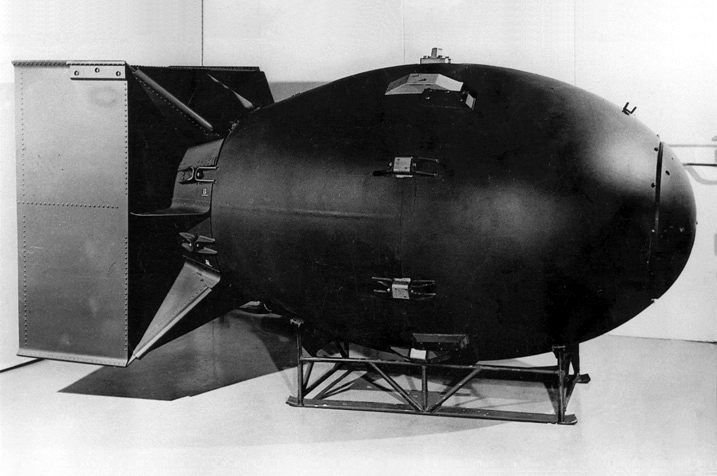
The development of Nuclear Weapons.
During last 50 years of development, the nuclear bomb, as the ultimate weapon became the peacekeeping force on the earth. The nuclear bomb was developed in Manhattan project during the WW II and was successfully tested in the New Mexico on July 16 1945. At this point started the change of nuclear weapon from ultimate weapon to political weapon. USA decided to use the atomic bomb to defeat Japan in order to save around 500.000 lives of American soldiers that were needed to end the war and in the summer 1945 the USA dropped two bombs on Hiroshima and Nagasaki. The nuclear weapon raised the confidence of USA but president Truman did not ordered its mass production because at that time he saw no explicit political function for the bomb. USA even tried to internationalize control of the bomb under the UNITED NATIONS but the Soviets were reluctant to support American plan for two reasons. To stop soviet nuclear program before developing the first soviet bomb would give Americans permanent lead in nuclear weapons technology. Soviets believed that instruments of force always have political capabilities. For the Kremlin weapons were political tools. This led Americans to the same conclusion. The beginning of Cold War created several political functions of nuclear weapons: nuclear deterrence, alliance building, and international prestige.
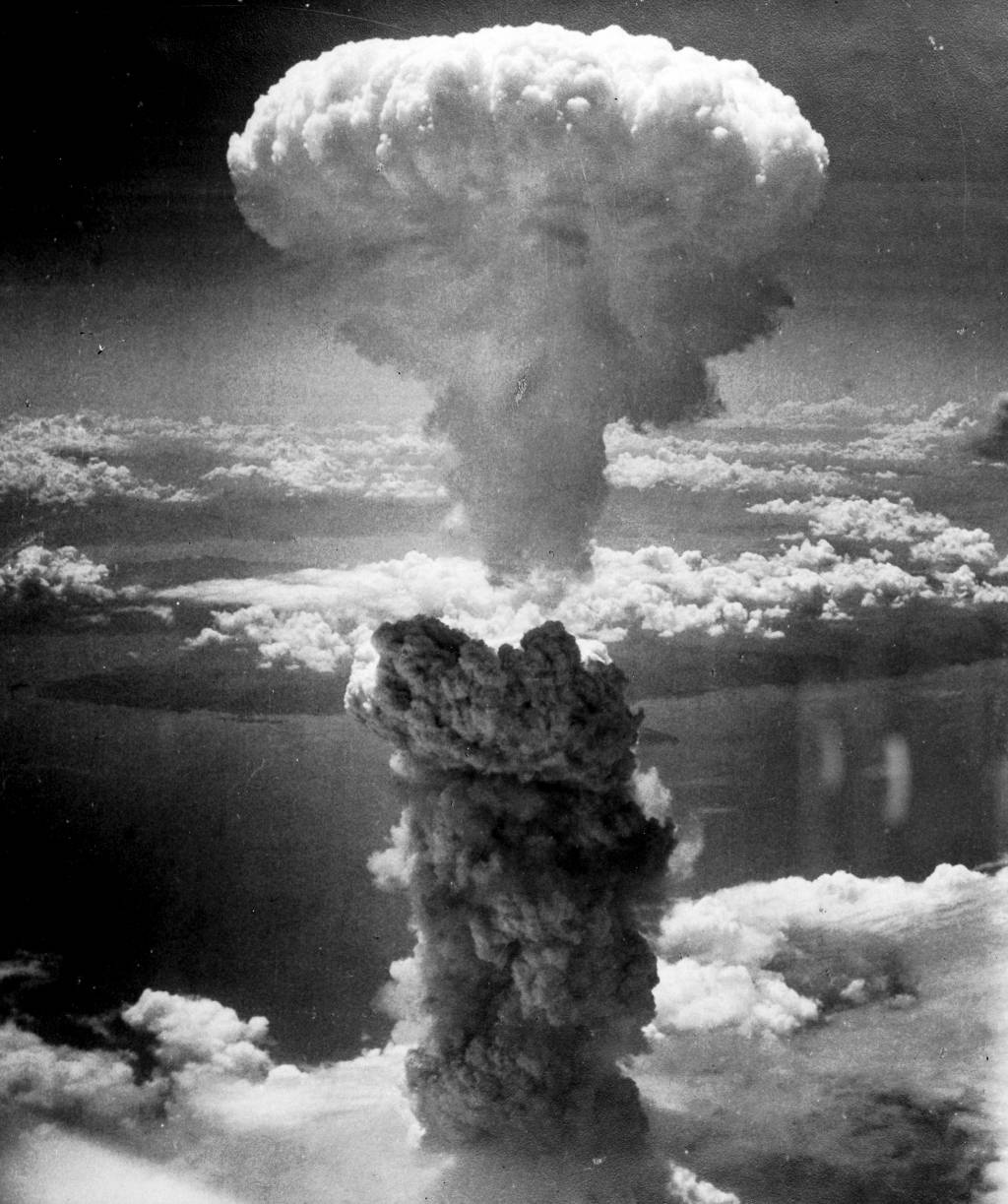
The Nuclear Bomb was developed as the weapon of war at the end of the Second World War. Nuclear Deterrence was than the natural function of nuclear bomb. The atomic bomb had a function of "natural deterrence" at the early beginning of Cold War when Soviets did not have nuclear weapons. The Soviets would not attack West Europe because they would risk war with USA and USA had atomic bomb that was seen by Soviets as the essence of deterrence. USA also...
More International Organizations & Conflicts
essays:
What was the reason the U.S Dropped the Atomic Bomb on Hiroshima And Nagasaki? Find out some of the reasons why this happen and how it got started. DBQ
... of Hiroshima and Nagasaki were destroyed by the first atomic bombs used in warfare. The United States decision to drop an atomic bomb on Hiroshima was strictly military measure calculated to intimidate the Soviet Union ...
The History of Globalization
... capitalism in three topics,Economics,politics,technology,and control. In technology ,capitalism leaded people to discoverys like productionline,massproduction,computers and ýnternet(all of these inventions has grate importance on our lives for example mass production gived us the oportunity to ...
Explain the development and meaning of the Truman doctrine, the Marshall Plan, and NATO.
... unified and "open" world, American worked on "containing" the threat of Soviet expansion. The Truman Doctrine, the Marshall Plan, and NATO were effective measures taken to contain Soviet expansion and communism. On March 12, 1947, President Truman appeared ...
The Affect of Revolutionary Political Ideas and Conditions on Modern World History from World War I to the 1970s.
... of nuclear weapons. This further decreased the risks of a full nuclear war between countries, though the risk still does exist. The interconnectivity of countries throughout the world has changed worldwide politics. A ...
"the cuban missile crisis" 2500 words detailed analysis of the cuban missile crisis 1962, including long and short term causes, the crisis itself, and the long and short term consequences
... the Soviets and Cuba manifested in the form of nuclear weapons bases ... overthrow, and tightened Cuba's alliance with the USSR. The USA had, since the development of the nuclear bomb, held ...
The Build-Up to the Emergence of Bangladesh
... unhappiness and political disparity made people feel that the situation would not change in this context. These negative feelings brewed over time and provided powerful weapons for ...
How Saddam Hussein's Greed and Totalitarian Quest for Power Led to the Invasion of Kuwait, World Conflicts and the Degredation of Iraq
... power, and believed that he could annihilate military superpowers like the United States, Britain and France. Saddam Hussein's ultimate dream was to possess a nuclear bomb. Most ...
Title: The Forever Recorded WOrld Events:1989~1991. -Essay about the collapse of Berlin Wall, Gulf War, and Fall of USSR-
... US president Bush to end production of chemical weapons and make substantial cuts in nuclear weapons. In 1990, the Communist Party surrendered hold on total power to allow other political parties ...