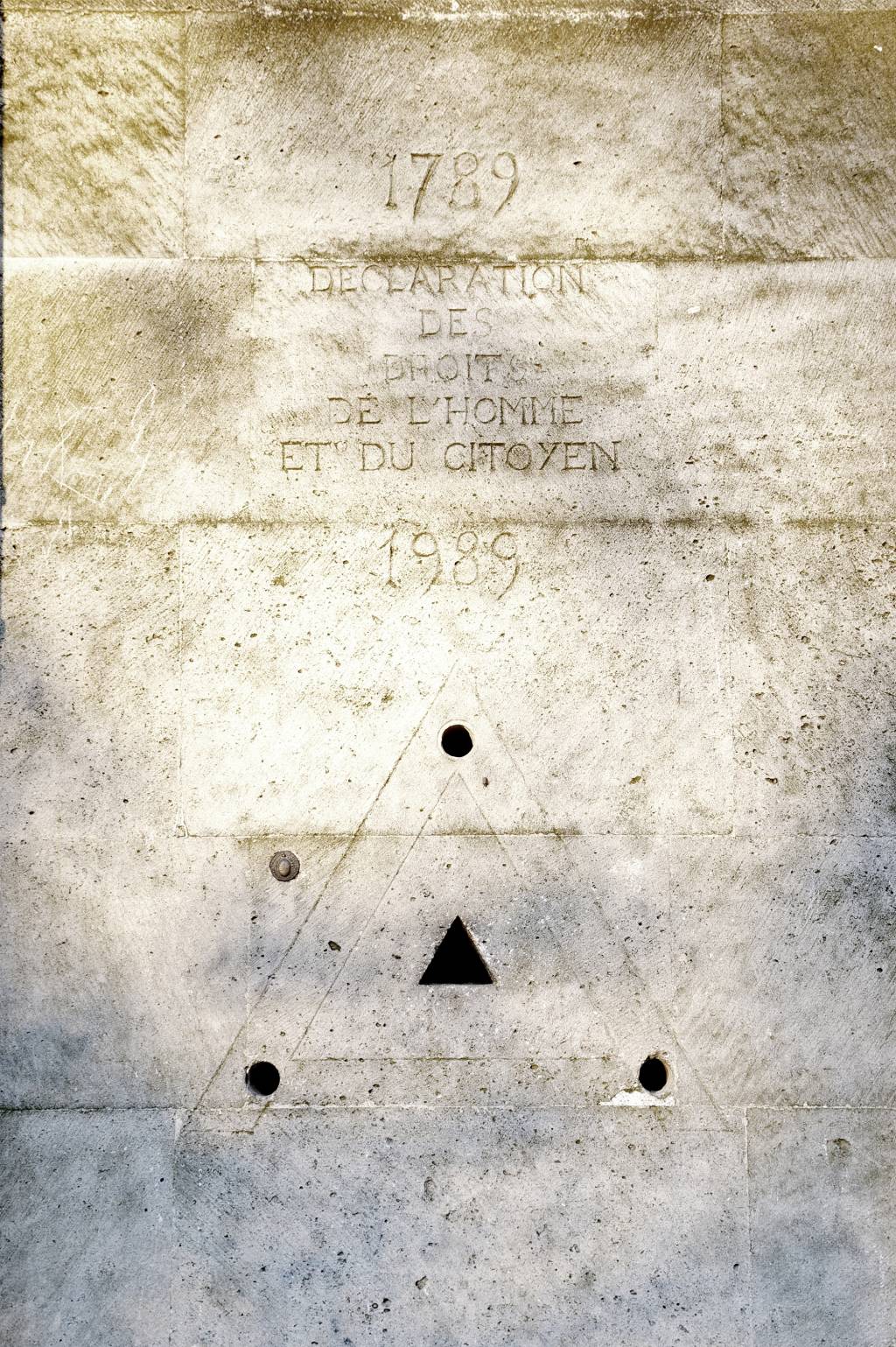
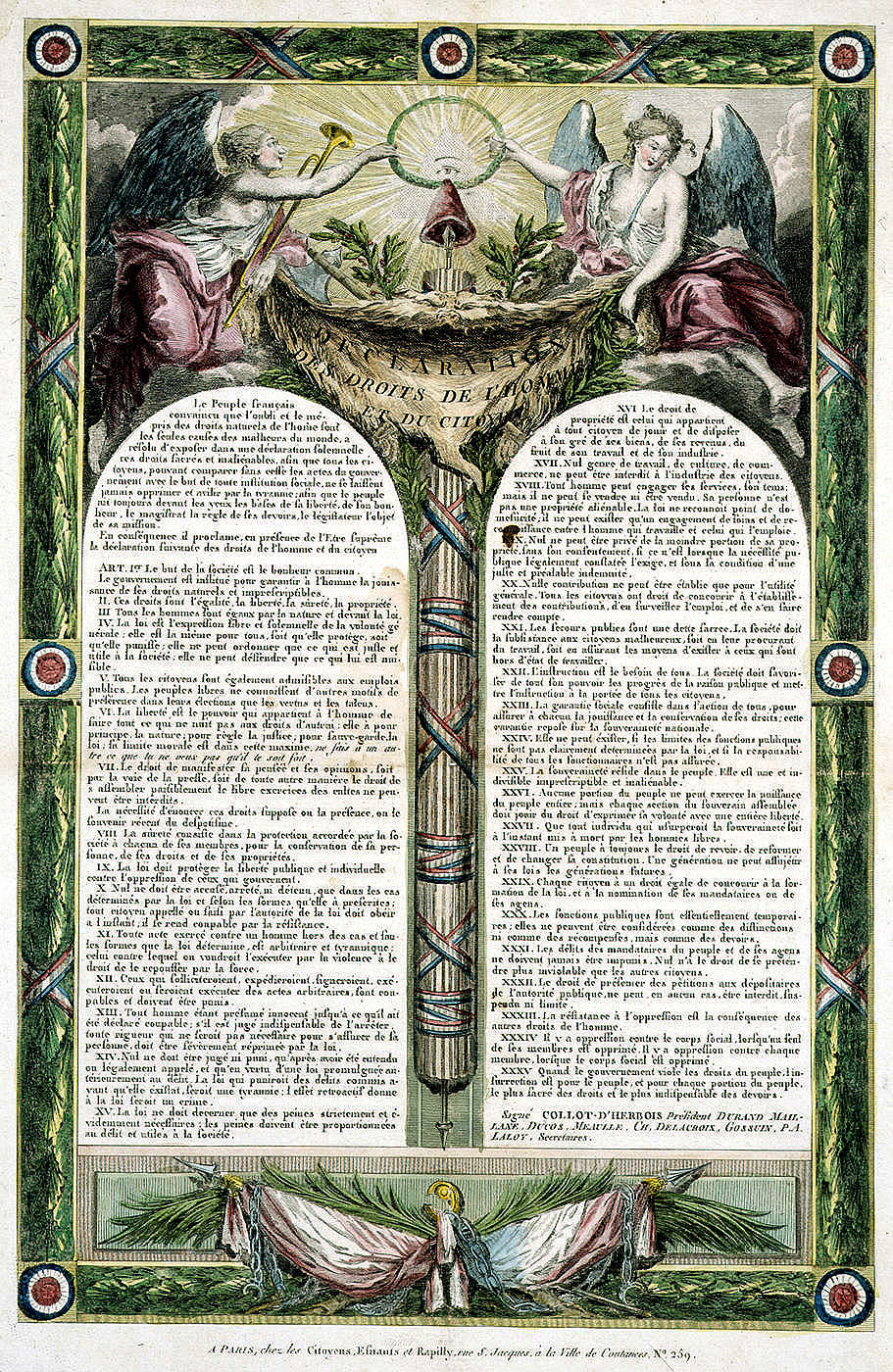
How did the Declaration of Rights and Man grow out of the Englightenment? In France did the French Revolution come from the ideas of the Englightenment?
The Declaration of Rights of Man and Citizen stated the principles of the new society in France. These ideas called for individual human rights and grew out of the Enlightenment. A mix of many rich new ideas allowed legal equality, representative government, and individual freedom. The calling for liberty from enlightened thinkers and monarchs also led to The Declaration of Rights of Man and Citizen.
The Declaration of Rights of Man and Citizen, which was issued at the beginning of the French Revolution, created the principles of society. On August 27, 1789, the National Assembly issued the Declaration of the Rights of Man, which stated, "Men are born and remain free and equal in rights." The declaration also stated that mankind's natural rights are "liberty, property, security, and resistance to oppression" and that "every man is presumed innocent until proven guilty." As for law, it stated, "it is an expression of the general will; all citizens have the right to concur personally or through their representatives in its formation . . . Free expression of thoughts and opinions is one of the most precious rights of mankind: every citizen may therefore speak, write, and publish freely." This open-minded and revolutionary document guaranteed equality before the law, representative government for a sovereign people, and individual freedom. Only two pages long, this document was spread throughout France, the rest of Europe, and around the world.
The call for individual human rights and liberty lead to the French Revolution. Liberals from the revolutionary age demanded to worship according to the dictates of their consciences, and wanted an end to censorship. They also sought after freedom from arbitrary laws and from judges who simply obeyed orders from the government. The Declaration of the Rights of Man proclaimed, "Liberty consists in being able to do...
More The French Revolution
essays:
Was Napoleon the son or the enemy of the French Revolution? In this essay, I will try and investigate whether Napoleon Bonaparte brought a positive change to France or was he just another tyrant.
... eliminated and education became widely available. However, Napoleons social changes created problems regarding the rights of liberty, equality and education. First of all, liberty was ...
Reign of Terror was during the French Revolution.
... the common people. The nobility abolished feudalism and linked hands with the commoners in their overthrow of the monarchy. The National Assembly adopted the Declaration of the Rights of Man and ...
Bread Riots as a cause of the French Revolution
... XVI of France guillotined in Paris. Thomas Paine's Rights of Man banned; Paine condemned in absentia (he is in France) for high treason. The British government, headed ...
The French Revolution and the Terror
... and political liberty and judicial and social equality suddenly became violent and extremely bloody towards those whose opinions differed from the revolutionary leaders. If the revolution protected the fundamental rights as laid out in the Declaration of the Rights of Man ...
The Reign of Terror and the French Revolution
... with the National Assembly. A crowd broke through the gates, demanding that liberty and equality be maintained. In response, the National Assembly declared that the King be imprisoned and replaced by six ministers. The mood of Paris ...
What were the causes and the effects of the French Revolution?
... the end of August, the National Assembly adopted the Declaration of the Rights of Man. It stated that democratic principles would be the basis for French government. The job of ...
The Primary Immediate Causes of the French Revolution.
... captured the attention of the Bourgeoisie by promising free commerce and more liberal freedom. Thinkers also challenged the dogmas of absolutism. Reason they believed was a higher force than the monarch's claim to divine right. The brotherhood of men, equal ...
Why do Marxist historians see the French Revolution of 1789 as 'Bourgeoisie'?
... to the National Assembly. Inequalities of tax allocation, judicial rights of individuals, agricultural rights, the suppression of venal rights, the list goes on and on, but they were issues that need addressing if the 'people' were to achieve equality for ...