Discuss the life and work of famous Ancient Egypt archaelogoist (Egyptologist) Flinders Petrie.
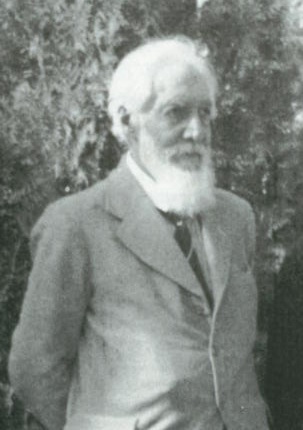
William Matthew Flinders Petrie, born June 3rd 1853 in Charlton, Kent, was the grandson of Captain Matthew Flinders, the first man to chart Australia. Petrie was named after his father William, who was a civil engineer and professional surveyor and his maternal grandfather Matthew, a famous navigator and explorer. Petrie's mother Anne had a love for science, namely fossils and natural minerals. When he was 4, Petrie became so ill that his mother became convinced he was a weak child, since she was a scholar herself, she taught him at home and introduced him to Hebrew, Latin and Greek. Both Anne and her husband William taught and encouraged their son the play around with rocks, minerals and anything else that interested him. At a young age, Petrie developed an interest in archaeology, particularly in the area of ancient weights and measures. Petrie had an inquisitive mind and developed an insatiable appetite for facts, toying with mathematics, discovering geometry and devising chemical experiments at the age of 15. His father taught him the use of a sextant and how to map sites, so by the time he was 18 Petrie spent days alone making surveys around his home.
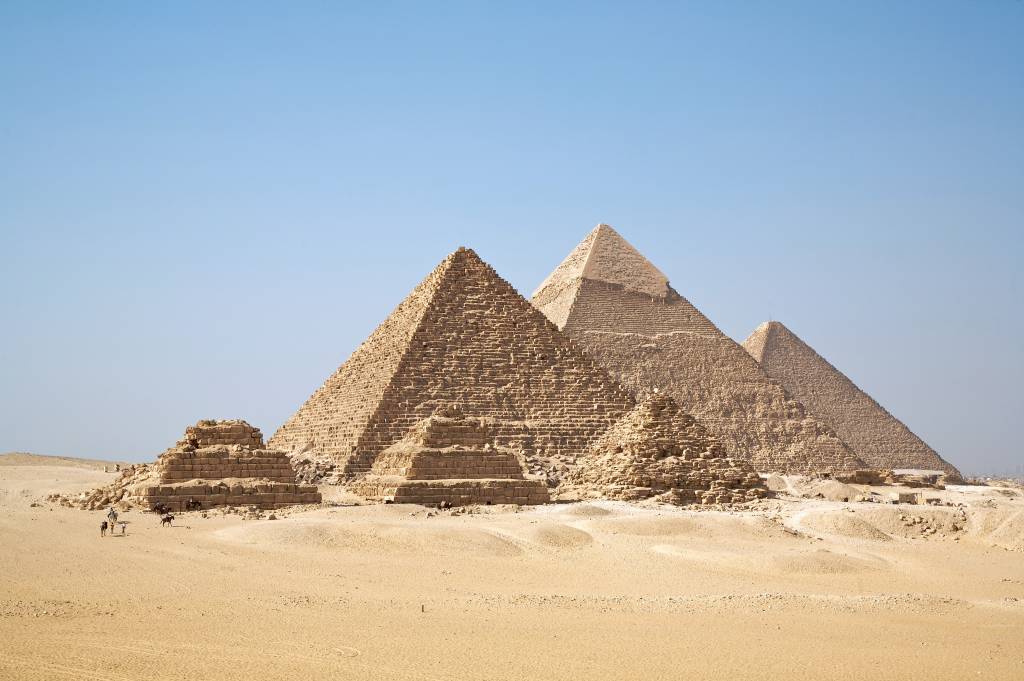
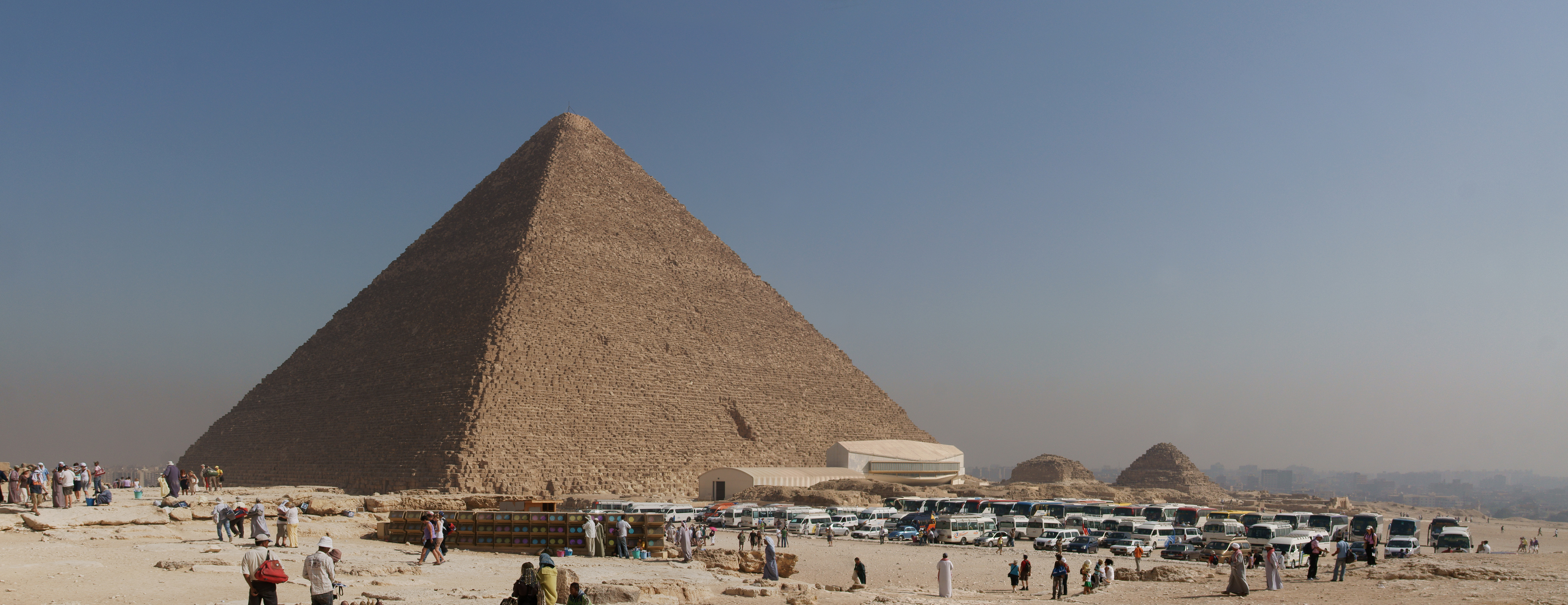
Petrie started out working as a practical surveyor in southern England. During this time he became interested in and started studying Stonehenge. In 1967 Petrie had read with interest books written by a family friend, Charles Piazzi-Smyth, the Scottish Astronomer Royal, on the Great Pyramid of Giza, whose measurements, the author swore, epitomized all mathematical and astronomical knowledge, past, present and future. Petrie wrote to him that "pi" must have been used in calculating the pyramid. Between 1880 and 1883, Petrie went to Egypt to confirm these results, since the book was heavily criticized. He traveled to Giza and the Great Pyramids, Saqqara,
More Ancient Egypt
essays:
Comparing ancient Sumer and Egypt
... weight of the Feather of Truth by the God Osiris. Skilled workers preserved bodies in what is called mummification. Bodies were preserved so that the Ba and Ka could recognize their owner's face. The Egyptian gods were based on nature ...
The tomb of Tutankhamun and the daily life in ancient Egypt
... that you could defend yourself against the enemy. There were also games so that you could have fun with yourself and your friend. So to look around in the tomb of Tutankhamun can absolutely give you an understanding of the daily ...
World History Notes On Ancient Sumerian City States,Religion,Law,Math& Writing::Downfall of Sumerians::Ancient Middle Eastern Civilizations(other than Sumer)
... stretched from Egypt to India -Persians developed a system of weights and measures -Persians built roads to link together citied, the most famous ... middle east were more easily conquered than Egypt; Egypt had natural barriers (deserts), unlike the middle east, which did not. -Egypt ...
The Lost City at Giza and the Homes of the Pyramid Workers
... director of the draftsmen," "director of workers," "overseer of masonry," and others with professional titles of the like were found on the doors. The ...
"A Marxist View on Government and Religion of Ancient Egypt and Mesopotamia"
... more immense. Other gods that belonged to Egypt took forms of animals, humans and natural forces. Gods needed to be pleased at all times to keep them ... ancient states religion created humanity. One of the only aspects of each of these two civilizations that can be looked upon as Marxist is when the ...
The Role of Women in Ancient Egypt
... . A woman who could bear many children was looked upon favorably by her husband and her peers (Tyldesly 1994). The wife was to blame if she was ... As children grew older the boys were sent to school and the girls remained home with their mother until they were old enough to marry. In Ancient Egypt ...
EGYPT--Description of Egyption culture, mummification, government and religion of ancient egypt--also a comparison with modern Egypt
... a mineral. Embalmers covered the body with natron for forty days. In the fifth step the stuffing was taken out and replaced with new linen and small ... daughter of Yuya. Yuya was not a king but a grandfather of a pharaoh and father of a queen. Amenhotep died in his mid fifties ...
Ancient Egypt, the Nile River, sub-Saharan Africa, the Middle East and their relationship.
... math and sciences. Each year after the floods by the Nile River, farmers had to measure the boundary lines all over again. This led them to develop advance ways to measure the land. Geometry was ...