Marriott adheres by the laws in place to protect the employee, the employer, and the organization. As a result of legal decisions and administered laws, Marriott follows the employment guidelines established to produce better employee-employer relationships. The concept of equal employment opportunity has come a long way since the 1960s. Current and future business professionals continue the efforts in the workforce.
An organization such as the Marriott, respect the Civil Rights Act which first passed in 1964. the. Marriott adheres in prohibiting the discrimination act on the basis of race, national origin, color, gender, or religion. In 1991, the act was amended again and now provides solutions for the complaining party to recover punitive damages if he or she can prove discrimination by the employer took place. However, the following limits were placed on the amount of the awards, based on the number of people employed by the company:
Also included in this act is the Glass Ceiling Act of 1991.
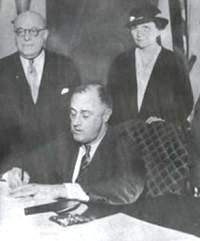 President Franklin Delano Roosevelt signs the act ...
 English: Members of the Service Employees Internat...
 English: Protesters from the AFSCME march around t...
The glass ceiling is the invisible barrier in the organization that prevents many women and minorities from achieving top-level management positions. With the Glass ceiling Act, Marriott sees this as non-existence, as the Marriott have high achievements in promotional level with women and minorities.
Marriott focus on the ability of the employee and how they can produce, and not worrying about the age. The Marriott philosophy on age is, if you are able enough to make production then age does not matter (Marriott).In 1967, Congress passed the Age Discrimination Act to prohibit employers from discriminating against individuals who were 40 to 65 years old. In 1986 the act was amended a second time to protect those individuals that were over 40 years old. The latest amendment gives older employees the option to continue working after they are 70 years...