The North American Free Trade Agreement (NAFTA) is a very significant part of international trading in North America. NAFTA was built upon a prior 1989 trade agreement between the U.S. and Canada that was responsible for tariff reductions between the nations. There were concerns of U.S. jobs being lost in the transfer of factories to foreign nations, where U.S. companies could take advantage of cheap labor and the lack of workers' rights. Also, environmental groups became concerned that enforcing pollution laws would be difficult in foreign countries with loose environment laws.
It was specifically designed to improve trading conditions between the North American countries. The treaty was put into effect January 1, 1994 and eliminated tariffs on many internationals goods. It would phase out other tariffs over a two decade period (Mayer 15). The agreement called for immediate removal of one half of U.S. exports to Mexico.
Along with NAFTA, the North American Agreement on Environmental Cooperation (NAAEC) was formed to prevent environmental destruction and to enforce the laws by which businesses are held.
 English: A North American Free Trade Agreement (NA...
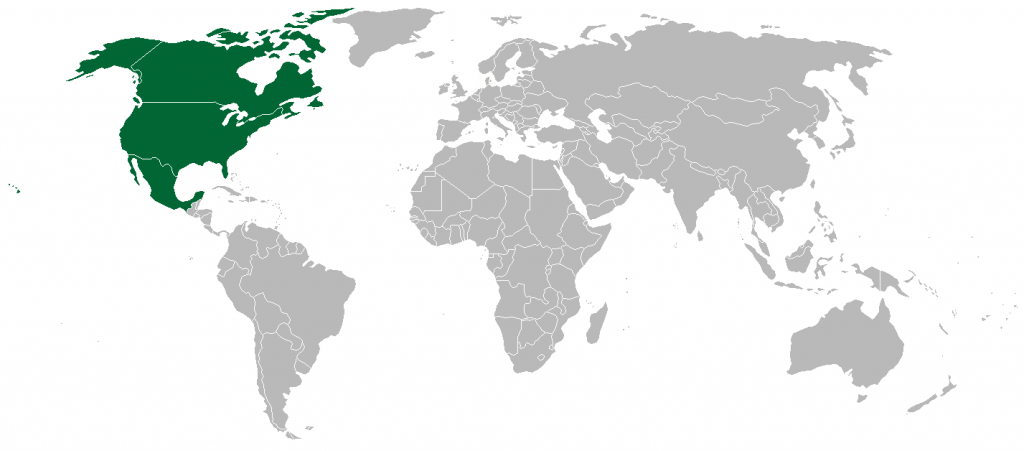 en map of NAFTA
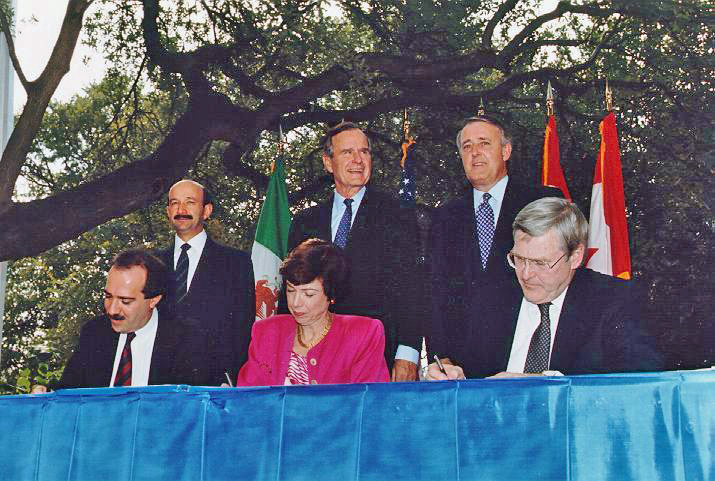 Carlos Salinas (left), George H.W. Bush and Brian ...
The Commission for Environmental Cooperation (CEC) was also established under this agreement to address regional environmental concerns and help prevent potential trade and environmental conflicts. It also promotes an effective enforcement of environmental laws (Mayer 33). In addition to the NAFTA treaty, supplemental agreements were signed to address the issues of international labor rights
NAFTA was created to amplify and promote commerce among North American countries. Elimination of tariffs would increase exports and create a greater, more stable and much more efficient North American economy. NAFTA linked a market of 365 million consumers in three countries, establishing the second largest free-trade zone in the world (Mayer 34). The main goal of NAFTA is to develop beneficial financial standards for all of North America though the regulation...
Great!
Man you have great understanding of this subject! Well written!
1 out of 1 people found this comment useful.