Using Act 3.3 as a starting point analyse the ways in which Shakespeare presents the development of Othello's character
Act 3.3 is referred to as the famous 'corruption' scene of the play. This name describes manner in which Othello metamorphoses from a calm, considerate loving husband to being completely driven by an emotion Shakespeare describes metaphorically as the 'green-eyed monster'. The effectiveness of this transformation pivots upon the skillful manner in which Iago insinuates that Cassio and Desdemona are having an affair. However, although this scene can be pinpointed as the beginning of Othello's self-destruction his descent continues throughout the play and Shakespeare skillfully raises many questions which can only be answer by the reader individually.
Othello is, in one sense of the word, one of the most romantic figures ever created by Shakespeare; he is so partly from the strange life of war and adventure, which he has lived from childhood.
![From the Library of Congress: TITLE: Thos. W. Keene. Othello CALL NUMBER: POS - TH - 1884 .O7, no. 1 (C size) [P&P] REPRODUCTION NUMBER: LC-USZC6-58 (color film copy transparency) RIGHTS INFORMATION: No known restrictions on publication. MEDIUM: 1 print (](/uploads/9/94760/library-congress-title-thos-w-keene-othello-call-number-pos.jpg) From the Library of Congress: TITLE: Thos. W. Keen...
From the Library of Congress: TITLE: Thos. W. Keen...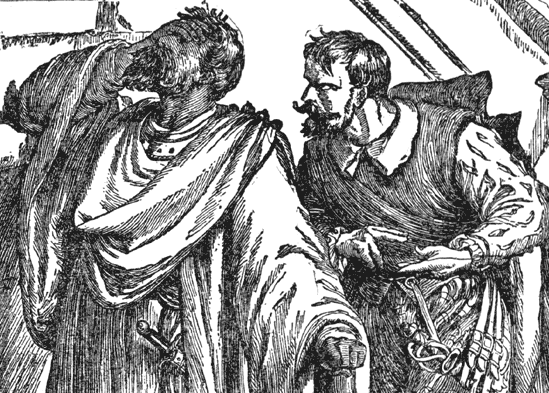 Illustration of Othello and Iago
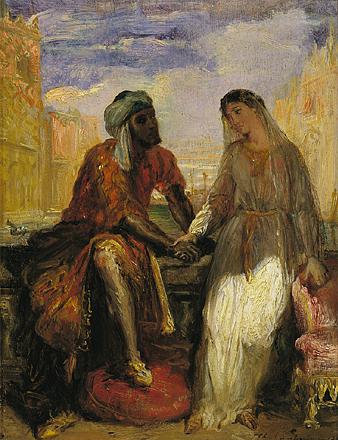 Othello and Desdemona in Venice, 1850, oil on wood...
He does not belong to our world; the vague details of his past supplied, coupled with his enigmatic character give the illusion Othello could almost have come straight from wonderland. There is something mysterious in his descent from men of royal siege; in his wanderings in vast deserts and among marvellous peoples; in his tales of magic handkerchiefs and the prophetic Sibyls; in the sudden vague glimpses we get of numberless battles and sieges from which he has returned a hero; and even in chance references to his baptism and in being sold to slavery.
And he is not a merely romantic figure; his own nature is romantic. Although he may lack the imagination of many great romantic figures, his manner and choice of wording is poetic throughout the play. Indeed, many of Othello's most famous speeches -- those that begin, "Her father loved me",
...
extremely well written, maintains the interest of the reader throughout. impressive sentence and paragraph structure, as well as good grammar etc.
2 out of 2 people found this comment useful.