The Soviet Union and the United States - two nuclear-armed superpowers - confronted each other in a simmering conflict known as the Cold War. The tense relationship between the United States and the Soviet Union started in the closing months of World War II. Some scholars attribute the hardening of the atmosphere between the two countries to Harry Truman's assumption of the presidency in April 1945, after the death of the more sympathetic Franklin Roosevelt, and to the American possession of an effective atomic bomb. Evidence suggests, however, that Truman was trying to carry Roosevelt's policies forward and that Roosevelt himself had become distressed by Soviet actions in Eastern Europe. Nor did Truman use the atomic bomb to try to keep Russia out of the Pacific. On the contrary, he worked hard to ensure Russian intervention against Japan at the end of the war. In part, the new coldness among the Allies arose from the mutual feeling that each had violated previous agreements.
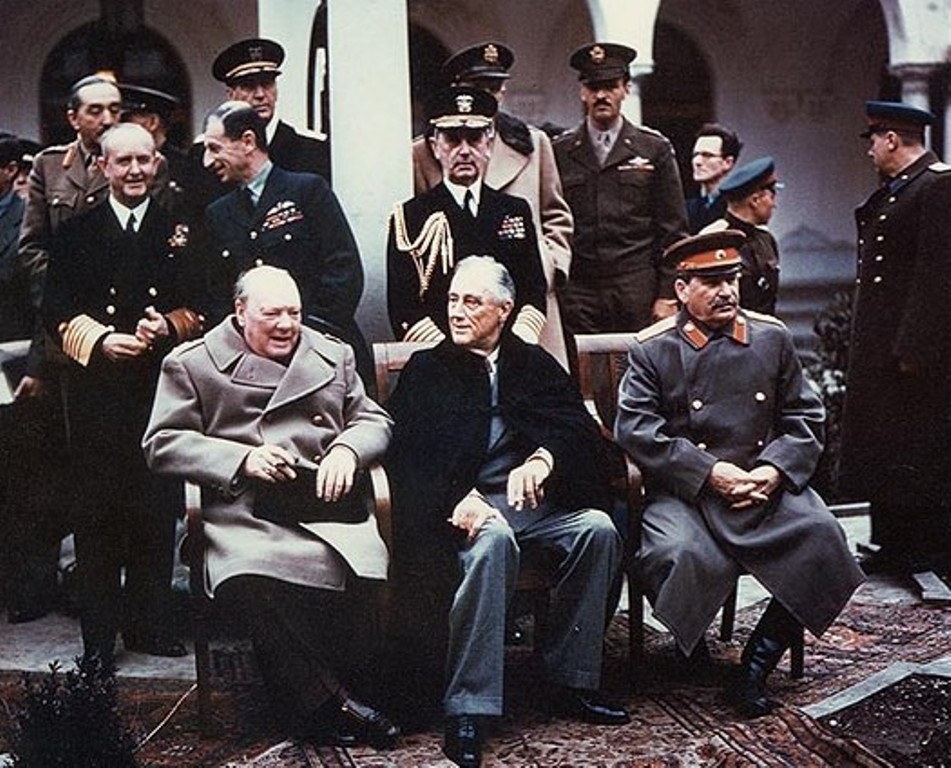 Yalta summit in February 1945 with (from left to r...
 February 4–11: Yalta Conference
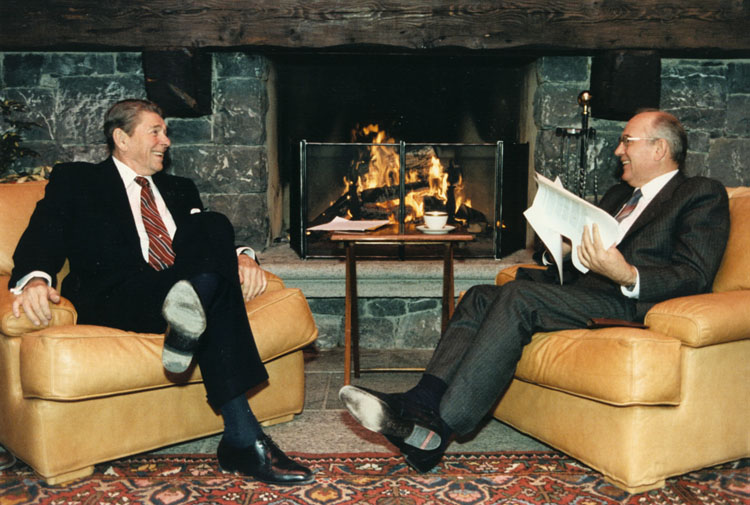 English: US President Ronald Reagan and Soviet Gen...
The Russians were plainly asserting permanent control of Poland and Romania under puppet communist governments. The United States, on the other hand, was taking a harder line on the extent of German reparations to the Soviet Union. First there was the secret speech of February 1956. Khrushchev made an extraordinary departure from expected practice by directly attacking the policies of the Stalin years. Then in July 1956 President Nasser nationalized the Suez Canal, until then controlled by British and French interests. Now, Egyptian control of the Suez Canal threatened the access of Great Britain and France to Persian Gulf oil supplies, essential to their industrial economies. In October 1956 war broke out between Egypt, then receiving arms from the Soviet Union, and the eight-year-old state of Israel, closely tied to the West. After 1956...
Study notes...
Thorough, informative, detailed, well structured, flows smoothly and even interesting to read.
These notes are definitely a valuable resource for research since they are of such great calibre and on a common classroom topic.
Great Job, ccmustangs2001.
2 out of 2 people found this comment useful.