Exaggerated Representations of Kings Saladin and Richard I and How These Representations Reflected the Cultures and Values of Their Times
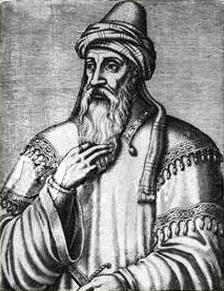
The Third Crusade (1189 1192 A.D.) was just one of a series of religious wars fought between Muslims in the Middle East and European Christians to take control of the Holy City of Jerusalem. This Third Crusade is unique because of the two iconic leaders that led each side of the conflict. These two leaders were King Saladin, the Sultan of Egypt led the Islamic forces to defend Jerusalem from King Richard I of England, who was trying to retake the Holy City in the name of Christianity. Throughout history, chroniclers and historians portray these two leaders as charismatic, honorable, virtuous, chivalrous, among other magnanimous adjectives. Along with this very flattering portrayal, the history and chronicles portray these men in such ways, they almost seem mythical in nature; that they can do things beyond the capabilities of most normal men. Truly, these exaggerated representations in the historiography and chronicling of these two figures and it is this exaggerated representation which has shaped how people saw and indeed still see these two men. Additionally, there is ample evidence in both primary and secondary sources which point out that these qualities that historians and chroniclers attribute to these two iconic figures are accurate reflections of the ideals and values of the two respective cultures to which they belonged.

Even in the earliest histories and chronicles, the authors of said histories made Saladin and Richard out to be more than just ordinary men. Baha' al-Din Ibn Shaddad wrote The Rare and Excellent History of Saladin (translated by scholar D.S. Richards) within a decade of the end of the Third Crusade. Shaddad was a scholar who met Saladin on multiple occasions and wrote many treatises on the Third Crusade. Shaddad's works were well known at the time by his contemporaries and his works...
More Middle Eastern History
essays:
An Overview Of the Crusades as History repeats itself.
... the holy city. Jerusalem surrendered on October 2. The led to Pole Gregory VIII starting a Third Crusade. Three major European monarchs joined: the holy Roman Emperor, Frederick I; the French King, Philip II; and English King, Richard I. These forces ...
EGYPT--Description of Egyption culture, mummification, government and religion of ancient egypt--also a comparison with modern Egypt
... 6th and 7th. On the night of the 6th, the Coptic Christians go to the church around ten o'clock for the holy mass and at ... sorceress and accused her of all sorts of different evils. Octavian then declared war on Egypt. Cleopatra and Octavian met in one of the biggest battles in history. The ...
History Internal Assessment: To what extent did T
... a Christian scholar. The self stated aim of this work is "to contribute to the cause of universal peace, and promote the better understanding of the ...
The so-called 'Road Map to Peace' looks in many ways more like a 'Road Map to War'. How far would you agree with this assessment of US efforts to settle the Palestinian Question?
... is evident that any peace process must take this into account - one sidedness will certainly only result in war, as has been demonstrated by the 'Road Map to Peace'. It is inadequate to ignore the history of the ...
Critically discuss how Egyptian pharaohs of this period (besides Hatshepsut) established and maintained the empire
... Experience of Ancient EgyptJ. H. Breasted, A History of EgyptSir A. Gardiner, Egypt of the PharaohsJ. Tyldesley, Hatchepsut, The Female PharaohJ. A. Wilson, The Culture of Ancient EgyptP. A. Clayton, Chronicle of the ...
Importance of army, diplomacy, gender roles and social structure of ramesside period
... worked as dancers, musicians, servant girls etc. MARRIAGE Marriage was a private matter, concluded between a man and a woman by setting up a common household. It did not need the sanction of any public authority, be it secular or religious ...
The creation of the Ancient Egyptian Calendar and twenty four hour time had a significant impact on modern societies.
... calendar and applied it to the Roman calendar. Since this was done, all Christian festivals were held at the same time. In 1582 this all changed when the Westerners changed it to that of Pope ...
How and why did the methods used by the PLO to fight for the Palestinian cause change over time?
... M-S, War and Peace in the Middle East, Hodder and Stoughton, 1998, pg 31. Firstly, this is a primary source coming from a Palestinian refugee, so we must take into account the ... Front, and Force 17, against targets inside and outside ...