The Aeneid, written by Virgil, is the story of pious Aeneas and the adventure that leads him to found Rome after the sack of Troy. This epic poem follows the development of Aeneas' character from an unwilling participant in his own fate to a man worthy and capable of the honor of founding Rome. However, Virgil chooses to end the story of Aeneas strangely in comparison to similar epic poems. Aeneas finds himself in the position to choose between killing his adversary Turnus, or, sparing his life. Aeneas' ultimate choice to kill Turnus, driven by inescapable Fury, is portrayed as a moral failure of his character. Virgil ends with the fall of Aeneas to exhibit the ultimate price of the founding of Rome, the moral character of its founder, to criticize Rome's current expansion, and also as a comment on human nature and the inability to escape fury.
Aeneas and Turnus agree to fight one-on-one to spare the lives of any more in the war.
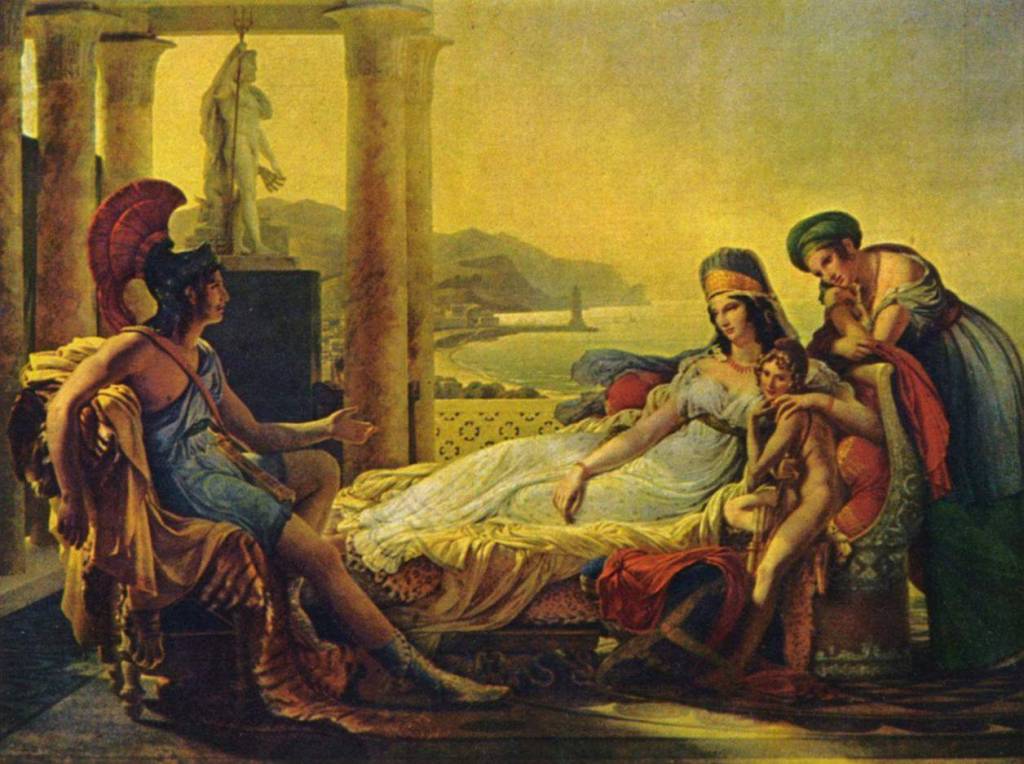 Aeneas tells Dido the misfortunes of the Trojan ci...
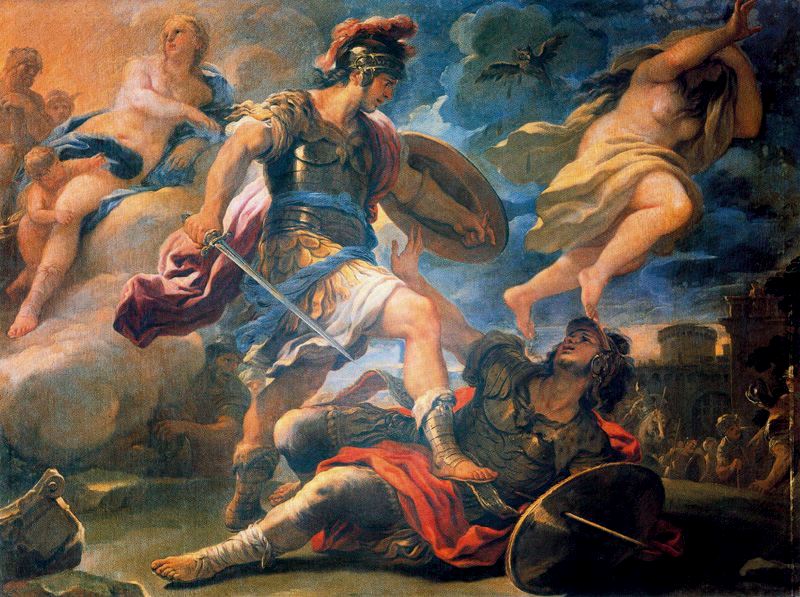 Luca Giordano, Enea vince Turno, Olio su tela, 176...
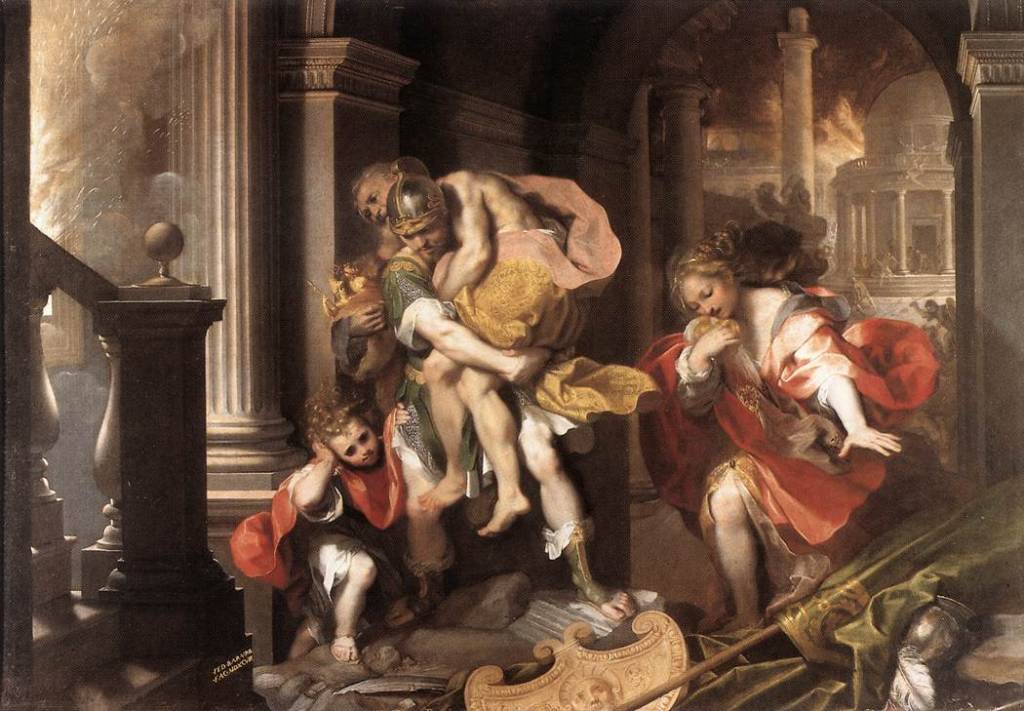 Aeneas, whom the Romans believed Romulus and Remus...
At the end of the battle, Aeneas throws his spear, which pierces Turnus' shield and passes through his thigh. He's brought to his knees, powerless to fight Aeneas any longer and relinquishes Lavinia to Aeneas, pleading for mercy. Here Aeneas can choose Turnus' fate. It is within Aeneas' character to show Turnus mercy and allow him to return to his own land. However, upon seeing the belt of Pallas, one of Turnus' victims, Aeneas chooses to kill Turnus. Virgil specifically gave Aeneas the choice, outside the intensity of battle, as to whether to kill Turnus. Had Virgil wanted to celebrate Aeneas' heroism, he would have written Turnus as killed during the battle between them. Instead, he is killed while at the mercy of Aeneas, opening the situation to criticism.
It is clear that Virgil...