Martin Luther
The reformation began within the Catholic Church .
On Oct. 31, 1517 , Martin Luther a professor and a monk of
theology, posted his 95 Theses on the Castle Church in
Wittenberg, Germany . This theses were series that attacked the
sale of indulgences . Luther criticized what he considered other
abuses in the church . Luther taught that God justifies human
beings . What Luther meant was that God makes them righteous
through His kindness to the people .
In Jan. 1521, Pope leo X excommunicated Luther and
declared him a heretic . Emperor Charles V and the members of
the imperial diet ordered Luther to appear before the diet in the
Worms, Germany .In May 1521 , the emperor signed the Edict of
the Worms , a document which declared Luther to be an outlaw
whom anyone could kill without protest . Frederick the Wise
protected Luther.
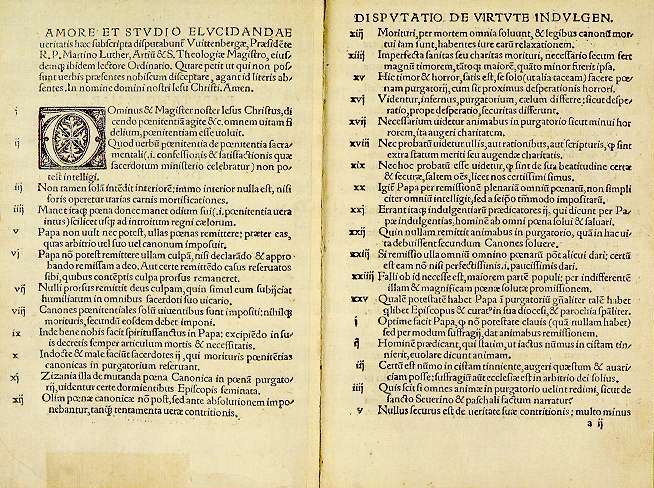 Disputatio pro declaratione virtutis indulgentiaru...
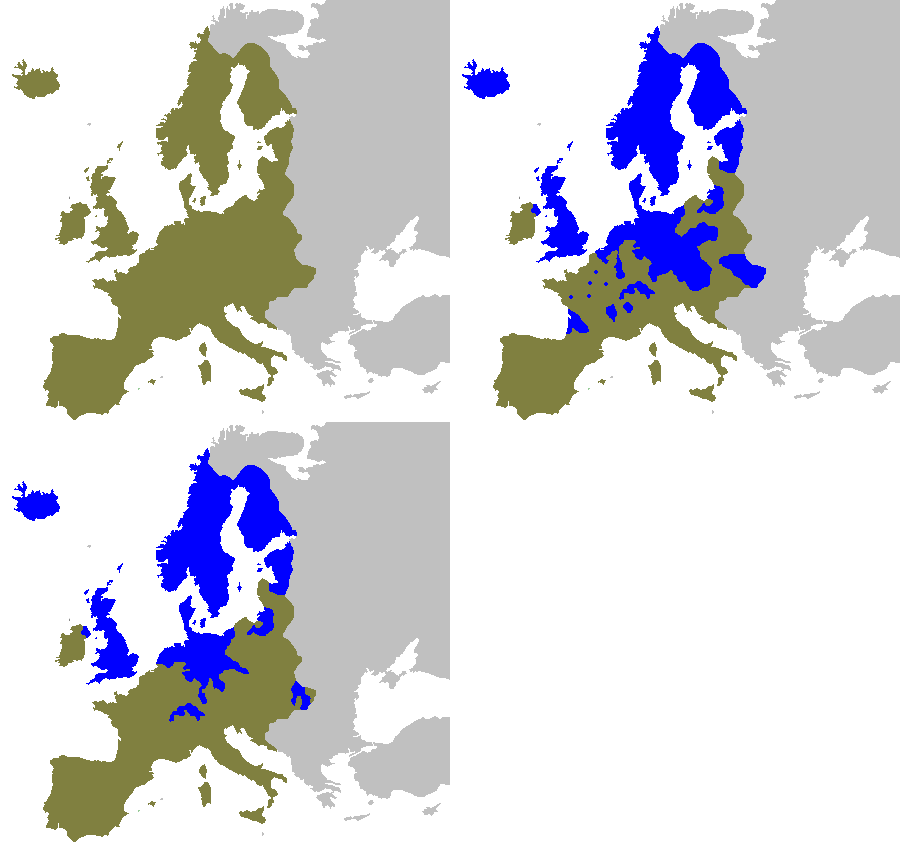 Reformation and Counter Reformation in Europe. Pro...
 Wittenberg All Saints' Church. The "Theses Doors".
Luther continued to the Protestant movement
until his death in 1546.
Reformation
Reformation was a religious movement of the
1500's that led to Protestantism . This movement had an impact
on social, political, and economic life . Before the reformation ,
Europe had been held together by the universalism of the Catholic
Church and the claim of the Holy Roman emperor . After the
reformation Europe had several large Prostant churches and
smaller Protestant religious groups .
From the result of the Reformation ,Europe was divided
btwn the Catholic counties of the south and the Protestant
countries of the north. This diversity of religious life created a
mood of religious toleration and the respect for the importance of
individual conscience . The Reformation also stimulated many
reforms within the Catholic Church .
Martin Luther believed that he can change
something that he believed in . Martin protested some of...