Almost every ancient civilization progressed beside the embankment of the river. One of the foremost immense civilization, Egypt, was the gift of the river, Nile. Its agriculture, economy and government were decreed by the seasons of the river.
To Egypt, the Nile was seen as the fountain of life. Every year, Inundation which occurs between the months of June and October, the great rivers of the Nile rush north, and flood the highlands of Ethiopia. The flooding surges of the land, and leaves behind water for the people, and fertile land, which could be used for agriculture. These floods brought only a thin layer of silt from both a jungle area and also a mountainous area. Not only did the flood bring silt, the soil would be soft and easy to plow. They would plant and harvest in early spring and then allow the fields to lay until July when the floods would come again.
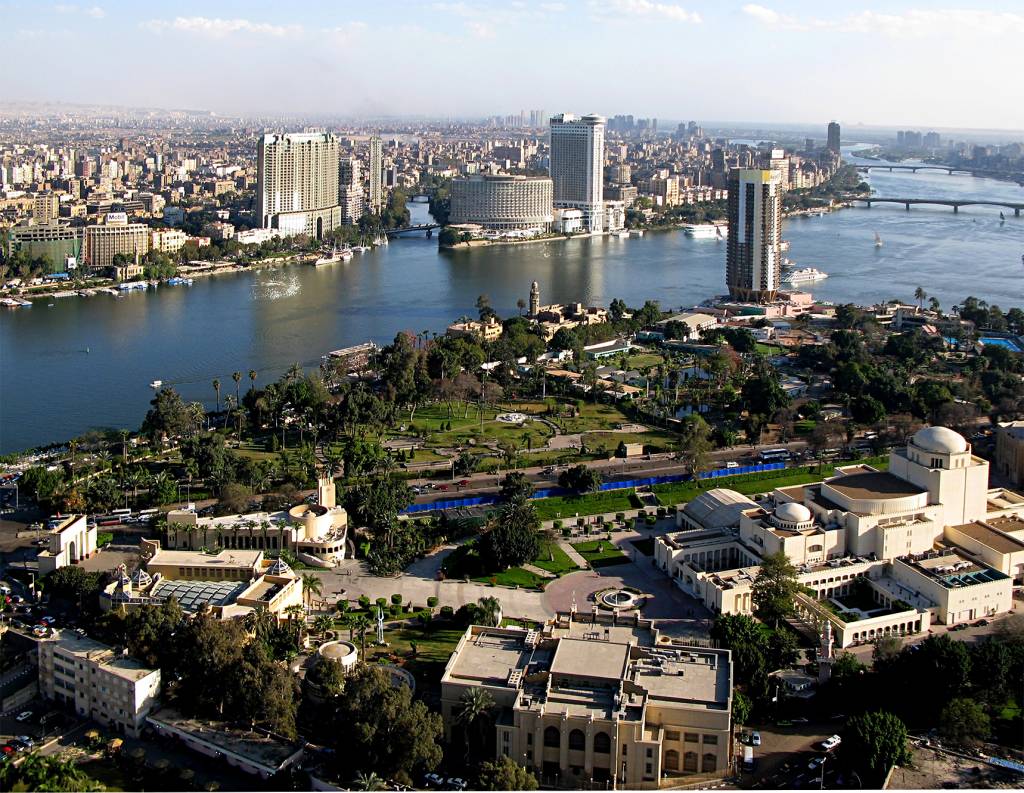 English: View from Cairo Tower
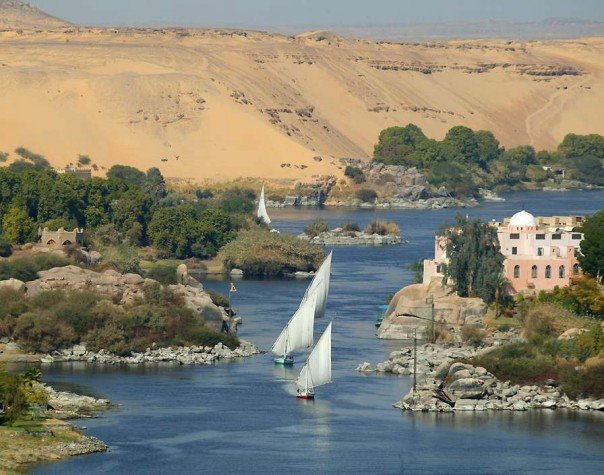 English: The Nile River in Egypt.
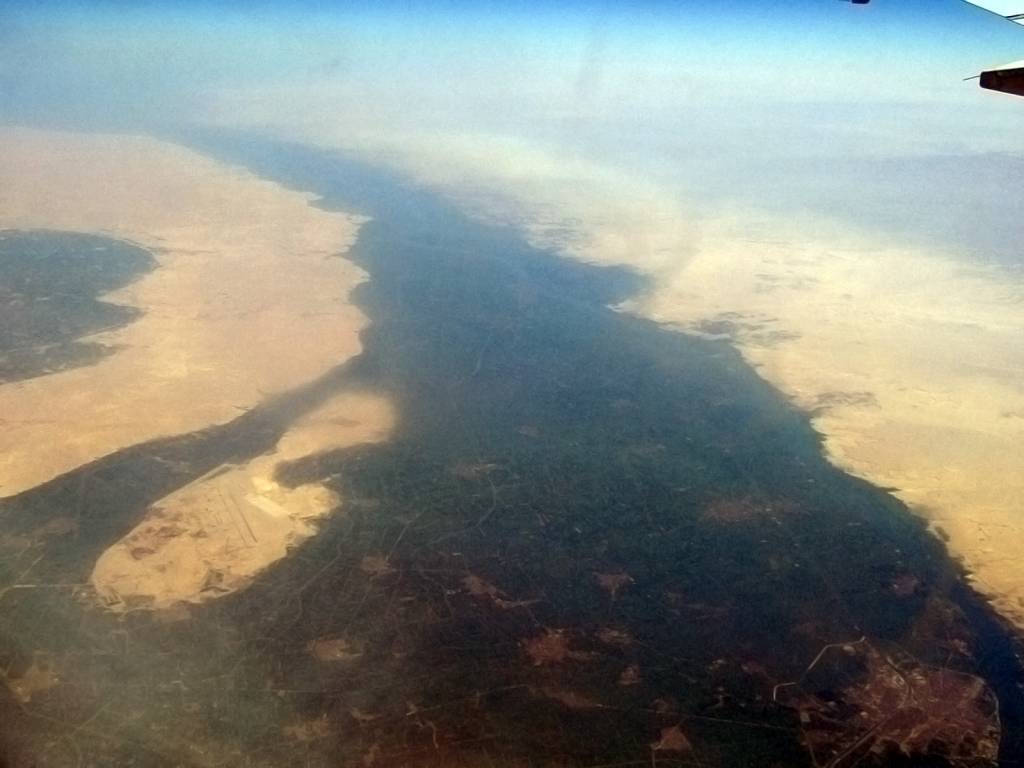 Vegetation along the Nile. You can see the river n...
The Nile also affected a variation on the political system and authority in Egypt. Since the floods caused commotion every year, the country needed a leader that was capable of enforcing of the farmings and methods used, such as the stockpile of the water and the stocking of the food harvested. Secondly, only a intensely organized government could manage the economy properly. To the Egyptians advantage, they lived in a impartially isolated area, which would aid them in their development of a government.
The great river was almost unconditionally accountable for Egypt's economy. It fed the people and, except for the gold mined in the eastern desert and Nubia, it furnished most of the wealth. It determined all real estate values because the land was divided into the areas that received the benefits of flooding, that which sometimes did and that which never did, and taxes would be assessed accordingly. Grain was the leading product, and the Nile gave so bountiful a yield that when the country was well administered Egypt was always in a position to export it. Along the banks of the Nile, and especially in the swamps of the Delta, there grew in profusion the tall reed called papyrus which was used as an excellent type of paper.
Consequently Egypt was the gift of the Nile river. It provided agriculture, effected a more appropriate government, and determined the real estate values and the economy in Egypt.
Without the Nile river, Egypt would not be the country as we see it today.
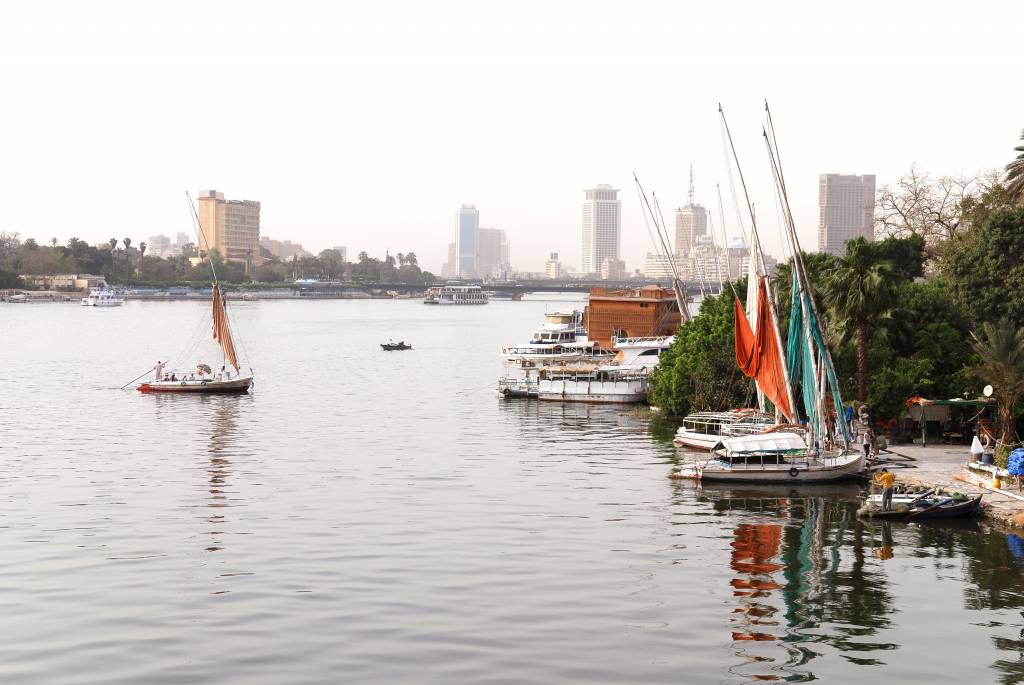 English: The Nile River as it flows through the ci...
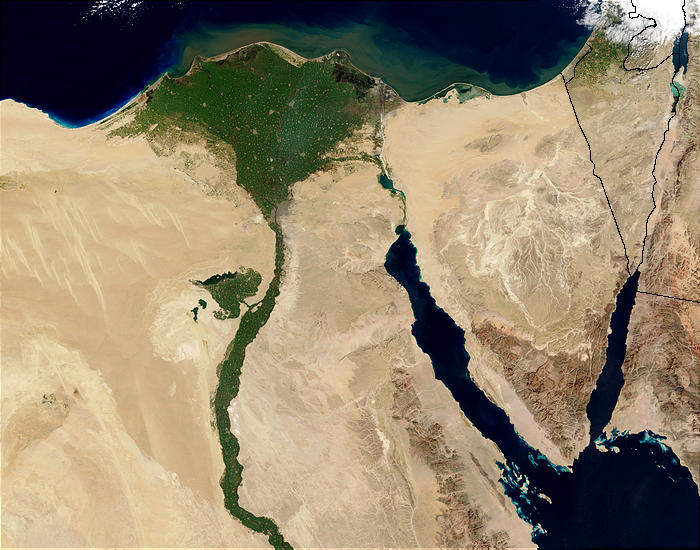 An enlargeable satellite image of the lower Nile R...
 NASA image of Nile Delta, taken by MISR instrument...