The Hawk's Secret Power.
The poem "Hawk Roosting", by Ted Hughes, reveals much just by the title. We know that the poem will be about a hawk which is roosting. The word "roost" here has two different meanings. We know by the first meaning that the hawk will settle down for rest or sleep, and by the second that it will be in charge or will dominate. This hypothesis is confirmed when we read the whole poem. The language of the poem seems to come from a cultivated person, as if the hawk had a great deal of wisdom and knowledge, as if it had always been there.
The first stanza reveals that the hawk is asleep on top of the high trees. We see the world through the thoughts of the hawk because the author lets it express them as if the hawk is a person. The expression "perfect kill" (Hughes 347) already tells the reader how the hawk believes in its superiority and reveals to the reader its arrogance.
 Hughes Stadium
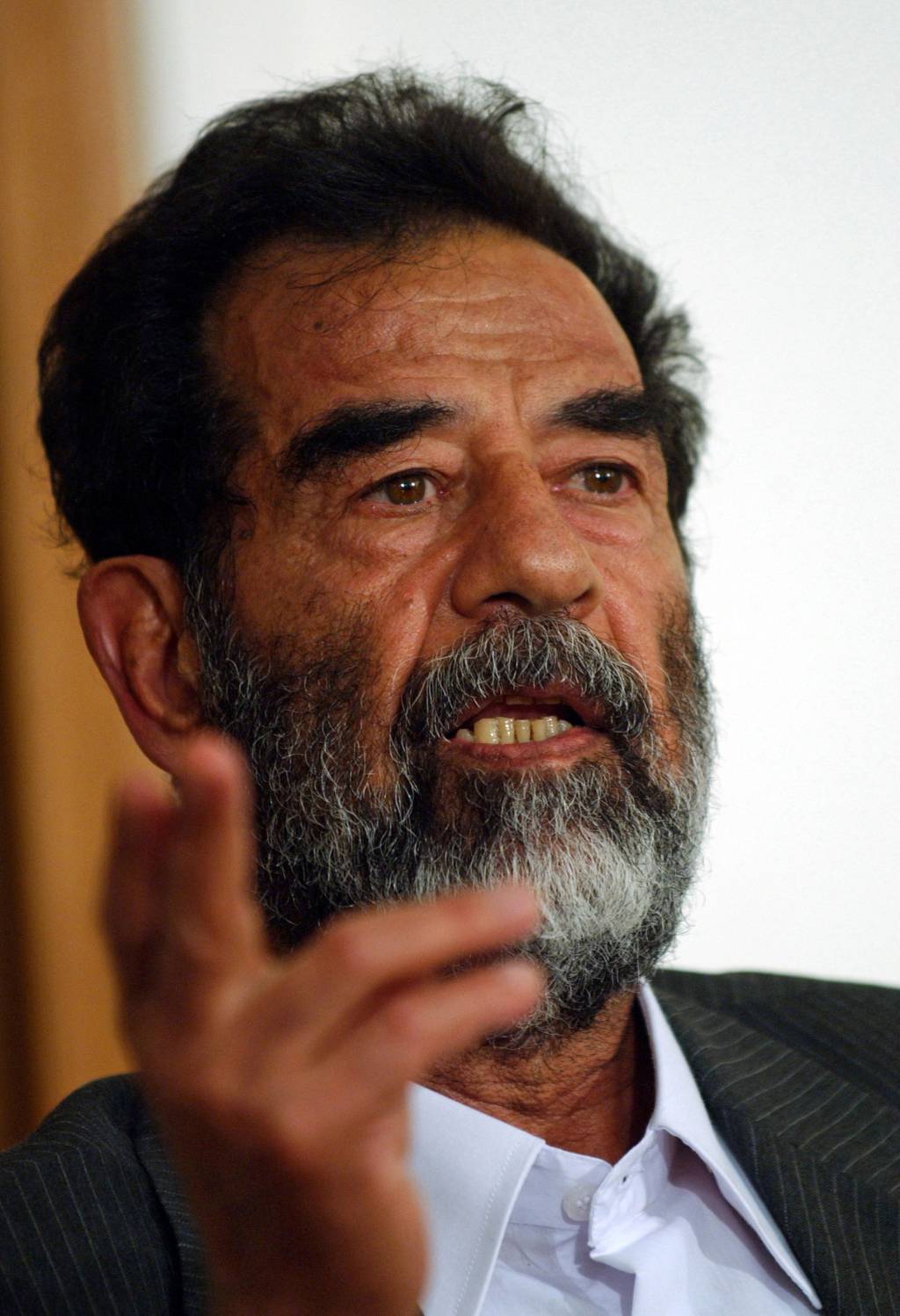 English: Former President of Iraq, Saddam Hussein,...
 Naval officers standing with William Morris Hughes
In the second stanza the hawk's belief of superiority is pushed even a little further. It believes that everything is like this because they (" The air's buoyancy and the sun's ray"(Hughes 347) )"are of advantage to [it]" (Hughes 347). In other words the hawk thinks that the world was created to serve him. The author even tells us that the earth faces the hawk for its inspection, which puts emphasis on the hawk's superiority.
The hawk says that it is a complex being when it says in stanza 3 : "It took the whole of Creation/ To produce my foot, my each feather" (Hughes 347). The arrogance and the feeling of superiority of the hawk are pushed to the highest level possible when he seems to say that he is God : "Now I hold Creation in my foot" (Hughes 347).
The idea that the hawk is God is reinforced in the fourth stanza when the hawk says :
" I kill where I please because it is all mine" (Hughes 347).
In the last stanza the hawk says that "The sun is behind [it]" (Hughes 348). We can therefore deduce that the sun is behind him for real but it can also mean that the sun is with him, that the sun approves what the hawk does and thinks. In the second verse the hawk says : "Nothing has changed since I began" (Hughes 348), which gives the impression of time. It makes the reader feel the hawk has always been there looking at the face of the earth. Then, the last two lines of the last stanza come back with the idea of domination or control : "My eye has permitted no change/I am going to keep things like this" (Hughes).
The way the hawk thinks and acts surely reveals a certain irony or analogy to the western way of thinking. The hawk thinks he is the most perfect thing that has been created : "It took the whole of Creation/ To produce my foot, my each feather" (Hughes 347). The hawk can also be seen as something powerful in itself but not powerful enough to take over the world; somehow like a cancer cell. If the hawk could multiply itself, then they could kill anything that stands in their way, and take over the world. If we admit that the hawk secretly rules the world it can be seen as someone who has influence on everybody. In this case we could substitute the hawk for Usama Bin Laden, Saddam Hussein or, even worse, George W. Bush.
In conclusion, this poem is a very good poem because, no matter where you are, at which time you live or under which political situation you are, you will always be able to refer to the hawk as someone well-known, to a plague or to something else that makes sense to you.
653 words
Work Cited
Hughes, Ted. "Hawk Roosting." The Harbrace Anthology of Poetry. 3rd ed. Ed. Jon C. Scott, Raymond E. Jones and Rick Bowers. Toronto: Harbrace, 2002. 347.
 Hughes OH-6A Cayuse
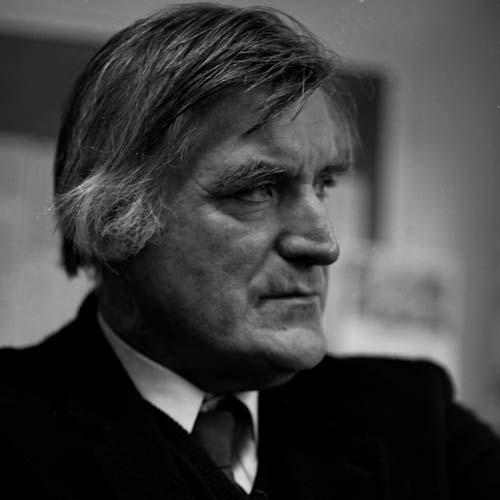 A portrait of Ted hughes by Rob Lycett. Date: Marc...
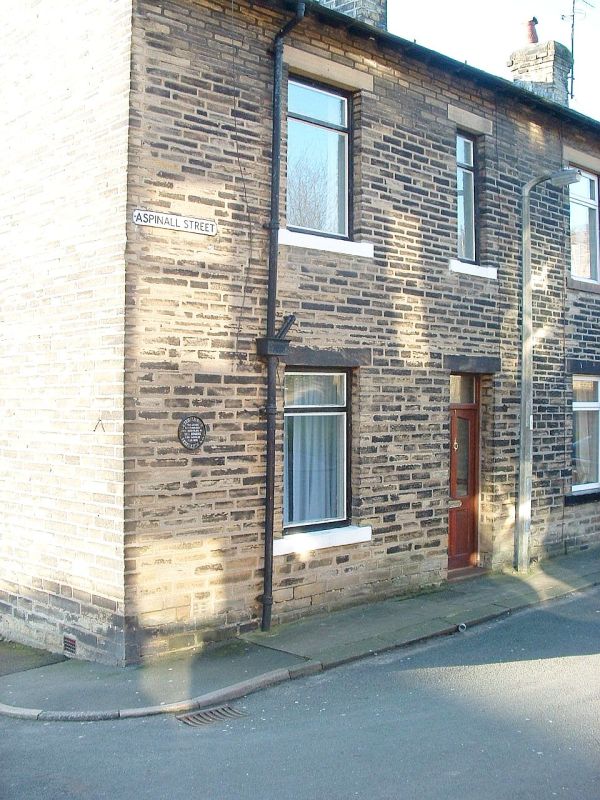 Hughes' birthplace at 1, Aspinall Street, Mytholmr...