History of Ostriches and The Australian Industry
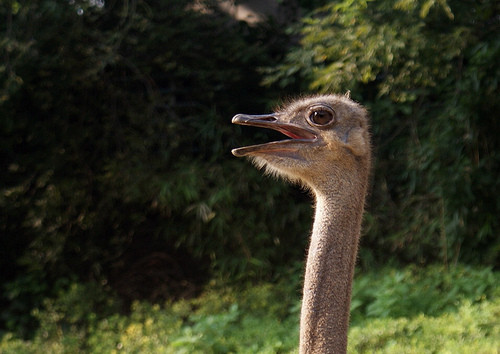
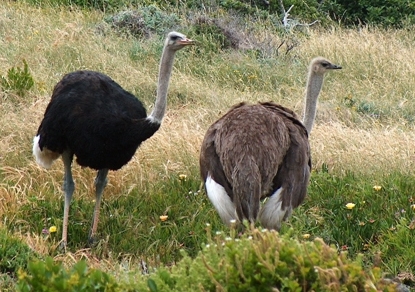
Ostriches have been valued for their feather production for several thousands of years. The Natural home of the ostrich is the dry, arid plains of Africa. But these birds can now also be found throughout the Middle East and Australia.
Over hunting lead to ostriches becoming an endangered and in 1870 people began to turn to a new way of saving them, domestication. The first ostrich farms had been established in South Africa in 1863 and a few decades later the ostriches were imported to Australia.
In 1881 the first Australian ostrich farm was established near Gawler in South Australia and in 1882 the South Australian Government began to encourage the industry by offering leasehold on the condition that increasing numbers of ostriches were kept on the land, at least 50 birds for every 1000 acres.
In 1905, ostrich farming began in NSW with six pairs of bird purchased from the South Australian Ostrich Company and by 1913 the ostriches in NSW numbered 550.
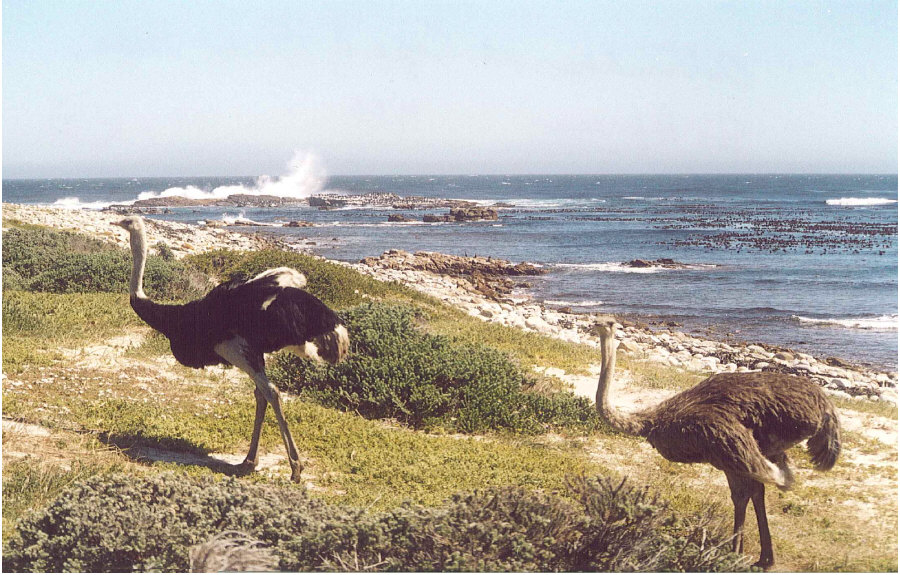
However, the international feather trade collapsed in the depression and the Australian industry died out. Most of the birds were slaughtered or released into the wild.
During the drought in 1982-83 the numbers of birds remaining in South Australia declined. But by this time some of these birds had been taken back onto farms and wildlife and the number of domesticated ostriches began increasing.
The Ostrich industry has spread throughout Australia but its largest concentration is in central Victoria and southern NSW.
The Current Production areas of ostriches in the black parts of this map
Unlike South Africa, Australian ostrich farms are scattered all over the country. Although this demonstrates the ability of the ostrich to adapt to diverse climatic conditions, it raises difficulty processing in the future. Also...
More Agriculture
essays:
Discuss the negative and positive aspects of the development of agriculture. Was it, or was it not the worst mistake in the history of the human race?
... each day. Therefore, there can be no kings and no landlords. Farming may have encouraged inequality between the sexes as well. Mobile hunter- ... clean, healthy living space. Human beings can share many diseases with domestic animals; therefore the clustering of both humans and animals together in ...
"A Study On Agriculture Systems" A study of four typical agricultural systems, with example. focused on the efficiency and feasibilities. Report format with sub-sections, not really an essay.
... at an average of over 1,104,000 litres per farm is the highest in Australia. Livestock in ranch often find their own food so the ... and meat. Kenya has one of the most developed dairy industries in Sub-Saharan Africa with an annual milk production of some 2 billion litres ...
Lucerne and its imporatance in Australia
... of Australia. The live cattle export industry, is currently a heavy user of lucerne "cubes", a high density compressed lucerne hay product. Despite very large numbers of live cattle being exported through north Australian ports ...
Aquifer Storage Recovery
... ASR has become the solution and has been implemented in South Australia since the early 1990's. To provide safe water supplies ...
The Green Revolution
... , pars. 3-4). Although very controversial, the Green Revolution transformed farming through improvements such as high yield varieties (HYV's) of ... Lectures, Peace 1951-1970, Ed. Frederick W. Haberman. Elsevier Publishing Company, Amsterdam, 1972. Nobelprize.org. 2005. The Nobel Foundation. 5 Apr ...
Hydroponics
Hydroponics is the growing of plants without soil. It was developed from the findings of experiments carried out to determine what substances make plants grow and the composition of plants. This dates back as early as the 1600s. Plants were being grown in a soil less culture far earlier than this. ...
Hydroponics
this is a science experiment which can be duplicated!!!!! He gave me an A on the display.... Introduction NAME HERE and I became fascinated by hydroponics and the idea that one doesn't have to get their hands dirty to be a great gardener, and if your like us that's a good thing. The ...
"Spearmint". An essay all about spearmint its benefits, scientific info, scientific name, all you need to know about spearmint.
There are about 3500 kinds of mint in the mint family. As well as the various commonly-known mints, the mint family also includes thyme, sages, lavender, marjoram, oregano, rosemary, savory, hyssops, basil, catnip, betony, horehound and many other herbs that are important in cooking and herbal ...