Organic Food --Did you just put fertilizer in your Mouth?
Did You Just Put Pesticide Or Fertilizer In Your Mouth?
Pesticides are poisons, designed to kill living things. Over the last many years, farming across the country has become increasingly dependent on pesticides, fertilizers, and hormones. While using these items contribute to increasing yields, they cannot possibly be good on the environment let alone on human health. Thousands of farmers have switched to organic growing methods with the support of consumers that are conscious of protecting their bodies and nature.
The United States Department of Agriculture defines organic foods as
"Production of organic foods does not use pesticides, antibiotics, synthetic (or sewage based) fertilizers or radiation. Organic emphasizes the utilization of renewable resources as well as conservation of land and water."
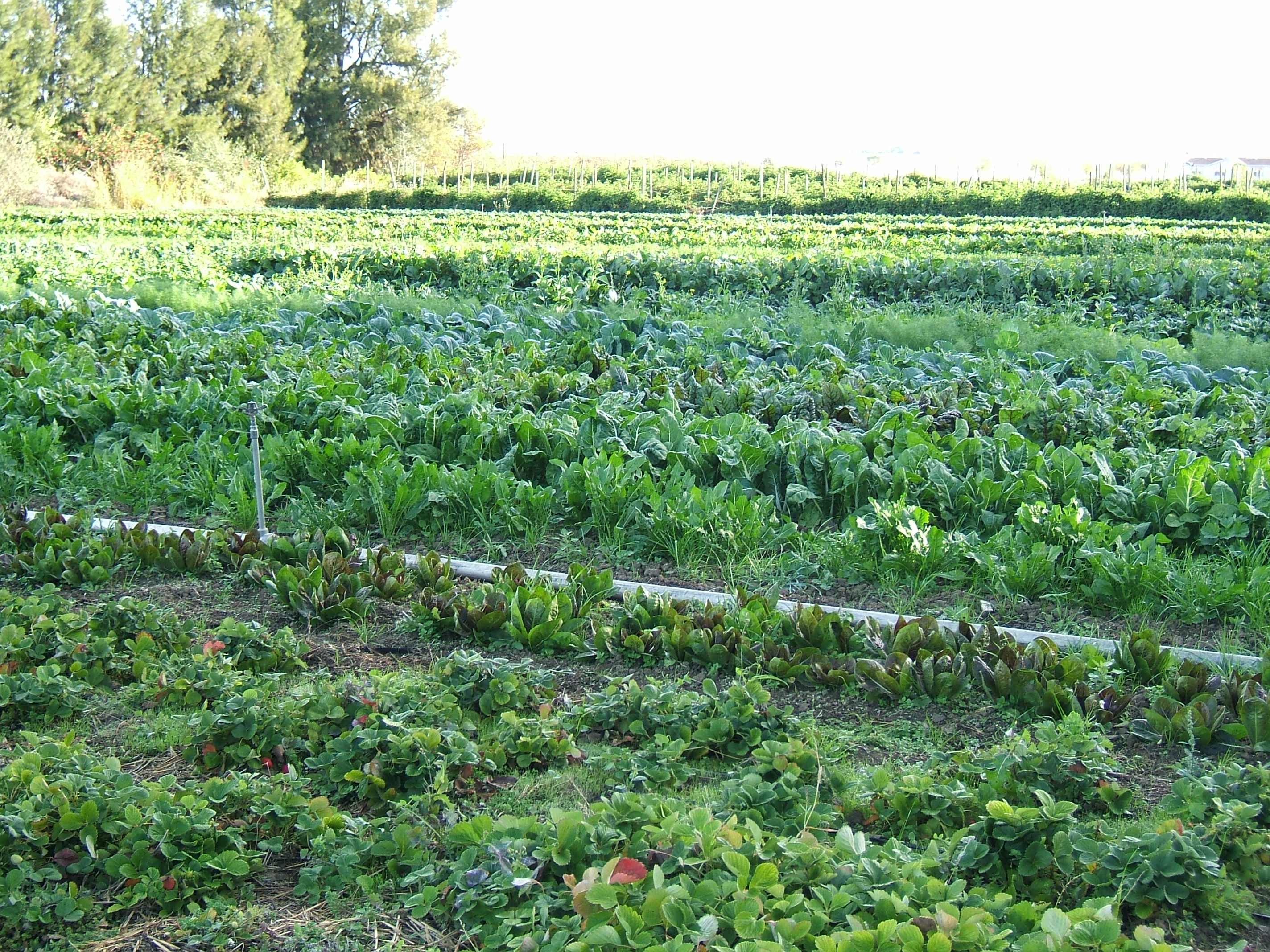
Increasing concerns about food safety and the fact that most processed foods contain genetically modified products is causing organics to rise in popularity. Organically grown foods mean that these foods have been grown on land that is absent of any chemicals for a minimum of three years. The crops are grown without the use of pesticides or any chemicals whatsoever. Organic foods are processed and packaged without the use of artificial preservatives, colorings, irradiation or any other additives. Animal products certified as organic must come from livestock that has had access to the outdoors, has not been treated with hormones or antibiotics, and has been feed only organic food.
In October 2002, the United States Department of Agriculture put in place a national system for labeling organic food. Foods that consist of at least ninety five percent organic ingredients can carry the USDA's organic seal. Foods that are made of at least seventy percent organic can carry a label with the phrase "Made with Organic Ingredients."
The cost of organic food tends to be a little bit higher than...
Reviews of: "Organic Food --Did you just put fertilizer in your Mouth?"
:
This is a great essay that explains many important things regrading pesticides and organic produce.
More Agriculture
essays:
Genetically Modified Food
... lot of food that we eat today contains genetically modified ingredients and usually without even noticing ourself. This all turns down because of pesticide, added impurities used to kill pests, diseases, especially insects which are on the land or ...
Agricultural Bioengineering
... problems, agricultural bioengineering should be completely legalized in all countries. Various engineered foods should be regarded by health departments as a normal food and should be judged as one, as is done in the United States. Also, in order to ensure ...
Social and Environmental Ramifications of Modern Farming Practices and Changing Trends towards Sustainable Farming Practices
... aim to produce food that is nutritious, without being contaminated with products that might harm human health. Organic farming consists of production of foods without using chemicals, synthetic pesticides and these foods are not derived through genetic engineering. The fertility ...
"A Study On Agriculture Systems" A study of four typical agricultural systems, with example. focused on the efficiency and feasibilities. Report format with sub-sections, not really an essay.
... form of agriculture activity. Although many herders gather as tribes, there is no scale in such operations. Nomadic pastoralists often own no land but migrate extensively in search of water and pasture ...
This essay explores the statement "The Agricultural Revolution in Britain was economically essential and socially undesirable." seeking truths and arguments against the statement.
... able to afford land and having to work in the city), and could give them a cheap wage, because prices of food were low, (the links between Agriculture and Industry ...
Food security- the world important issue
... natural resources most essential to agricultural production--arable land and fresh water--are becoming degraded and polluted. Unless steps are taken soon to reverse this course, the risks of irreversible damage to the resource base ...
The Green Revolution
... able to kill most parasites. In addition to the effectiveness of the bacteria, this innovation was also very useful because it was virtually harmless to other species including humans. Hence, agriculture became much safer as minimal amounts of specific pesticides were ...
Aquifer Storage Recovery
... needed to ensure success and water availability. Failure to understand these concepts of ASR can result in lost investment and disappointment. (Pyne, D 2001) 3.2.2 Where Is ASR? ASR systems are operating in the United States, United Kingdom ...
Good Research
This is a good essay. Thank you for including your bibliography. I am doing a powerpoint on this topic, and am going to use your source <http://lookwayup.com/free/organic.htm>. Great job!
0 out of 0 people found this comment useful.