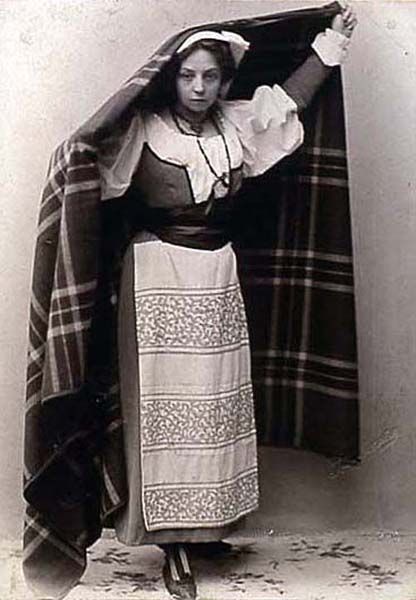
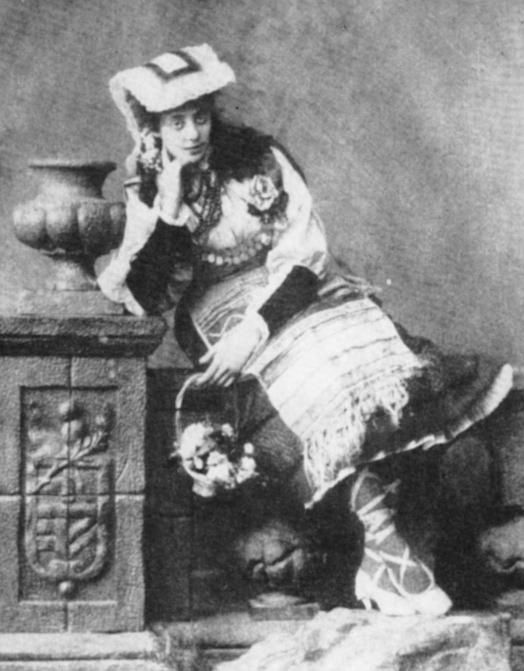
Ibsens "Doll House"
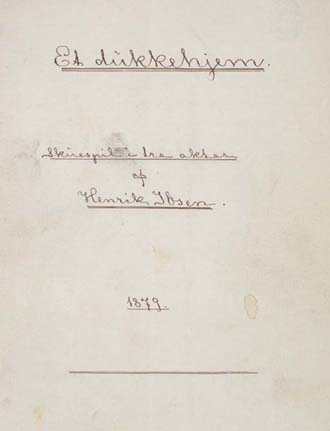
'A Doll's House' is classified under the 'second phase' of Henrik
Ibsen's career. It was during this period which he made the transition
from mythical and historical dramas to plays dealing with social problems.
It was the first in a series investigating the tensions of family life.
Written during the Victorian era, the controversial play featuring a female
protagonist seeking individuality stirred up more controversy than any of
his other works. In contrast to many dramas of Scandinavia in that time
which depicted the role of women as the comforter, helper, and supporter of
man, 'A Doll's House' introduced woman as having her own purposes and
goals. The heroine, Nora Helmer, progresses during the course of the play
eventually to realize that she must discontinue the role of a doll and seek
out her individuality.
David Thomas describes the initial image of Nora as that of a doll
wife who revels in the thought of luxuries that can now be afforded, who
is become with flirtation, and engages in childlike acts of disobedience
(259). This inferior role from which Nora progressed is extremely
important. Ibsen in his 'A Doll's House' depicts the role of women as
subordinate in order to emphasize the need to reform their role in society.
Definite characteristics of the women's subordinate role in a
relationship are emphasized through Nora's contradicting actions. Her
infatuation with luxuries such as expensive Christmas gifts contradicts her
resourcefulness in scrounging and buying cheap clothing; her defiance of
Torvald by eating forbidden Macaroons contradicts the submission of her
opinions, including the decision of which dance outfit to wear, to her
husband; and Nora's flirtatious nature contradicts her devotion to her
husband. These occurrences emphasize the facets of a relationship in
which women play a dependent role: finance, power, and love. Ibsen
attracts...
Reviews of: "Ibsens "Doll House""
:
this is a good outline, well written and as theman123 said organized, but i agree, more about Noras dealings with truth
More Drama
essays:
A critical look at Ibsen's "A Doll house"
... the Victorian era, the controversial play featuring a female protagonist seeking individuality stirred up more controversy than any of his other works. In contrast to many dramas of Scandinavia in that time which depicted the role of women as the comforter ...
The Origin of Emma and Nora, From Henrik Ibsens "A doll's house" and Gustave Flaubert's "Madame Bovary"
... But controversy was no big deal to Henrik Ibsen. He was quite involved in the political movements of his time. So the characteristics of Nora and ...
How did Henrik Ibsen's work develop in relationship to the conventions of Realist Theatre?
... The role of women is focused upon extravagantly in Ibsen's masterpiece, A Doll's House (1879), the most performed play of all his other works, yet it is also one that had caused a universal controversy. Nora, the protagonist ...
David Williamson. Essay dealing with themes/ideas in Williamson's "The Club" and "The Removalists"
... a luxury you can't afford in a business with a multi-million dollar turnover.' Gerry's pragmatic attitude is perhaps typical of the attitudes which are becoming commonplace in the cutthroat business world of the 1990s. The role of women ...
This is a creative essay regarding a letter written by one of the characters. Prewriting is included.
... between Nora Helmer and Yermolai Alekseyevich was that they both broke free of the ... A second difference was that of gender: While Nora was partially held back due to her gender (women were ...
As a Director, how would you cast and direct the roles of Oberon and Titania to communicate your ideas about the individuals and their relationship?
... number of women followers who devote themselves to her service. Due to the fact that Shakespeare presents the character of Titania as a "light-hearted" fairy queen, the actress playing the role would ...
A Doll's House - Henrik Ibsen Symbolisation through props
... Henrik Ibsens in one of his most revolutionary plays, A Dolls House, filled his set and narrative with symbols that emphasised the idea that above everything, one must be an individual. Doors ...
A dolls house
... to the lacking role of women in society Ibsen manage to do a good job of mocking the ways of life then. Finally ... criticism of the role of the women in society. It was basically a time where the woman could not do anything for herself. An example of this from the book is the loan that Nora took ...
Comment
Well written and organised but i think you could have talked more about Nora dealing with truth
1 out of 1 people found this comment useful.