To the untrained eye there does not seem to be too many variations between the civilian world and the military world besides the evident like uniforms, stricter standards of living, and traveling. However, to the trained eye one huge difference stands out. That difference is mutual respect. The fact that mutual respect exists, and is demanded is a major difference between the civilian world and the military world. The Army has even come out with an Army Regulation, which is a manual on how to show proper respect and etiquette. The manual covers such things as personal salutes and honors, courtesy visits within the Army, and even Inter Service and Military-Civilian visits all that I think are important things to know as a future officer in the Army.
A salute is defined as "show[ing] respect and recognition to (a military superior) by assuming a prescribed position" by the Merriam-Webster Dictionary.
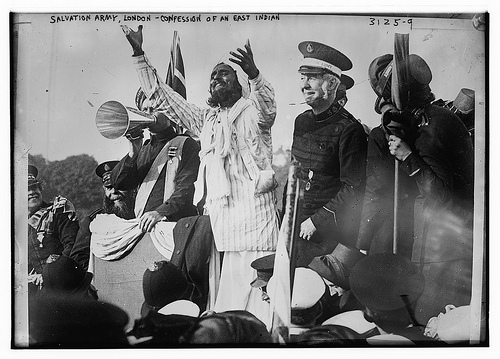 Salvation Army, London -- Confession of an East In...
 A good job in the air cleaner of an army truck, Fo...
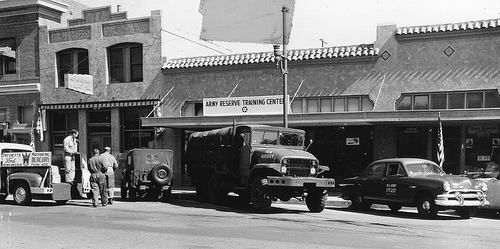 Newman, CA Army Reserve Training Center 2 October ...
The exact origin of the salute is unknown. It is said that the salute began in late Roman times when assassinations were rampant. When the citizens wanted to see a public official, they had to advance toward the official with their right hand raised to show that they did not have a weapon. The showing of the right hand eventually became a symbol of respect. It is also, in some form, used all around the world. Many historians think that the United States military salute derived from the "open hand" British Army salute that is palm down and toward the shoulder.
In the Army, any personnel in uniform are required to salute if they recognize persons entitled to the salute. Persons entitled to the salute include the President of the United States or Commander-in-Chief, Commissioned Officers, Warrant Officers, any Medal of Honor recipient, and Officers of friendly foreign...
Cool essay
I liked this essay a lot. You pointed out the main difference and then elaborated on it. Good stuff man.
0 out of 0 people found this comment useful.