The U. S. has explored the moon since the 1960,s. 'The
Apollo Program' tells why the United States went to the
moon. 'The Apollo Spacecraft' tells ho we got to the
moon. 'The First Lunar Landing' tells about the first
voyage to the moon. This paper will discus the lunar
landing.
The Apollo progam was made to meet the goal set by
John F. Kennedy on May 25, 1961. The goal was to
land a man on the moon and return him to Earth alive
and well.
The program was a succes. There were 11 manned
lunar landings and other test flights totaling 15 manned
flights. Out of all these there was only one major
problem, and no one was injured. There was three
deathes on the lanchpad but none in space.
The Apollo Spacecraft was developed from the work of
two other programs, the Mercury and Gemini Programs.
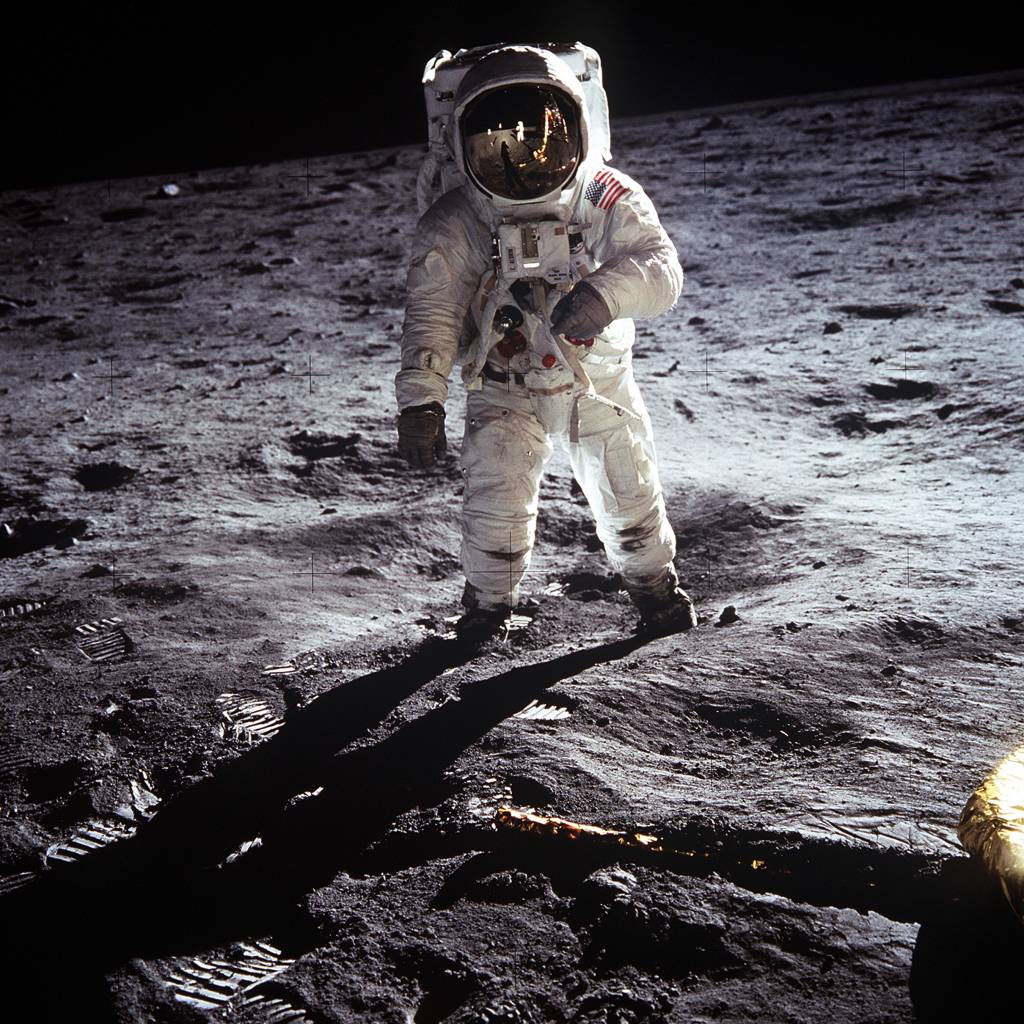 Buzz Aldrin walks on the moon, July 20, 1969
 English: Apollo insignia. Italiano: Stemma del pro...
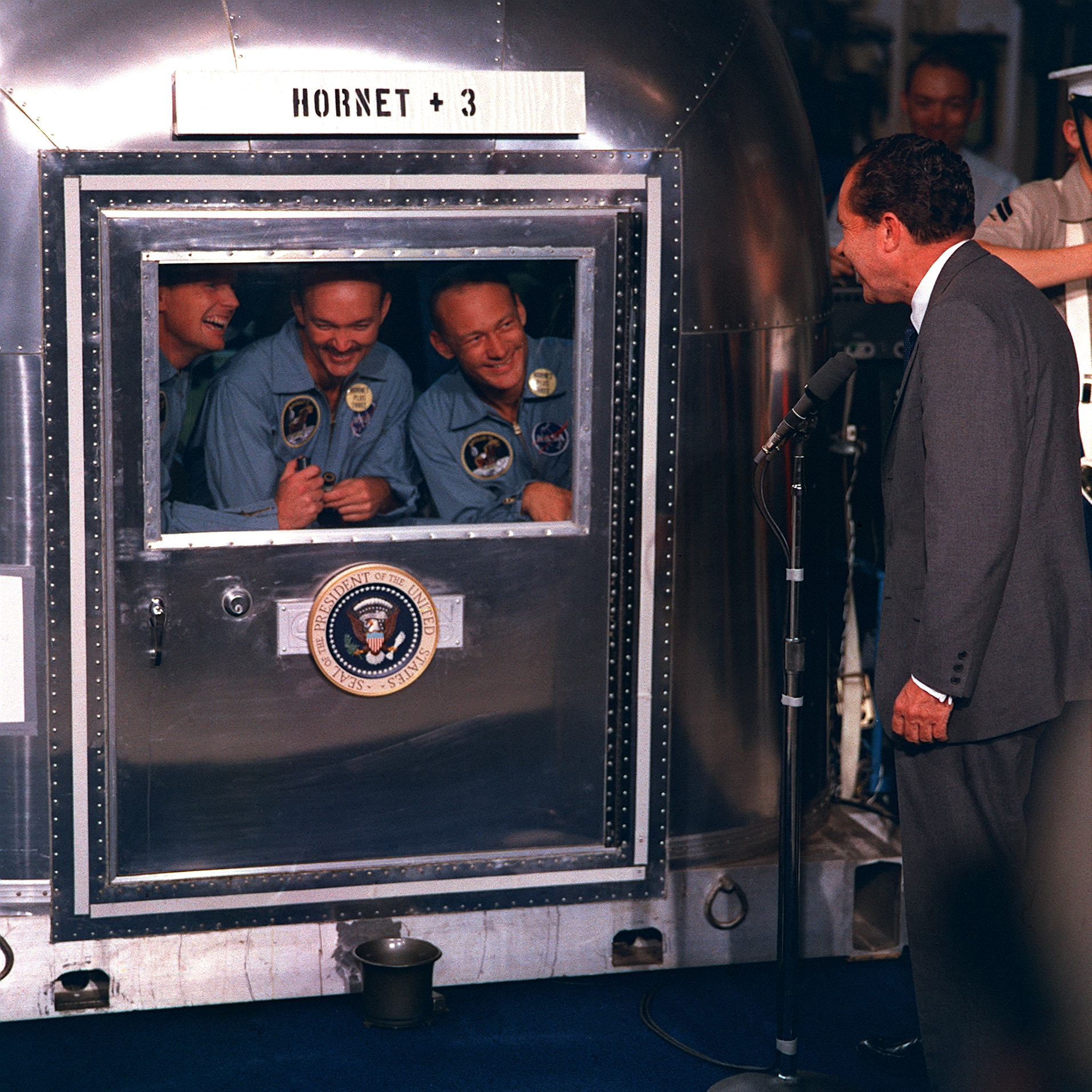 The crew of Apollo 11 in quarantine after returnin...
The actual spacecraft was made of the combined
Command Module and the Service Module also called
the CSM. It was 34ft. long and 10ft. in diameter at the
end. It had a major advantage with its internal guidence
system, that was developed by The Massachusetts
Institute of Technology.
The CSM was made of two parts. The crew stayed in
the Command Module, which had some couches and
was pressurized with oxygen.
Behind the CM was the SM or Service Module which
had the main engine, which had 21,500lb. of thrust.
The reaction control system , oxygen, fuel cells,
hydrogen tanks, and envirnmental control systems. The
main engine was only used for changes in course and
changes in orbit and escape from the lunor orbit.
When the crew came back for reentry the CSM would
split. The Command Module had heat sheilding so it
would not burn-up. When the...
Not very deep
This essay, though it has a lot of what might be considered gramatical errors, is a good overview of some facts about the 1969, Apollo 11 moon landing. However it does not go into much depth, seeming only to list facts straight outa the encyclopedias that it sites as sources. It might be more intersting if more sources were used, there are tons of web sites about NASA and the space program.
5 out of 5 people found this comment useful.