The term Nuclear Reactor means an interaction between two or more Nuclei, Nuclear Particles, or Radiation, possibly causing transformation of the nuclear type; includes, for example, fission, capture, elastic container. Reactor means the core and its immediate container. Nuclear Reactors are used to produce electricity . The numbers of Nuclear Reactor plants have grown sufficiently . Electricity is being generated in a number of ways, it can be generated by using Thermal Power. It can be employed by using two basic systems a Steam Supply System and an Electricity Generating System these two systems are related to each other. The Steam Supply System produces steam from boiling water by the burning of coals and the Electricity Generating System produces electricity by steam turning turbines. The Nuclear power plants of this century depend on a particular type of Nuclear Reaction, Fission (The splitting of a heavy nucleus like the uranium atom to form two lighter "fission !
fragments" as well as less massive particles as the Neutrons).
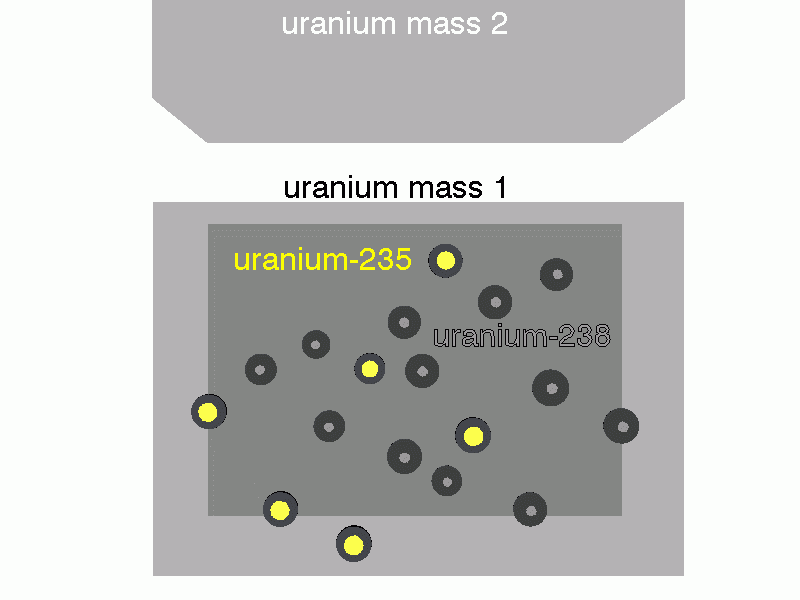 English: Animation showing the fission of U-235 at...
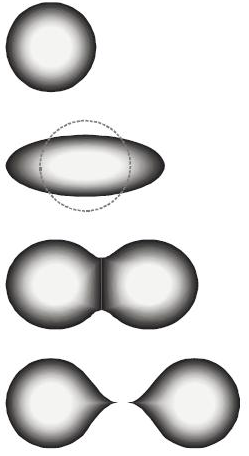 English: Stages of nuclear fission (liquid drop mo...
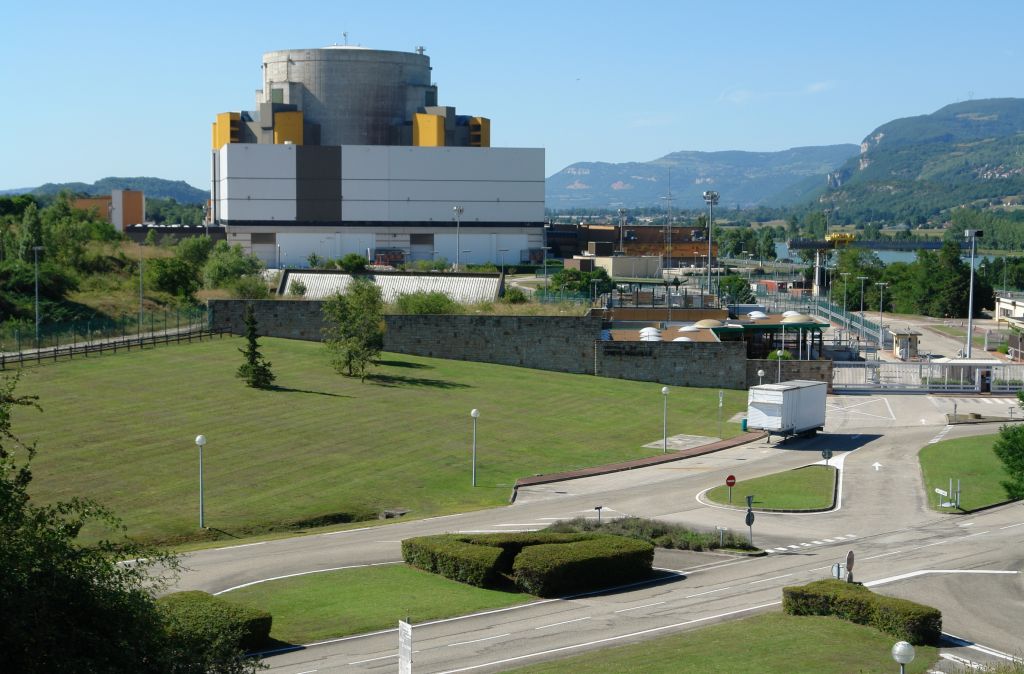 Superphenix, Nuclear power plant of Creys-Malville...
In the Nuclear Reactors this splitting is induced by the interaction of a neutron with a fissionable nucleus. Under suitable conditions, a "chain" reaction of fission in which events may be sustained. The energy released from the fission reactions provide heat, part of which is ultimately converted into electricity. In the present day Nuclear power plants, this heat is removed from the Nuclear fuel by water that is pumped past rods containing fuel. The basic feature of the nuclear reactor is the release of a large amount of energy from each fission event that occurs in the nuclear reactors core. On the average, a fission event releases about 200 million electron volts of energy. a typical chemical reaction, on the other hand releases about one electron volt. The difference, roughly a factor...