Optical networks are high-capacity telecommunications networks based on optical technologies and components that provide routing, grooming, and restoration at the wavelength level as well as wavelength-based services.
As networks face increasing bandwidth demand and diminishing fiber availability, network providers are moving towards a crucial milestone in network evolution: the optical network. An optical network can transmit any information you can imagine -- phone calls, videos, music, live TV transmissions.
All of these sources of information can be transmitted over long distances by regular electrical signals traveling over copper cables. The key to an optical network compared with an electrical network is that the amount of information that can be transferred is increased. Today with the great amount of information that needs to be transmitted across and between countries, optical networks are by far the most cost-effective solution. Modern networks can transmit 10 Gbit/s from one single laser -- 10 Gigabits per second, which is 10 billion flashes per second.
 Exploring the light: optical fibers lamp
 Optical fiber core
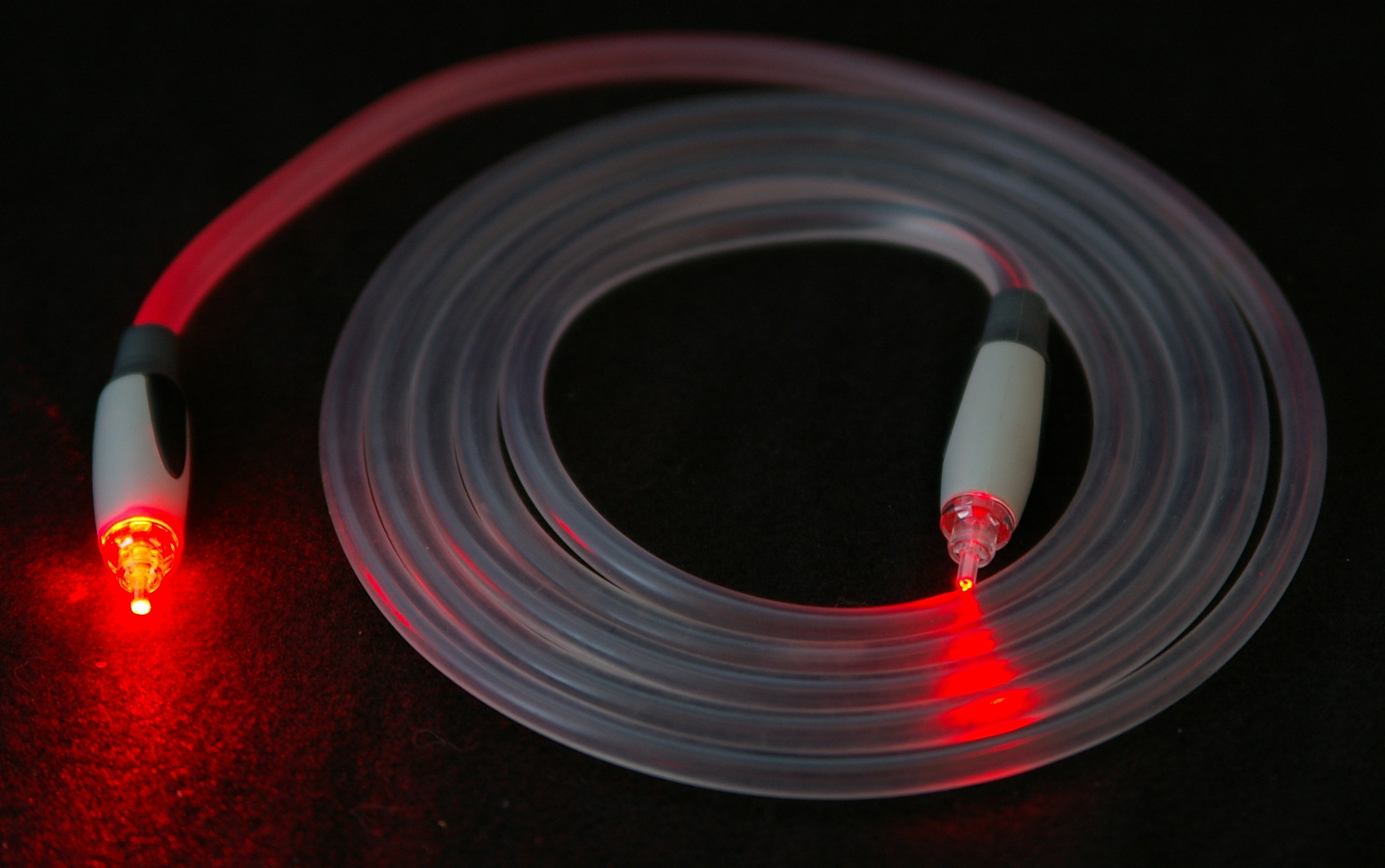 English: A TOSLINK fiber optic cable with a clear ...
To put this into context, you could send the text of more than 1000 books in just one second.
There are numerous advantages and disadvantages to using fiber optics in networking. For example, compared to copper wire, fiber optic media is smaller in size and lighter. Also, since the fiber use light pulses in place of electric pulses, they are not subject to electromagnetic interference, radio frequency, or voltage surges. The use of light pulses instead of electric pulses prevents most fire hazards. Optical fibers reduce signal loss and do not require as man boosting devices. Fiber optics has larger bandwidths, too.
Nevertheless, there are some disadvantages of using fiber optics, such as its incompatibility with the electronic hardware of today. Conversion points are created to change the light pulses into electrical pulses; and, therefore, much of the speed that...