Rationalism, Empiricism, Dialectic materialism
Empiricism's definition is knowledge and truth are products of sensory experiences and not of purely mental operations. This word is derived from the Greek word empeiria, meaning "experience. With this definition we can conclude and knowledge of empiricism, we can conclude that empiricism consists of two statements: analytic statements and synthetic statements. Analytic statements are statements that attribute a property to something, and with that, the property is already implicit in the definition of that object or concept. An example of an analytic statement would be if the statement "Smith is a bachelor" was given to you. The sentence "Smith is a bachelor" means that Smith is unmarried. So if anyone were to ask you, what is a bachelor, with that sentence, you would know that it would mean that a bachelor is an unmarried man. Looking at this concept would be considered to not moving "outside" of the box. But on the other hand, synthetic statements are the exact opposite of analytic statements. They attribute a property to something and that property goes beyond what is contained within the definition of the object of concept involved. A simpler version of this definition would be that synthetic statements add something to the concept at issue. Basically, they move "outside" the box. For example, saying that a page is white, it would be synthetic because if you were to examine a definition of the concept "page," you would not find the idea "white". "Page" suggests "material which can take writing," "flat surface," "part of a book or let," and so on. All these conclusions are what make a statement synthetic.
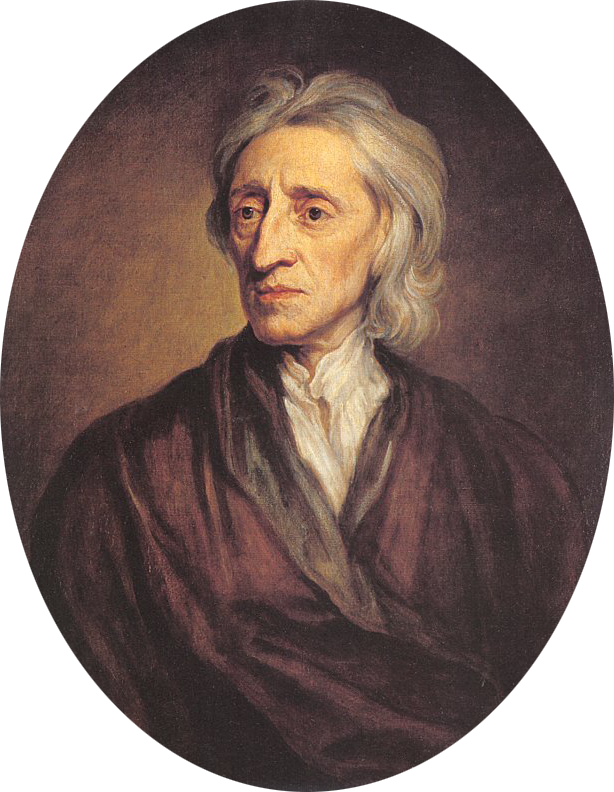
An empiricist philosopher that would be against rationalism would be John Locke. He is a British Empiricist who rejects the notions that the mind can encounter nonsubstantial, universal essences and that...
More Contemporary Philosophy
essays:
To understand something you need to rely on your own experience and culture. Does this mean that it is impossible to have objective knowledge?
... and Empiricism which concerns our dependence on sense experience in our attempt to gain knowledge. Empiricism is ... because the concept of Ethics does not exist physically but mentally where the mere existence of Ethical knowledge is in the ...
Plato's theory of ideas-the history of philosophy.
... itself. Thus, dialectic the key, the dialectician is the expert. Greek word literally means to converse, to discuss. According to Plato, the ... the closest to the ideas, much closer than the common man led by senses and experience. To repeat the ability of the mathematical soul - her ability ...
Is It Possible? An Examination of Adeimantus' Reply in Plato's "Republic"
... is not exactly an apology but more literally it comes from the Greek word "apologia" which translated means a defense. In The Apology Socrates ... provides a perfect image in describing the concerns of the common man towards Socrates individually and philosopher kings in general. "Like the unskilled, ...
Does Plato succeed in demonstrating that philosophers make the best rulers?
... they are older and their minds begin to mature, their mental training can be intensified." (498 b) During the first states ... life in general. When slightly older, they follow the conventional Greek education, with the study of music and a physical training ...
An Analysis of The Republic
... argued that there is evidence of this in our everyday experience. When faced with choices about what to do, we commonly ... any other class, the entire city as a whole will operate smoothly, showing the harmony that is genuine justice. (ln 433e ...
Th Doctrine of Double Effect: Consequentialism
... she is to be saved. This will, given the limits of available medical technology, kill the fetus. But if no operation is performed the mother will eventually die after giving birth to a healthy infant. (Darwell 195) In the above case ...
PLATO: His Biography and Works
... sense experience, because he thinks that empiricism depends solely on probability. In other words, objects of sense experience are ... structured to produce philosopher-kings.(HC) Plato associates the traditional Greek virtues with the class structure of the ideal state. Temperance ...
"The kind of knowledge Plato has in mind in his theory of forms is not the kind of knowledge needed to rule a city".
... and of course, the philosopher rulers. The lower class does not partake in politics because they are not mentally able. In other words, they do not understand the concept of the forms. Thus, it is better to allow the philosophers, who ... each class (Horowitz). It appears that the only classes that are allowed to participate in government are the auxiliaries and of course, the philosopher rulers. The lower class does not partake in politics because they are not mentally able. In other ...