Research Paper on Cloning
We have seen comic material in the movies and on television. The entertainment industry usually shows it in a humorous situation such as Danny Devito and Arnold Schwannager as genetically engineered twins while Michael Keaton was duplicated to make his life easier. Cloning is only achieved after intensive research and experimentation where as in the movies; it is made out to be as easy as 1, 2, 3. Even though animal and human cloning has only been announced recently to the public, it has been around for the many decades, and is very beneficial to our future generations.
In 1938, a German scientist by the name of Hans Spemann came to the conclusion that organisms can, in fact, be reproduced. His belief was that by transplanting the central element of one animal's cell into the egg of another animal, the animal could be reproduced, or "cloned".
 Clone Trooper vs. Spider-Man Clone (93/365)
 Human Cloning Raëlian
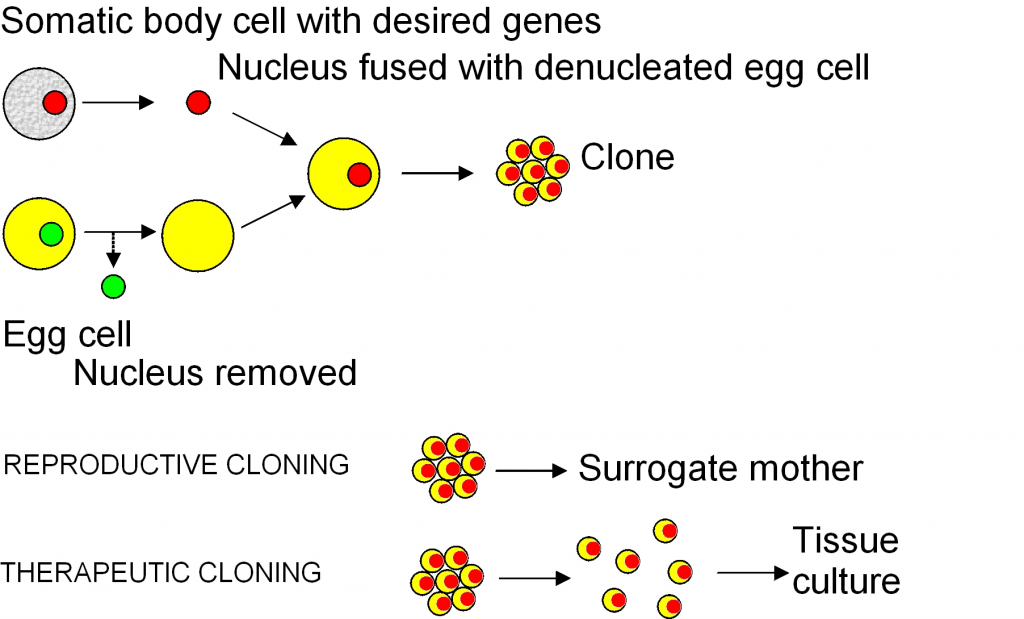 en: Reproductive and therapeutic cloning english d...
Dr. Spemann believed that the central element or "nucleus" of a cell contained the genetic blueprint for the structure of the organism. He was awarded the Nobel Prize in 1935 for his discovery of what he called the "organizer effect" ("Bio of Hans"). After Spemenn's discovery, there were two other tries to replicate what he did. The first was in 1952, when American scientists tried by infusing the nucleus of a frog's embryo into a frog egg, but this attempt resulted in failure. In 1970, a British scientist repeated the same experiment. This attempt resulted in the development of some specimens, which died after reaching the tadpole stage. Over time, there have been many claims to cloning, but have all turned up as either frauds or they produced organisms that have died after a few days (Plutonium).
There have been cases of cloning of several types of animals beginning in...
Very Good Essay
Every Second reading this essay was interesting.. Cloning is a very controversial subject, & it brings alot to light.
Though you didnt state how Human Clones are created.. is it the same way Dolly (roslin 1) was created, or not?
The Cited work is great cuz the reader can look up any Un-Anwswered Question.
The Conclusion is great.. Especially the Mentioning of Christopher reeves.. (which past references in the essay explain Spinal Cord Repair[procedure in cloning])
Overall - Great Essay
1 out of 1 people found this comment useful.