St Augustine's Theory of Illumination.
St Augustine's theory of illumination consists of different degrees of reality and being. He views the world as being hierarchically arranged. St Augustine maintains that nothing is completely real with the exception of God. God is the intelligible light beyond all light and the primitive rich source of brightness that extends to all intelligence. There are different levels of reality. Hence the hierarchy of value becomes also a hierarchy of reality, so that it makes sense to speak in degrees of being. (Anthony Kenny, Western Philosophy) The hierarchy is arranged as follows; God is at the top, while physical objects are considered being nearly unreal, and human souls are somewhere in between. The souls of good people are higher than those of the evil ones. Good angels are below God but above the souls of good people. Fallen angels are somewhere between the souls of wicked people and physical objects. It is just an arrangement of how Augustine's sees their value.
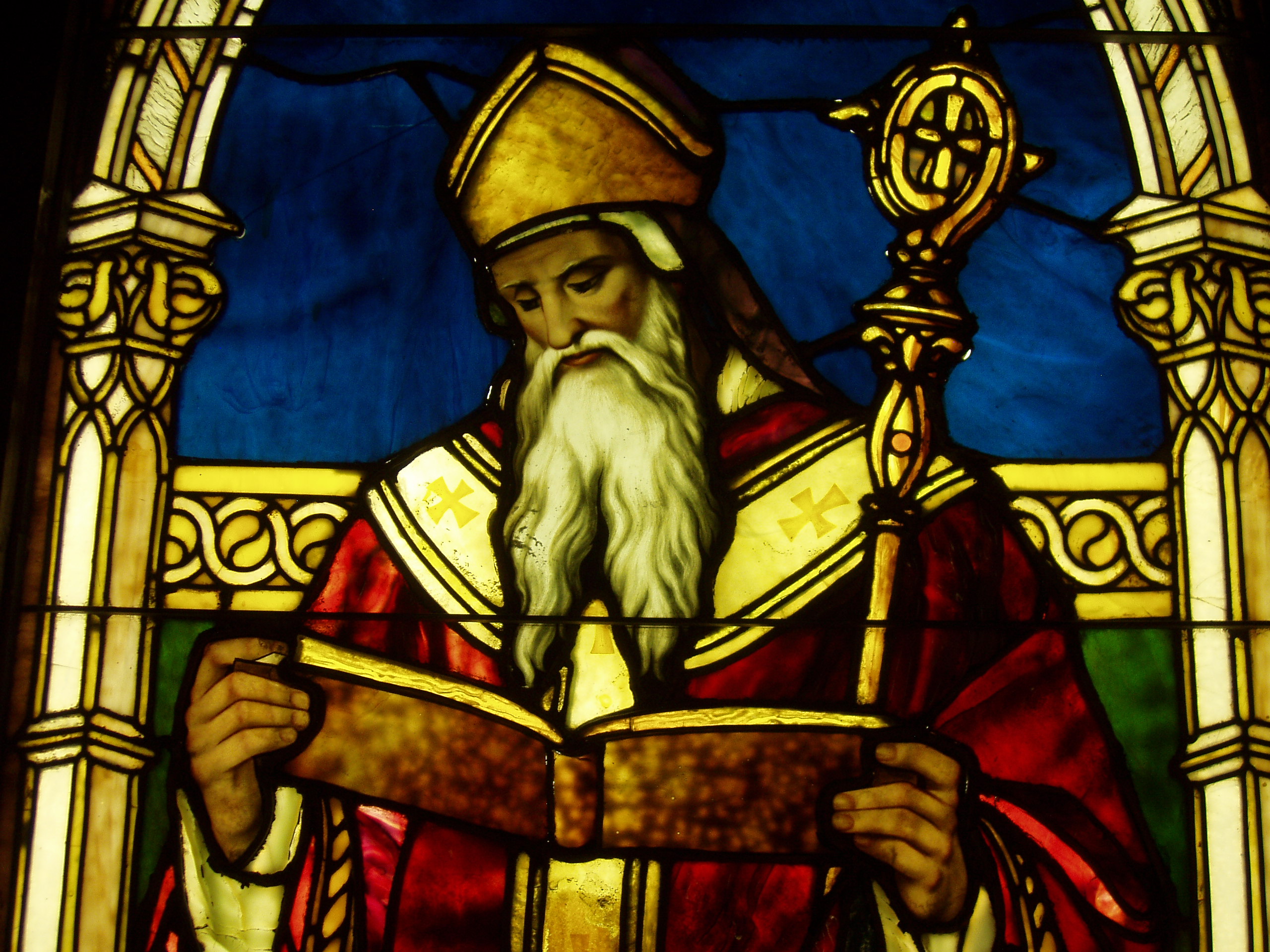
As our eyes have need of the light of the sun in order to see sensible objects, so does our mind need the light of God to know the world of understandable beings? Everlasting truths, ideas, species, formal principles are imparted to our intelligence by Wisdom, the World of God. ( Kenneth Young, Stanford University)
St Augustine maintains that if degrees of goodness are identified with degrees of being, there can be nothing purely evil. In fact it is St Augustine's position that an absence of good doesn't mean that there is evil. Therefore there is no evil in the hierarchy. St Augustine believes that evil is merely a form of injustice. There is no such thing as evil; he regards evil as being disorder. In retrospect St Augustine believes that something with a low degree of goodness is...
Reviews of: "St Augustine's Theory of Illumination."
:
This is a really great essay. One who's quality, relating to the subject, I haven't seen in comparison in a while. It is apparent that the writer comprehends the subject and is able to analyze it. It is very clear and easily understood as well, a feat which is rarely accomplished when writing on this topic. SO KUDOS TO YOU.
More Christianity
essays:
Augustine's Concept of the City of God and the Growth of Monasticism
... helped and reinforced each other because one succeeded where the other did not. They covered each others weaknesses. During his life, Augustine wrote a book entitled The City of God. In it, he presents human history as being a conflict ...
St. Augustine's important philosophical contributions to defend the philosophy of Christianity.
... minor exception of the source of evil - or rather, who created it - I agree with Augustine and found his principles very interesting. I think St. Augustine was a very important figure in the history of moral philosophy and he is one ...
From Sinner to Saint: Augustine's Conversion to Christianity
... with Augustines perceptions of God, however, he chose not to address the intellectual inconsistencies, ultimately relying upon the immeasurably powerful and crucial element of Christianity: faith. Sources:St Augustine, The ...
HOW SHOULD WE ACT AS LEADERS IN THE COMMUNITY? A comparison between Nicollo MAchiavelli's theories for leadership and those of the Catholic Church
... anything except war, its organization and discipline. This is counteract to what the Church emphasizes, which is the power of human love and the devastation war brings to humanity. The Church views war as evil and ...
Believe What One Wills: An essay questioning the motives for St. Augustine's conversion.
... rule, human beings want their lives to have harmony and little conflict. In order to accomplish this, many attempt to align their personal philosophy with a widely accepted philosophy. For many years of his life, Saint Augustine tried ...
What explanations do Christians offer for the origin of sin?
... live. God provided everything that the humans could need or want, and they were allowed to eat from any tree in the Garden except one: "Of the tree of knowledge of good and evil, thou ...
Pascal's Wager: An argument for belief in God using logic, reasoning, and decision theory
... believe in God. All of these landmarks in his life took place before his religious conversion except the Wager. In 1654, Pascal converted to Christianity, abandoned all work on science and mathmatics and began work on philosophy and theology. One of ...
Shipping in the Book of Acts
... 1986 Landels, J.G. Engineering In The Ancient World Los Angeles: University of California Press, 1981 With regards to the St.Paul, Landels does not go into great detail, but his ... According to the Book of Acts, the ship and all souls on board drifted until the ship's crew believed they ...
Good.
Well worded.
2 out of 2 people found this comment useful.