Stem Cell Technologies
Technological advances in this day and age have given
scientists the ability to do things that were only dreamed about
in the past. With all the advances in medical technology there
are still diseases, illnesses and conditions that cannot be
treated or cured effectively. New discoveries and complications
commonly come about in today's world. Scientists are studying
human embryonic stem cells, which includes: how an organism
develops from a single cell and how healthy cells replace damaged
cells in adult organisms. The study of stem cells is also
leading scientists to discoveries in regenerative or reparative
medicine. This research of stem cells and their possible ability
to treat certain diseases has quickly grown popular ever since an
important discovery in 1998. Scientists discovered how to
isolate stem cells from human embryos and grow the cells in the
laboratory. In this new area of Science, questions arise as
rapidly as new discoveries are made.
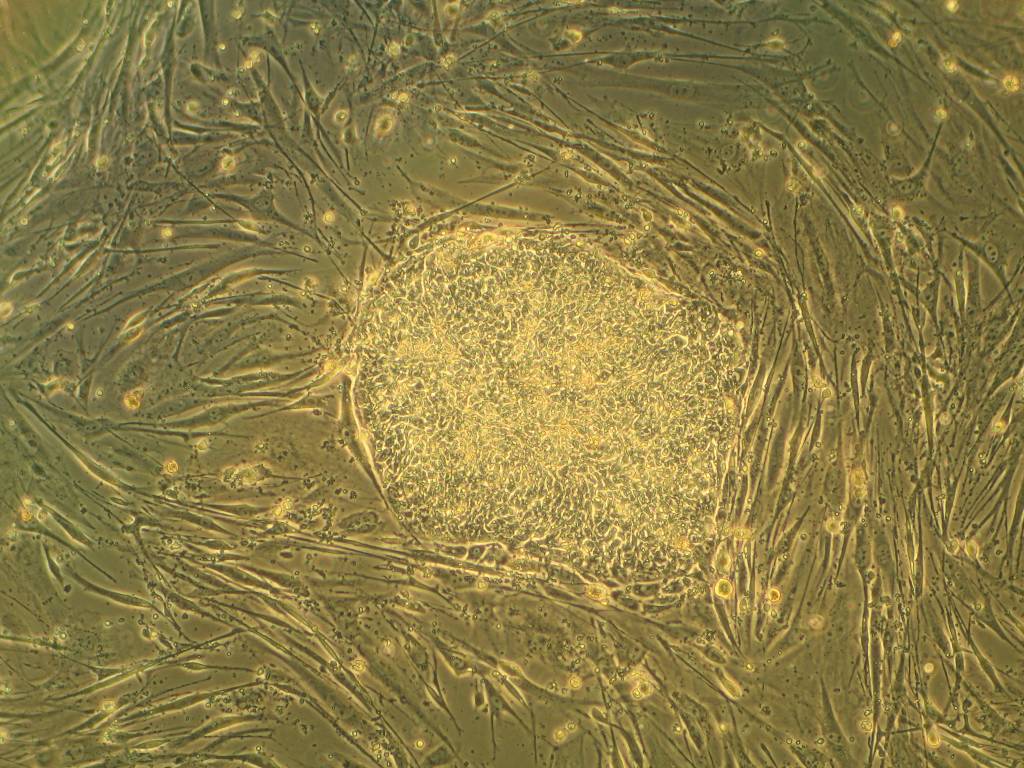 A colony of embryonic stem cells, from the H9 cell...
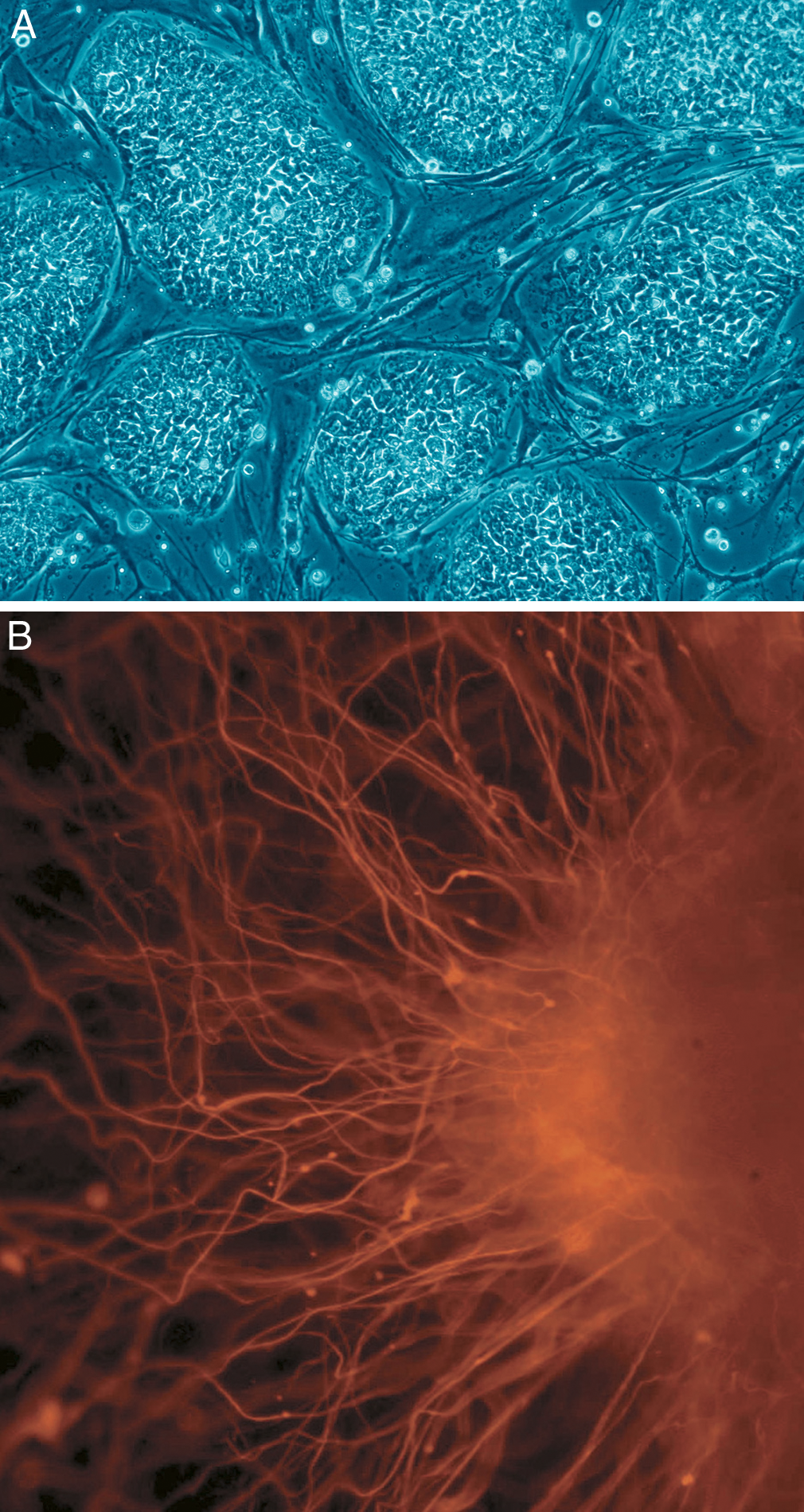 English: Embryonic Stem Cells. (A) shows hESCs. (B...
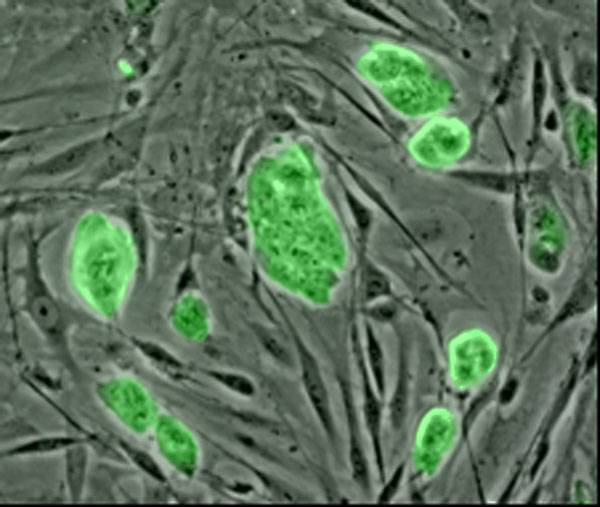 Mouse embryonic stem cells. More lab photos
Over 20 years ago, scientists discovered ways to obtain stem
cells from a mouse embryo. With only 20 years of research,
there's a lot still yet to discover about stem cells and how they
can help us. There are two characteristics that separate stem
cells from other cells. Stem cells are unspecialized cells, and
they can be induced to become cells with special functions.
Embryonic stem cells and adult stem cells are the two commonly
used by scientists. It is believed that someday in the future,
stem cells will provide the basis for treating serious diseases.
Parkinson's disease, cystic fibrosis, diabetes, paralysis,
Alzheimer's disease, spinal cord injury, heart disease, etc.,
could all be cured one day if the controversies don't delay the
research. The possibilities, depending on what scientists
discover, could change the world and science forever.
Embryonic stem cells are found in...