Many of you know her as Dorothy from the Wizard of Oz. But there was much more trouble behind Judy Garland than just a pair of ruby slippers. At the young and innocent age of 17 she starred in her 7th film, "The Wizard of Oz". The same year she had her hand and shoe prints forever embedded in the Hollywood Walk of Fame. The reality of her envied life was not so pretty however. The pressures were harsh and so was the work load. Her contract stated that if her physical appearances were to change, her voice became impaired or she couldn't work satisfactorily she would be suspended without pay.
Drugs were naturally used to help her maintain her life and schedule. She did not start out abusing drugs or using them for pleasure, Benzedrine and Phenobarbital were taken to control her appetite and weight. She was worked so hard that she became too exhilarated to sleep.
 Cropped screenshot of Judy Garland from the traile...
 Cropped screenshot of Judy Garland from the traile...
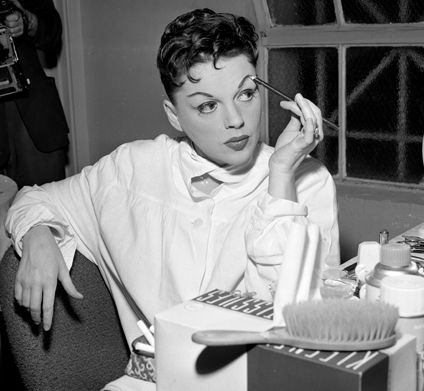 Singer Judy Garland in her dressing room at Greek ...
Sleeping pills helped her get as much sleep as possible for the next day of hard work. In order to wake up able to function in the morning she had to take a wake-up pill, or Benzedrine. These psychotropic drugs were newly discovered and considered medicine, such as amphetamines. The consequences that we now know of these drugs were not known back then. They did not know how addictive these new drugs were or of the severe physical and mental side effects. They took they're toll on Judy Garland and she became very addicted and slowly completely dependant on the drugs.
She decided that she needed help when the people around her began noticing the differences. She saw a psychiatrist and he told her that she had problems and that they would become serious; that she needed help...
Wow
This essay truly makes me think of the effects of drugs, and it also makes me feel sorry for Judy Garland, and angry at drugs for being out there before effects are known. This essay has wonderful structure and holds attention, and I hope you write many more!
4 out of 4 people found this comment useful.