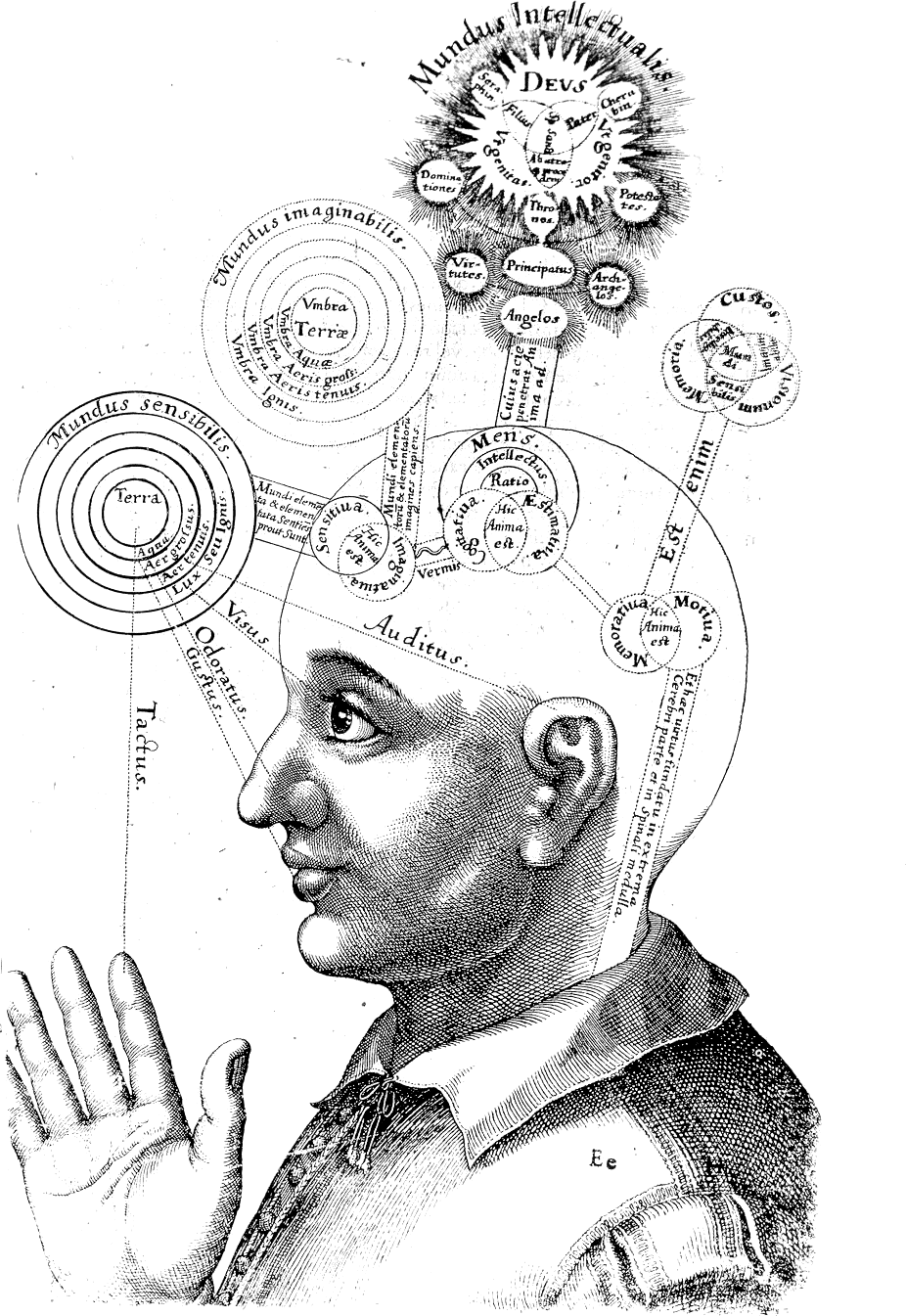
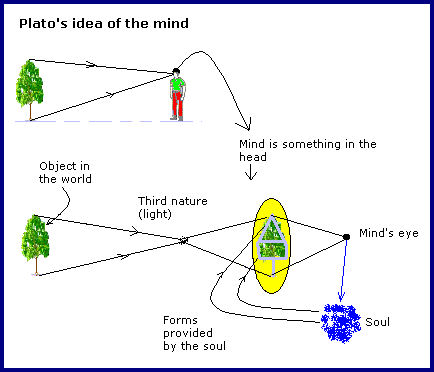
Truth, freedom, love, clear perception, purity, transcendence, and enlightment. It all attains the ultimate happiness
[Key Areas: Introduction, Transcendent of the Measurable, Spiritual Influence, The Symbolism of Light, The Journey.]
The one single truth of reality is not measured or distinguished -- it is the ultimate paradox. The journey by which one achieves this truth can be a journey of increasing realizations of paradoxes, and finally, freedom from the bubble of limitation of a mind that would perceive such paradoxes as paradoxes in the first place.
Truth is the same as spiritual feeling. Of spiritual perception. Of clear perception. Of freedom of the mind. Freedom of the soul. Freedom of the Heart. It is ultimate love and empathy. The end of struggle. Fully knowing the truth is to be enlightened. Fully realizing the truth is having transcended the distortions of the Machine (see The Machine at my web site given below). Truth means complete fulfillment and true happiness. Truth is impossible to change or destroy -- doing so contradicts the very nature of a single truth from which all things seen through distorted perception stem. Finding truth (and thus everything that it is) is the ultimate subconscious goal of all struggling. The search for truth, the want of truth, paradoxically, most often leads to illusion and darkness and pain. This is the case for the general spiritual state of humanity in the late Twentieth Century.
In this way, truth, freedom, love, clear perception, purity, transcendence, and enlightenment are all the very same thing. During the journey, one will no doubt see many facets of truth and see them as separate, distinguished, or part of a duality; but in time, one will see how they all link up and ultimately, how everything is a part of the same thing, and how perceiving everything in terms of truth is transcendence of distinguishment and knowing the truth; and...
More Modern Philosophy
essays:
"Camus and the Absurd": Essay explores the existentialist reasonings of Albert Camus and discusses his view of the self in comparison to other existentalist thinkers.
... in mind is the very essence of living the absurd life. One must always be fully aware of this fundamental paradox and struggling against it. Other philosophers have tackled the notion of the absurd ...
Marxist Ethics This essay explores the idea of whether or not there are 'ethics' in marxism
... not true. For example, Trotsky points out that it is unacceptable to act in a manner contrary to party policy, ie., the freedom of the proletariat. Acts such as dissention, false happiness, and the lack of faith ...
Jean-Paul Sartre
... opening of the Cartesian "thinking thing" supports a wide variety of alternative theories of the self while retaining the features of freedom and ... forms of "spirituality,"can find in Sartrean existentialism forms of "care of the self ...
The Moral Philosophy of John Stuart Mill
... At the very heart of John Stuart Mill's Utilitarianism is a concern which can be traced back to the Biblical parable of the house built on sand - an improper foundation. With this in mind, Mill ...
On the Genealogy of Morals: a work of history or of the imagination? On the Genealogy of Morals by Friedrich Nietzsche.
... analysis of the words "good" and "bad." He notices that in many languages, the words for "good" are closely related to words denoting power, wealth, and happiness, whereas the words ...
What are the consequences of Nietzsche's discussion of religion on his understanding of morality?
... our freedom and our strength. From this the only thing left to sacrifice was God himself and we now worship nothing. Nietzsche's declaration of the "death of God ...
The Life & Philosophy of Friedrich Nietzsche: Timeline
... idealism of The Master Race. He was, in fact, a prime influence on the writing of Hitler ... in mind, with an ideal government and an ideal God: the "Overman" or "Superman." These Gods were a product of natural ...
Utopias of 21st Century
... about freedom from repetitive drudgery. The distinction between particularities and differences and the dynamic this distinction reveals is a part of the theory (of difference ...