Why did the French fail so often in military battles around the period of the French Revolution? A look at France's military tactics from the 1400s-1800s.
The French are often criticized for their poor military record, often insulting the attitudes of the French people themselves. But why did the French really lose so often in combat? Their military tactics were horrendous, their armor was impractical, their formations were illogical, and their weapons were ineffective.
The most important part of the battle, according to French officers, was having an effective defense. This all started with armor. In the early 1400s the offensive attacks had increasingly been carried out primarily with long-range weapons, such as crossbows and longbows. Because of this, iron plated shields replaced the previous leather shields. However, the typical iron armor of this time weighed 130 to 175 pounds, an incredible load to bear (Duby, 155). Not only could a warrior with this armor on walk only straight, but also he could only strike at things directly in front of him. In addition, he could not make ordinary gestures, and he would have been "unable to lift himself up if he falls to the ground, and, if the ground is muddy, he is bogged down in it." (Duby, 155). This was a very harsh change for the soldiers who had previously been used to leather shields, an incredibly light armor but extremely ineffective in stopping arrows.
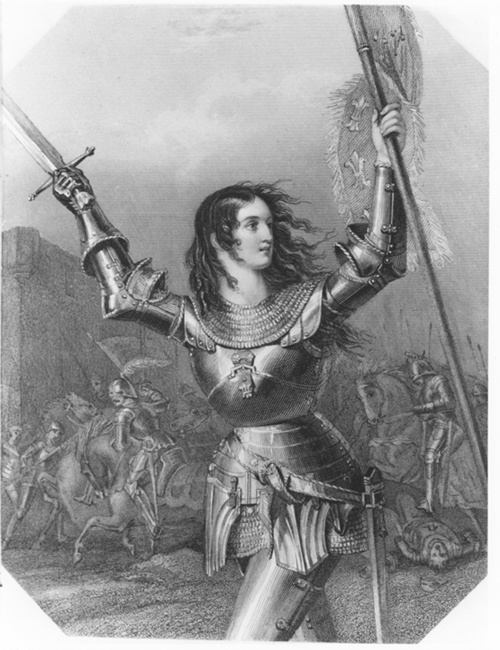
This new armor did not only cause a problem because of how difficult it made hand-to-hand combat, but it also made the possibilities of cavalry greatly less: not only could horses not carry such heavy riders very far or very fast, but because the horses quickly died from the arrows of arches and crossbowmen (Duby, 156).
These problems did not go without an answer. A new formation, called a "lance", was developed to minimize their army's weaknesses. The lance consisted of a horseman, two arches (who were mounted as...
Reviews of: "Why did the French fail so often in military battles around the period of the French Revolution? A look at France's military tactics from the 1400s-1800s."
:
yea i agree all their idea almost never work beacuse they didnt put much thought into it.
good essay, though me certaint hings
nice works cited page, very organized paper
More The French Revolution
essays:
Was Napoleon the son or the enemy of the French Revolution? In this essay, I will try and investigate whether Napoleon Bonaparte brought a positive change to France or was he just another tyrant.
... enlightened ruler anxious to bring lasting reforms beneficial to the French people and to consolidate the gains of the Revolution (Matthews 2001 ...
A look at what people do to bring a revolution to a sucess...talks about the french revolution and ghandhi
... overthrow the government and bring liberty and justice to the French people. Before, France had the old regime, which consisted of three ... 1947. As Gandhi once said, "Peace is the most powerful weapon of mankind. It takes more courage to take a blow ...
A brief account of France's financial difficulties leading up to the First Revolution, as traced through several ministers of finance. (includes works consulted!)
... taxed people and by extending certain taxes and government monopolies into exempt provinces. He also was the first to blatantly attack the distinctions and privileges of the upper classes. He believed this attack, and other measures such as having an ...
The Impact of Napoleon Bonaparte
... prevent a spread of revolutionary ideas in their own countries. Therefore, Napoleons military success protected Frances people and assisted France in defending the ideals of the French Revolution and Enlightenment. Napoleon also restored political stability by overthrowing the Directory ...
How far did Napoleon Bonaparte maintain the revolutionary ideals of liberty and equality in France?
... a military draft should the need arise. This caused discomfort among the French however it gradually became accepted. Napoleon immediately got rid of any obstacles that stood in his way. For example, free speech wouldnt have been forbidden ...
Why do Marxist historians see the French Revolution of 1789 as 'Bourgeoisie'?
... had been destroyed" , yet again showing how that it was the bourgeoisie that were the main beneficiaries of the French Revolution and therefore establishing the Marxist historians view of a Bourgeoisie Revolution. In conclusion I would have to ...
The Reign of Terror and the French Revolution
... the people by setting up a Revolutionary Tribunal, with which to try those who would otherwise have been killed ... Le pere Duchesne, and L'Ami du Peuple, respectively. Their attacks on established French Institutions were biting with much venom in their arguments. Marat ...
What were the causes and the effects of the French Revolution?
... a limited, constitutional monarchy. This sparked some change in the French people. Immediately after the National Assembly secretly began working on a ... the largest army in Europe during this time. A great military leader, Napoleon Bonaparte, headed this army. In 1793, Napoleon won ...
True
The French army was proven to be weak throughout the history. WWI and WWII...the only good thing i remembered about the French army was when Napoleon controlled it...
4 out of 4 people found this comment useful.