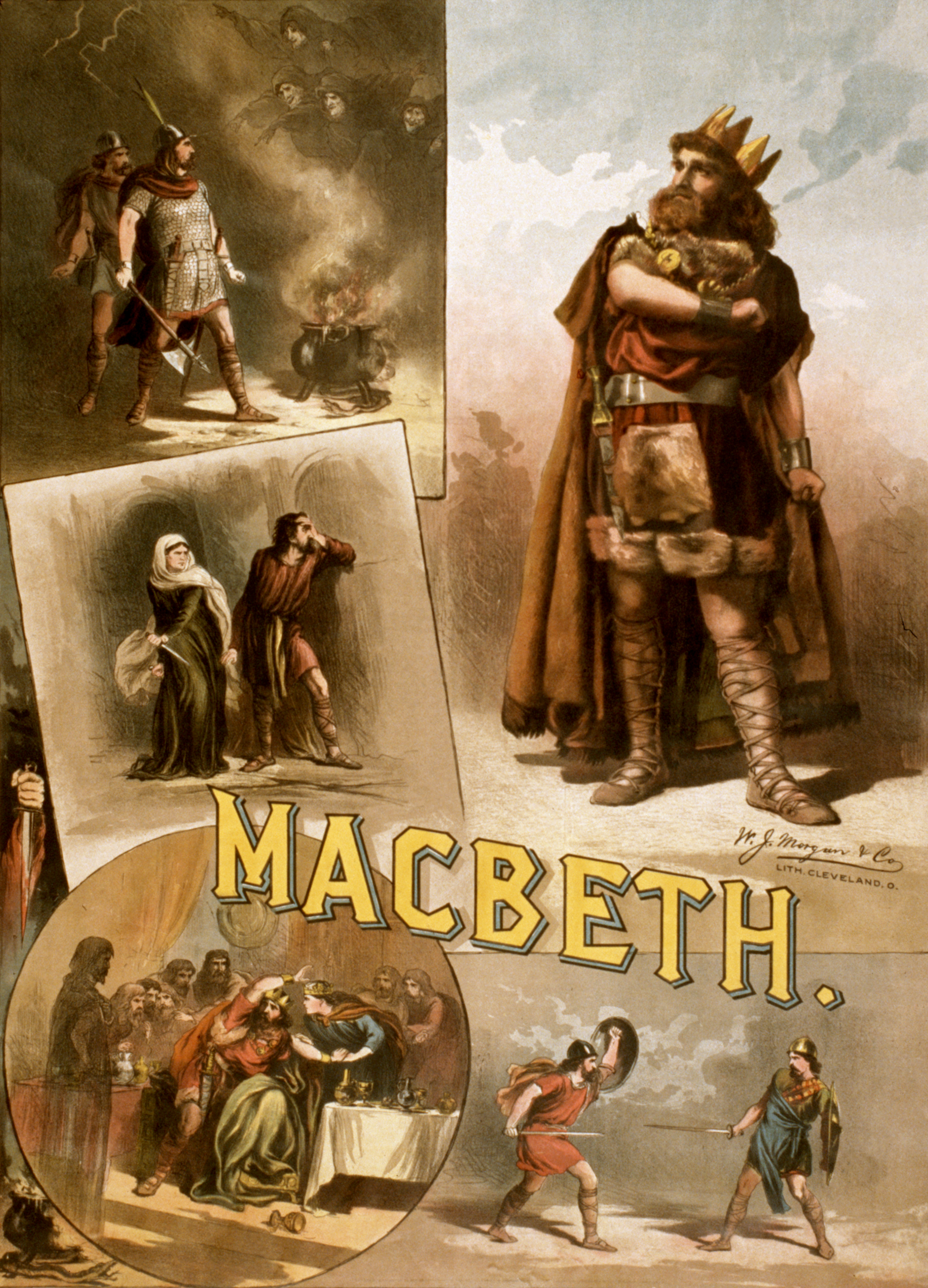
The Witches in Macbeth: Corruption and Fate vs. Free will in William Shakespeare's "Macbeth"
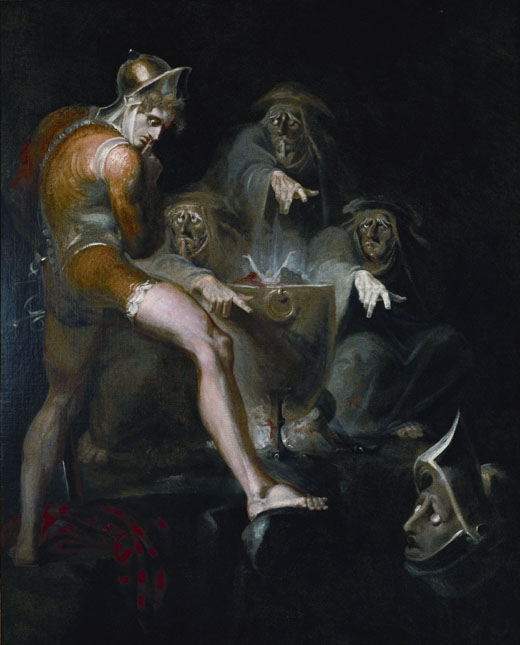
In "Macbeth", William Shakespeare uses certain characters to foreshadow the play by involving supernatural spirits. For example, witches and their prophecies bring the subject of free will vs. fate into the play and also the rising anger and blood. Supernatural spirits become involved because of the effects they have on the characters; Shakespeare uses each character to manipulate their conscience and to show the breakdown of the human spirit when suppressed with guilt. Further influencing more deaths is the power of guilt and corruption that plagues both Macbeth and Lady Macbeth. In William Shakespeare's Macbeth, witches symbolize characters' imaginary tools to represent the power of corruption, and the inner demonic conscience of man.
In "Macbeth", the characters struggle with the prophecies and free will vs. fate. Shakespeare makes the true nature of these prophecies unknown to the reader and allows the reader to interpret their own truth of mythical thought. These prophecies are indeed foretelling of the fate of each person. At the final battle seen, Macbeth allows himself to believe that he is unstoppable and tries to prove the prophecy wrong by fighting for his life against Macduff. It is impossible for Macbeth to win, but he accepts death. Critics agree with the argument that, "The witches are not, it is true, divine Eumenides, and are not intended to be: they are ignoble and vulgar instruments of hell" (Schlegel 183). Shakespeare uses the witches as tools to corrupt his characters as well as demonstrating to the crowd how evil man truly is. The Witches are allowed to manipulate each character into succeeding in their ultimate dream of evil and guilt. Ribern also describes his attitude towards the image of the witches being evil by explaining, "All that we need to know about the witches is that they are as...
Reviews of: "The Witches in Macbeth: Corruption and Fate vs. Free will in William Shakespeare's "Macbeth""
:
I recently had to read macbeth in English class. When I read it, I didn't get the depth of the play. I had to visit Sparknotes, and other sources to completly understand it. If I would have read your essay before, I would have stopped here. Your essay would have been truly helpful and is an A in my book!
More Macbeth
essays:
Fate Vs. Free Will in Shakespeare's MacBeth.
... Fate versus Free Will William Shakespeare's Macbeth is a tragic play which details the rise and fall of King Macbeth of Scotland. The tragic downfall of the hero Macbeth begins with the encounter between him and three witches who prophecy ...
Free-Will in Macbeth.
... William Shakespeare had once postulated, "It is not in the stars to hold our destiny but in ourselves." Conversely, via distinct imagery he portrays that only the opposite of true - destiny is not in the hands of the beholder. In Macbeth ...
Macbeth: Fate or Free-will.
... In Shakespeare's Macbeth, there is a question as to whether or not Macbeth is driven by fate or free will. The three weird sisters approach Macbeth with prophecies that will all come true in ...
With Reference to the four Kings in Macbeth discuss Shakespeare's view of Kingship
... hide. Lady Macbeth hears of her husbands success and also of the prophecies of the Witches. She is determined that the prediction will come true at ... to become the most successful king. Class Notes and the William Shakespeare's Macbeth ...
To what extent can Lady Macbeth be considered the fourth witch in Macbeth? Support your answer with reference to the text.
... th milk of human kindness. Secondly, Lady Macbeth is cruel. As soon as she received Macbeths letter telling him about the Witches prophecies, she already ... doing so, the servants shall have to bear the guilt of their[our] great quell. Lady Macbeth's true cruelty is shown when her death has ...
Lady Macbeth is the real driving force behind the murder of Duncan.
... obstruction. Lady Macbeth reads a letter from her husband in which he tells her about the witches' prophecies. She doesn't consider Macbeth evil ...
Macbeth and Lady Macbeth as tragic heroes in Shakespeare's "Macbeth."
... when she must commit suicide to rid herself of the guilt that plagues her. Both Macbeth and Lady Macbeth begin in high places and decline due to flaws in ... Shakespeare's Macbeth, Macbeth and his wife Lady Macbeth are both examples of tragic heroes who possess a tragic ...
A Desired Fate- The Role of Fate in Shakespear's Macbeth
... Desired Fate Throughout the whole of William Shakespeare's tragedy Macbeth, the theme of fate versus human desire plays out as a continual struggle for the titled character. Macbeth, despite ...
This essay is pretty amazing.
I liked this essay very much. I didn't even read Macbeth, but I understood what you meant here. I liked your argument, and the sources you posted. In short, I liked it.
1 out of 1 people found this comment useful.