Australian assimilation policies of the 1930's.
The following statement, "The assimilation policies of the 1930's had a devastating effect on the Indigenous community, which is still being felt today. While promoted as protection for the Aboriginal children, the policy actually aimed at wiping out the Aboriginal race", is incorrect and unsupported.
It was not the actual assimilation policies that caused the devastating effects on the Aboriginal communities but the influence of the White Settlers. Before the white settlers came the aboriginal communities lived simple and satisfying lives. When the white settlers came they brought with them the complications of their own society and introduced the Aboriginal communities to it. Drugs such as alcohol and tobacco, along with other possibly more dangerous drugs were introduced to the Aboriginal people. Unfortunately many were not able to cope with all of this. Many of the parents in that time became alcoholics, who did not have jobs and physically abused their partners and children. Things are not all of that different today. The influence of the white settlers changed the Aboriginals way of life dramatically for the worse, but many still refuse to admit the high levels of domestic violence, substance abuse and child abuse that goes on in their communities. "Aborigines are reluctant to admit that girls are being raped by their own" (Major T, Address at a meeting between the Prime Minister and Cape York Officials, date unknown)
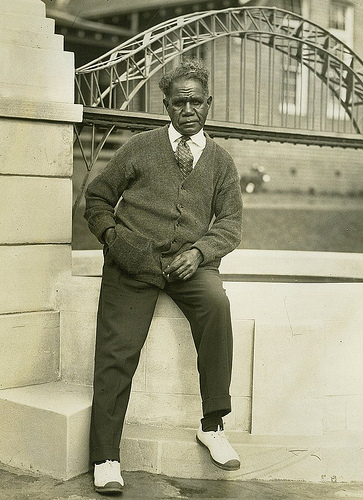
Many claim that the effects of the "stolen generation", which is a result of the assimilation policies is what is actually still being felt today in most aboriginal communities. The stolen generation is referred to an estimation of 5625 half-caste children that were removed from their families, for no apparent reason, to be set up in foster families or in missions. Because many of...
More Australian History
essays:
The History of Austraila's economic recovery after the first World War, and the affects various leaders of the country had on the country.
... peak of 23,000. (Bolton Geoffrey P. 90) When Menzies took office in 1949 the expansion of communism was thought to be the biggest danger in Australia. This was evident by the policy that Menzies made shortly after he became Prime ...
Discusses the hardships suffered in the Great Depression that occured during the 1930's and how the government and the people dealt with it.
... at 30% in 1932 was down to sixteen percent by 1935. The reality was that the government was unable to cope with the crisis and although bold policies were needed and they were thought to be found, the government never really ...
Analyze the effects of the Great Depression on Australia in the 1930s.
... 2004, Australia in the 20th Centaury, Macmillian Education, MelbourneDepartment of Communications ...
Assess The Achievements Of The Women's Movement From The 1960's To The 1990's
The roles of women in modern day society have undergone tremendous change since the emergence of the Women's Liberation Movement in the 1960's. After decades of gradual progression, the assemblage of Australian women to unite under a common cause has led to liberation. Their resorts to often ...
The Impacts of The Changing Governments Policies towards the Aboriginal People- Including a Source Based on Rabbit Proof Fence
... remove Aboriginal children who had a non- Indigenous parent from ...
Evaluate the impact of key policies and legislation enacted by the Australian Federal Government during the Vietnam Era.
... from its capitalist allies, the USA sent soldiers into Vietnam straightaway, following their own foreign policy of the containment of communism. Menzies declared that Australia was at war with little criticism as he had convinced Australia that the war was an ...
Australian immigration policy and its relation to Asia
... form of regrouping under foreign skies and the rebuilding of communities with different members and neighbours" (Papastergiadis, 2000, pp156). A study ... the contrary, they are still worried about "how migrants will assimilate and particularly whether they speak English". In 1999, the Australian ...
immigration policies of Australia and is the whitlam governemnt mainly responsible for multicultural Australia today?
... do not already, and enrol their children in school. Settlement programs also help migrants to find out about their new environment - what is expected of them, what services are available, how the government and community operates. The Whitlam government was greatly ...