Bearings are the invisible heroes inside many mechanical devices. Learn about all different kinds of bearings, including 5-foot ball bearings that keep buildings on solid footing!
A tapered roller bearing from a manual transmission
Have you ever wondered how things like inline skate wheels and electric motors spin so smoothly and quietly? The answer can be found in a neat little machine called a bearing.
The bearing makes many of the machines we use every day possible. Without bearings we would be constantly replacing parts that wore out from friction. In this edition of HowStuffWorks, we'll learn how bearings work, we'll look at some different kinds of bearings and explain their common uses, and we'll explore some other interesting uses of bearings.
The Basics
The concept behind a bearing is very simple: Things roll better than they slide. The wheels on your car are like big bearings. If you had something like skis instead of wheels your car would be a lot more difficult to push down the road.
That is because when things slide, the friction between them causes a force that tends to slow them down. But if the two surfaces can roll over each other, the friction is greatly reduced.
A simple bearing, like the kind found in a skate wheel
Bearings reduce friction by providing smooth metal balls or rollers, and a smooth inner and outer metal surface for the balls to roll against. These balls or rollers "bear" the load, allowing the device to spin smoothly.
Bearing Loads
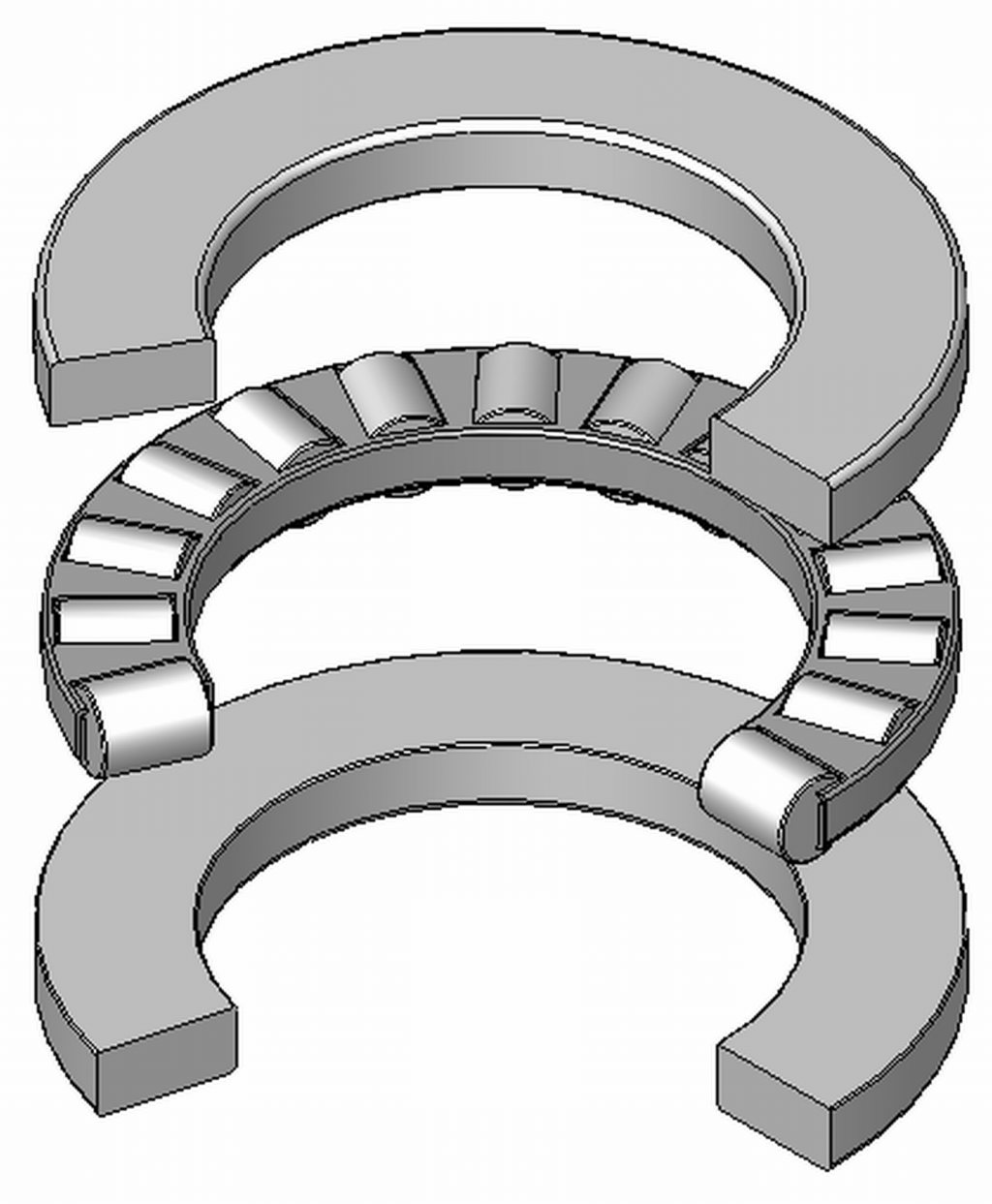
Bearings typically have to deal with two kinds of loading, radial and thrust. Depending on where the bearing is being used it may see all radial loading, all thrust loading or a combination of both.
The bearings that support the shafts of motors and pulleys are subject to a radial load.
The bearings in the electric motor and the pulley pictured above face only a radial load. In this case, most of the...
More Mechanical Engineering
essays:
MAchining Processes
... grinding wheels used are similar to all other grinding processes. Process Characteristics - Produces straight, tapered, and formed workpieces - Is used only for cylindrical workpieces - Produces highly accurate surfaces and smooth finishes - Is a final machining process ...
Manufacture and Materials
... the friction action and cooling it down. - The porosity / density / hardness of the PM part can be changed to suit the component as described in the general advantages. - The largest area for the use of these types of bearings is ...
The History Of Flight. Speaks of the Wright brothers and Leonardo da Vinci
... fluid friction, we call it viscosity, (Definition of) the resistance of air or any other fluid to motion, whether its own or that of a body moving through it. Daniel Bernoulli, used Newton ...
THIS ESSAY IS ABOUT HOW AUTOMATIC TRANSMISSION WORKS AUTOMATIC TRANSMISSIONS HAVE ALL THE FEATURES OF MANUAL TRANSMISSIONS AND A LOT MORE. HAPPY READING...
... effective use of the engine's torque, and to keep the engine operating at an appropriate speed. The key difference between a manual and an automatic transmission is that the manual transmission locks and unlocks different sets ...
Any car with a manual transmission has a clutch that connects/disconnects the engine and transmission. Learn how a normal automotive clutch works and explore a variety of other clutches!
... a manual transmission car, you may be surprised to find out that your car has more than one clutch in it. And it turns out that folks with automatic transmission cars ...
Torsional vibration in marine propulsion
... smoothly. The runner and the impeller have pockets that face each other which are filled with oil as they rotate. The engine driven impeller provides kinetic energy to the oil, which transmits the drive to the runner. Thrust bearings ...
Effects of Podded Propulsion Bearing Failure
... ships because Azipod System burns less oil than conventional type. Using electric cables rather than a mechanical transmission system also reduces vibration on board. The Azipod system arrangement ...
Working in the Clouds, airplanes
... in use of aeronautical charts, much in the same way that we use road ... to the day-to-day change in technology pilots are constantly 're-learning' techniques of flying. To obtain a private pilots ...