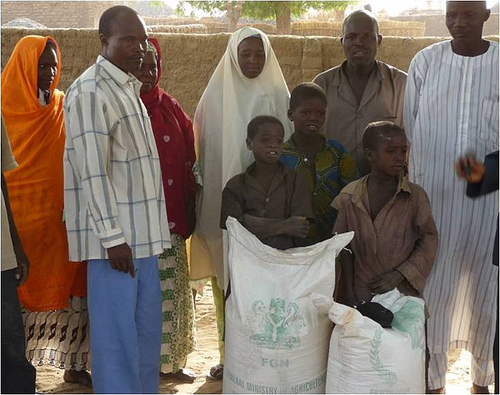
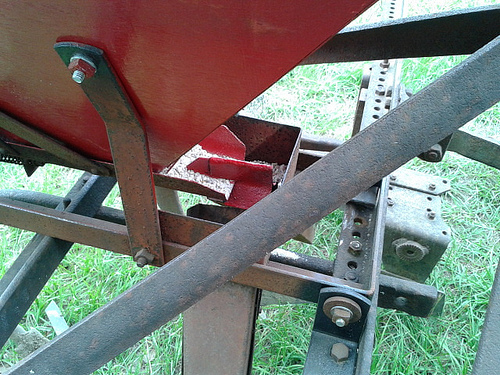
Biochemistry: Fertilizers
In Britain and other developed countries, farming is essentially a business. Like all business, the farmer's aim is to make as large profit as possible. To achieve this, the farmer needs to achieve high yields of the crop(s) which provide the best economic return as efficiently and as cheaply as possible. To obtain high yields, farmers need to manipulate the environment of their crops. This is were the fertilizers take their role to help in the farms.
Fertilizer is generally defined as "any material, organic or inorganic, natural or synthetic, which supplies one or more of the chemical elements required for the plant growth". The cheapest and most common fertilizer would be manure. Manure, or faces, is a natural fertilizer. It is a mixture of complex chemicals. Many of these contain the element nitrogen. The complex chemicals act as food for decomposers. Decomposers break down these chemicals into simpler ones such as nitrates. Plants can then absorb these. Decomposers need a good supply of oxygen for this job. The amount of oxygen needed for the complete breakdown of any material is called a biologically oxygen demand, or BOD. Substances which encourage the growth of organisms will have a high BOD.
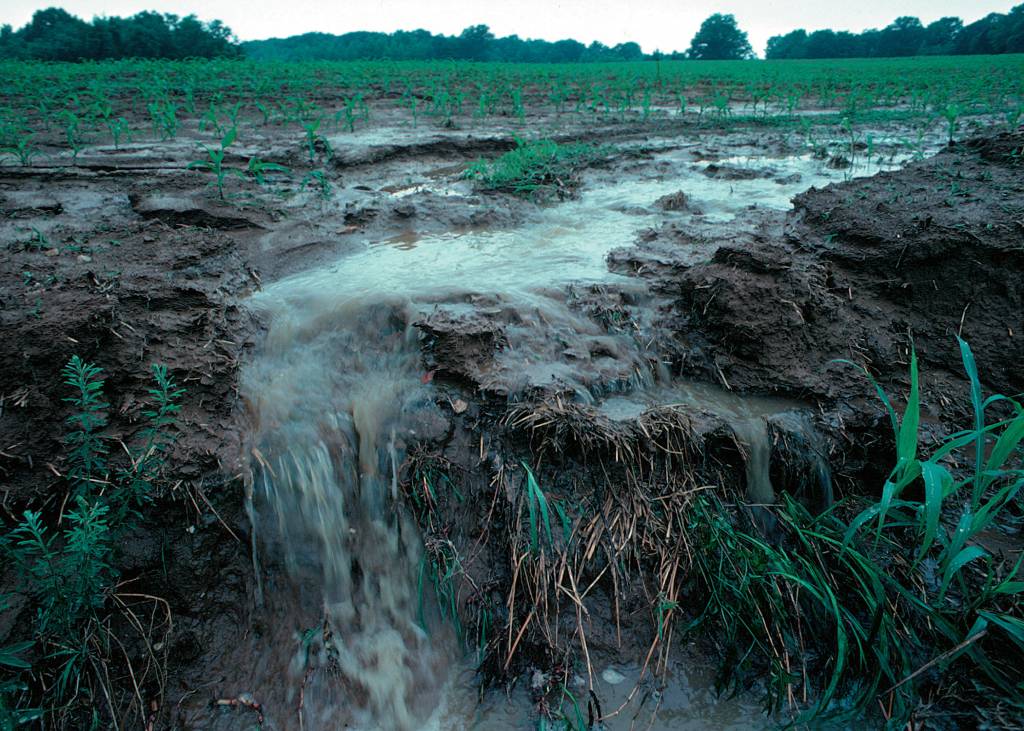
Primary nutrients are normally supplied through chemical fertilizers. They are chemical compounds containing one or more of the primary nutrients and are generally produced by chemical reactions. Whatever may be the chemical compounds, its most important ingredient for plant growth is the nutrient content.
Artificial fertilizers are much simpler than manure. They are usually a mixture of three or four salts. A salt is made when an acid reacts with an alkali, by neutralization. These salts dissolve quickly in the water in the soil and get into the plant.
Plants need some 14 essential mineral nutrients to grow. Of the,
Reviews of: "Biochemistry: Fertilizers"
:
nice work full of information
More Biochemistry
essays:
RNA Evolution, RNA Function in RNA viruses and the Origin of Life
... were breaking down. These chains are proposed as the first, primitive forms of life. In an RNA world, different forms of RNA compete with each other for free nucleotides and are subject to natural selection. The most efficient molecules ...
Experiment write up, including method and discussion on testing food substances for the presence of lipids (fats)
... the boiling water bath to allow for the food to break down. This caused the lipids to melt and enter the solution ... low fat content and on heating in the boiling water chemical reactions would have occurred causing it to make the solution ...
Pesticides.
... any chemicals other than the ones we have banned here, and corporations sell to them as an alternative to discarding them. Another big problem to the health of farmers in developing countries is ...
Basics Of Biochemistry
... be reduced, higher=enzyme=more effective, too high=denaturization (enzyme begins to break down, changes shape to stop functioning. ) Optimum temperature= 25-40 C. Enzyme ... one another. 8. List the 4 types of organic compounds. What elements are they composed of? What is the function of each in the ...
Application of Enzymes
... used naturally occurring microorganisms - bacteria, yeasts and moulds - and the enzymes they produce to make foods such as bread, cheese, beer and wine. For example in bread-making the enzyme, amylase, is used to break down flour ...
Iodine-Source and Daily Requirement.
... body temperature, therefore it's essential for normal grown and development. These thyroid hormones are particularly important for early brain development and intelligence before and ... it is important, where it can be found,and how it is absorbed in the body. Basically, if you are looking for a grade ...
Effect of pH on Protein Digestion
... test tubes #3 will reduce the greatest because it has pepsin to further break down the egg. Whereas the other test tubes will have a smaller reduction. ... NaOH so that the two substances would not mix together to form another chemical, which would not provide accurate results 4) Place a small piece of ...
heavy metals
... in chemical fertilizer, manure, compost, and sewage sludge. Lead (Pb) Lead in the environment is strongly absorbed by ... and impact of metals on animals. Mercury (Hg) Mercury occurs naturally as elemental mercury and as organic and inorganic compounds. Much of the ...
Helpful
I am doing a Science fair on Organic vs Inorganic fertilizers. This was a good help. Oh, and great thesis
0 out of 0 people found this comment useful.