The coral reef system is a collection of different species of sea life that interact witheach other, and the environment (SeaWorld.org, 2009). These reefs are also very fragile,and are highly complex communities. They have adjacent and interrelated sea grass beds,mangrove forests, and their physical and chemical environments support well over amillion species (NOAA's Coral Reef Information System (CoRIS), 2009). The scientificclassification of coral reefs are called Cnidarians. This group includes jellyfish, seaanemones, and sea fans. The coral reef system is made up of aragonite structures that areproduced by living organisms. Most of these reefs are found in marine water, and theyget very few nutrients. Most reefs, are organisms that are made of stony corals, orcolonial cnidarians, these have an exoskeleton that is made up of calcium carbonate.
Corals are sessile animals, meaning they are not mobile but stay fixed in one place. Theyfeed by reaching out with tentacles to catch prey such as small fish and planktonicanimals (EPA.gov,
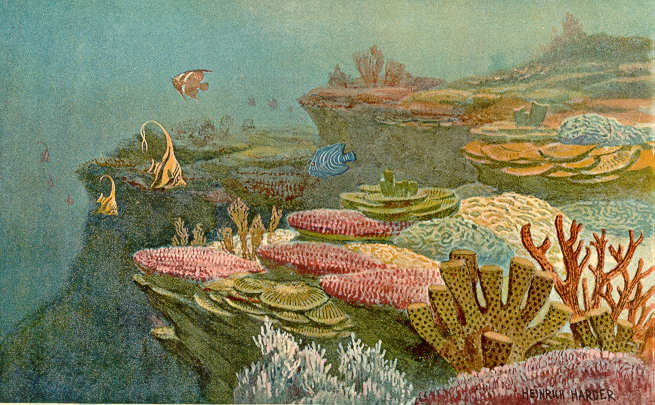 Ancient Coral Reefs Español: Antiguas Arrecifes d...
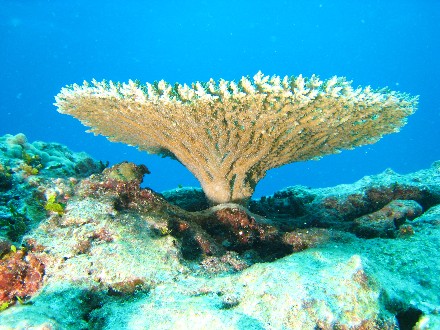 English: Table coral of genus Acropora (Acroporida...
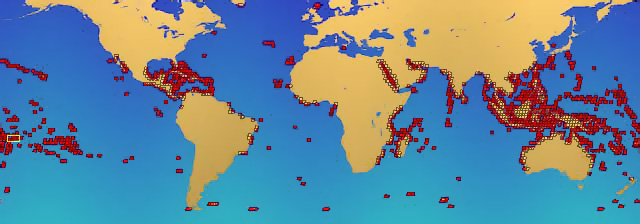 This image depicts all of the areas that the Mille...
2009). Corals live in colonies, and need clear, warm water with plentyof light.
Although they look like plants, coral reefs are actually animals. Many Coral Reefs areable to reproduce both asexually and sexually. About three-quarters of all stony coralsform hermaphroditic colonies. These colonies have the ability to produce both male andfemale gametes. The remainder form gonochoristic colonies which can produce eithermale or female gametes, but not both (NOAA's Coral Reef Information System (CoRIS),2009). The Stony (hermatypic) corals are best recognized because of their colorfulformations. One trait of stony corals is their capacity to build reef structures that rangefrom tens, to thousands of meters across. As they grow, reefs provide structural habitatsfor hundreds to thousands of different vertebrate and invertebrate species (NOAA's CoralReef Information System (CoRIS), 2009).
Another life form is the Zooxanthellae, and it is biotic. This is a one celled algaewhere...