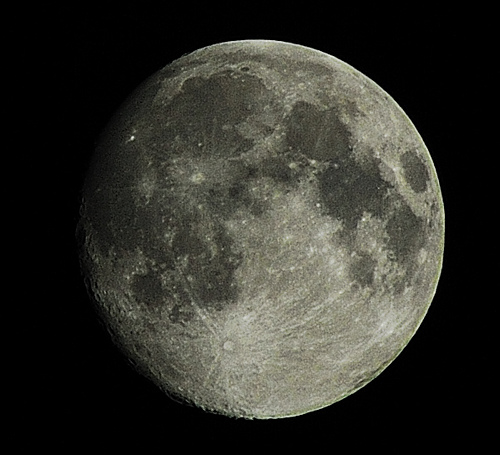
This is an essay I did on explaining how gravity works as well as how it effects the tides... How high tide and low tide work
Introduction
"Gravity is a force of attraction that exists between any two masses, any two bodies, any two particles. Gravity is not just the attraction between objects and the Earth. It is the attraction that exists between all objects". (NASA gravity 2000) Gravity is a very essential part of life on earth. We are in the exact position in the sun's gravitational field to keep us in orbit and keep life ongoing on our planet. Gravity is a downward force on any body of mass, the larger the mass of the body, the stronger the gravitational force. On earth the force is 9.8 N/Kg (Newton's per Kilogram) roughly, depending on where you are on earth.
Gravitation
The original idea of gravity was discovered by Sir Isaac Newton (Jacob 1999). It is said that Newton was sitting under
an apple tree and an apple fell from the tree striking him on the head. (What probably happened was that he watched an apple fall from a tree.) He concluded that there must be a force pulling all objects towards the ground, such as the apple and himself, and because the apple started at rest, there must be acceleration due to that force. Later with his invention of the telescope, he discovered that larger bodies have a stronger gravitational pull. It had been previously proven that the earth and other planets orbited around the sun. Because the sun was the largest body in the solar system, Newton concluded that larger bodies had larger and stronger gravitational fields.

As seen above, gravity is a force affecting 2 bodies. This is not totally exact because it does not factor in air resistance and friction. Even though gravitational acceleration is constant, air resistance affects free fall. For instance, if you took a sky diver and a...
More Oceanography
essays:
Our World's Oceans: Their Importance to Our Planet
... He concluded erroneously that there was a "zero" point at which life ceased to exist at lower depths. His "azoic" zone, beginning at 300 fathoms down contained no life whatsoever. Later, near the beginning of the ...
The problems with our ozone layer today and how to protect it for the future
... Ozone is a layer of our stratosphere that protects all life on Earth by controlling the temperature of the atmosphere. The ozone layer absorbs the ultraviolet (UV) rays (radiation) of our sun and without this, the temperature of our atmosphere would ...
Floods: Causes and Consequences
... Acts of God." Effects on Americans Although many Americans had not realized that there was ... flooding since the water is constricted rather than being released on the flood plain; and forced by levees into a narrow channel, the river backs up ...
This is a standard informative report on Krill. Everything about this sea species. Size, mating, eating, living locations. Well written.
... 2003). There are a number of problems associated with the krill industry. For a start, Antarctic krill are found in a remote location that is ... as food webs around the world. Krill support all marine life either directly or indirectly in the marine food web. While ...
"El Nino and it's effects on coral reefs" What is El nino and how does it affect the ocean?
... many that we rely on for food. They are full of new and undiscovered biomedical resources that we have only begun to explore. They give protection to coastal communities from storms, wave damage, and erosion. Coral reefs also attract hundreds ...
Oceanography as viewed from space
... Poseidon orbits above the earth at 840 miles and has a 10-day repeating cycle in which it takes pictures of all of the earth (Cracknell 17). Information about the how the sea level changes can tell scientists that there are ...
New Zealand and the Impact of Fishing
... successful that it may someday become a large contributor to the export economy. The fisheries of New Zealand are not just limited to the sea, but to freshwater as well. There may be a diversity of life in ...
Coastal Management Northern Beaches Sydney Collaroy to Dee Why Case Study The Geographical Processes and Human Impact (involving development, beach replenishment, etc.)
... mound of sand by eroding sand particles from the windward side and depositing them on the leeward side. Gradually this action causes the dune to "migrate" inland; as it does so it accumulates more and more sand. There are ...