EGYPTIAN CIVILIZATION
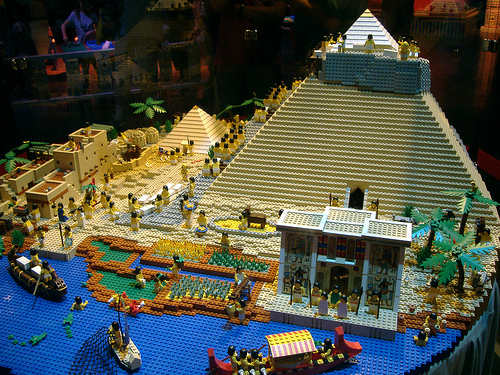
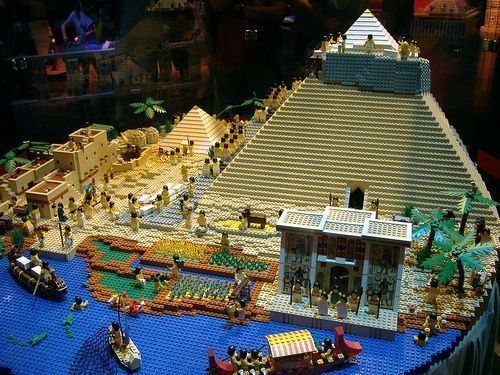
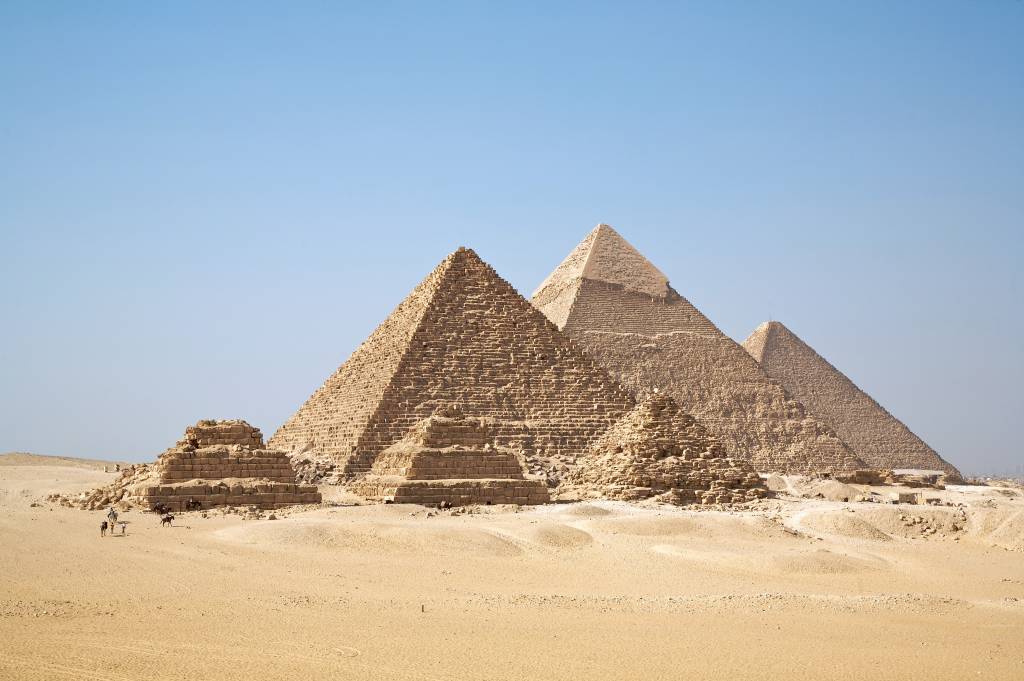
Ancient Egypt -- a land of mysteries. No other civilization has so captured the imagination of scholars and laypeople alike. Mystery surrounds its origins, its religion and its monumental architecture: colossal temples, pyramids and the enormous Sphinx. The Egyptian pyramids are the most famous of all the ancient monuments, the only remaining wonder of the seven wonders of the ancient world.
Just as life arose from the waters, the seeds of civilization were first sown along the banks of the Nile. This mighty river, which flows north from the heart of Africa to the Mediterranean Sea, nourished the growth of the pharaonic kingdom. The long, narrow flood plain was a magnet for life, attracting people, animals and plants to its banks. In pre-dynastic times, nomadic hunters settled in the valley and began to grow crops to supplement their food supply. Seen as a gift from the gods, the annual flooding of the river deposited nutrient rich silt over the land, creating ideal conditions for growing wheat, flax and other crops. The first communal project of this fledgling society was the building of irrigation canals for agricultural purposes.
The sun was a principal deity whose passage across the sky represented the eternal cycle of birth, death and rebirth. The pharaohs were seen as gods, divine representatives on earth who, through rituals, ensured the continuation of life. After death, they became immortal, joining the gods in the afterworld.
The Egyptians also believed that the body and soul were important to human existence, in life and in death. Their funerary practices, such as mummification and burial in tombs, were designed to assist the deceased find their way in the afterworld. The tombs were filled with food, tools, domestic wares, treasures -- all the necessities of life -- to ensure the soul's return to...
More Ancient Egypt
essays:
Ancient Egypt
... skinned ancient Egyptians were short and slender. The belong to the Mediterranean race of the Caucasoid (white) stock. As time went on, the Egyptians mixed with people from Asia, Negroes from other parts of Africa, and people from lands ...
Report on Ancient Egypt
... into the desert. Ancient cultures were often plagued with warfare and attacks from other cultures, Egypt's geography protected it from most of its neighbors. The Mediterranean Sea, the Red Sea, the Nubian Desert, and the Libyan Desert surrounded Egypt, it ...
"Assess the contributions and impact of Amenhotep III"- a prominent king of the 18th dynasty of ancient egypt
... certain gods through various monuments and benefactions. Egypt had a system of a centralized redistributive economy in which the temples were the economic centres of a region. Amenhotep IIIs' monuments stretched from the Delta ...
EGYPT--Description of Egyption culture, mummification, government and religion of ancient egypt--also a comparison with modern Egypt
... offices and a press center. The Military Museum displays a wonderful collection of ancient weapons, statues, and uniforms plus other exhibits that were designed to show the art of warfare in Egypt from the earliest ...
Ancient Egypt, the Nile River, sub-Saharan Africa, the Middle East and their relationship.
... desert. Ancient cultures were often plagued with warfare and attacks from other cultures, Egypt's geography protected it from most of its neighbors. The Mediterranean Sea, the Red Sea, the Nubian Desert, and the Libyan Desert surrounded Egypt, it ...
Contributions of ancient egypt
... of ancient Egypt's contribution to society not only advanced them as a civilization but left an impressionable impact on the accomplishments of the modern day. Nestled within the fertile valley of the Nile, Egypt was protected on all sides from ...
"A Marxist View on Government and Religion of Ancient Egypt and Mesopotamia"
... single leader. Everyone would be equal without prejudice, with all the same rights and abilities. The government of ancient Egypt would not fit into a Marxist society. There are a ...
Ancient Egypt
... much of the western world's views and attitudes are based. Everything from religion, to architecture, to art has been handed down, generation by generation, to us in the present day. Although many of the ancient Egyptians ...