Egyptian Civilization
According to the Egyptian account of creation, only the ocean existed at first. Then Ra, the sun, came out of an egg (a flower, in some versions) that appeared on the surface of the water. Ra brought forth four children, the gods Shu and Geb and the goddesses Tefnut and Nut. Shu and Tefnut became the atmosphere. They stood on Geb, who became the earth, and raised up Nut, who became the sky. Ra ruled over all. Geb and Nut later had two sons, Set and Osiris, and two daughters, Isis and Nephthys. Osiris succeeded Ra as king of the earth, helped by Isis, his sister-wife. Set, however, hated his brother and killed him. Isis then embalmed her husband's body with the help of the god Anubis, who thus became the god of embalming. The powerful charms of Isis resurrected Osiris, who became king of the netherworld, the land of the dead.
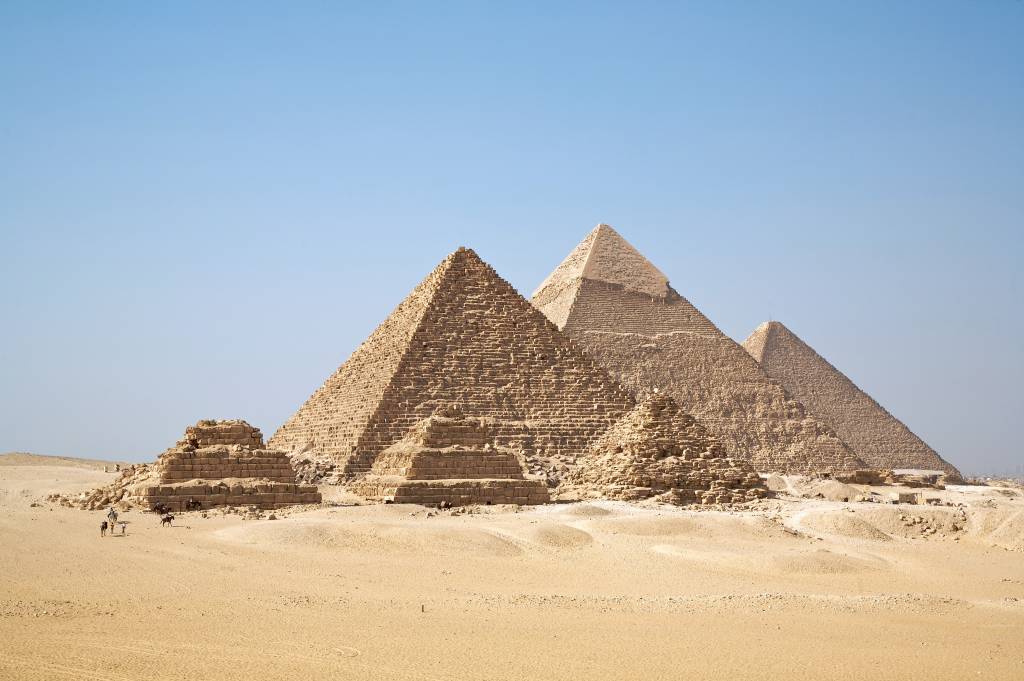 All Giza Pyramids in one shot. Русский: ВÑ...
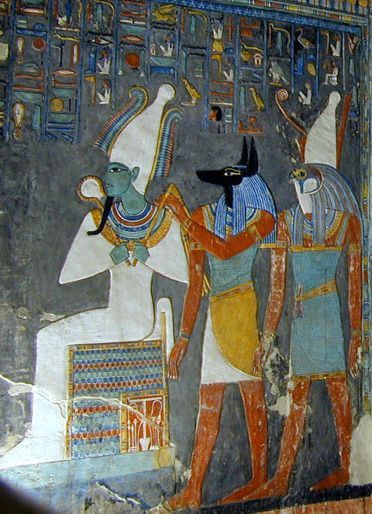 English: Detail of the frieze of the wells in the ...
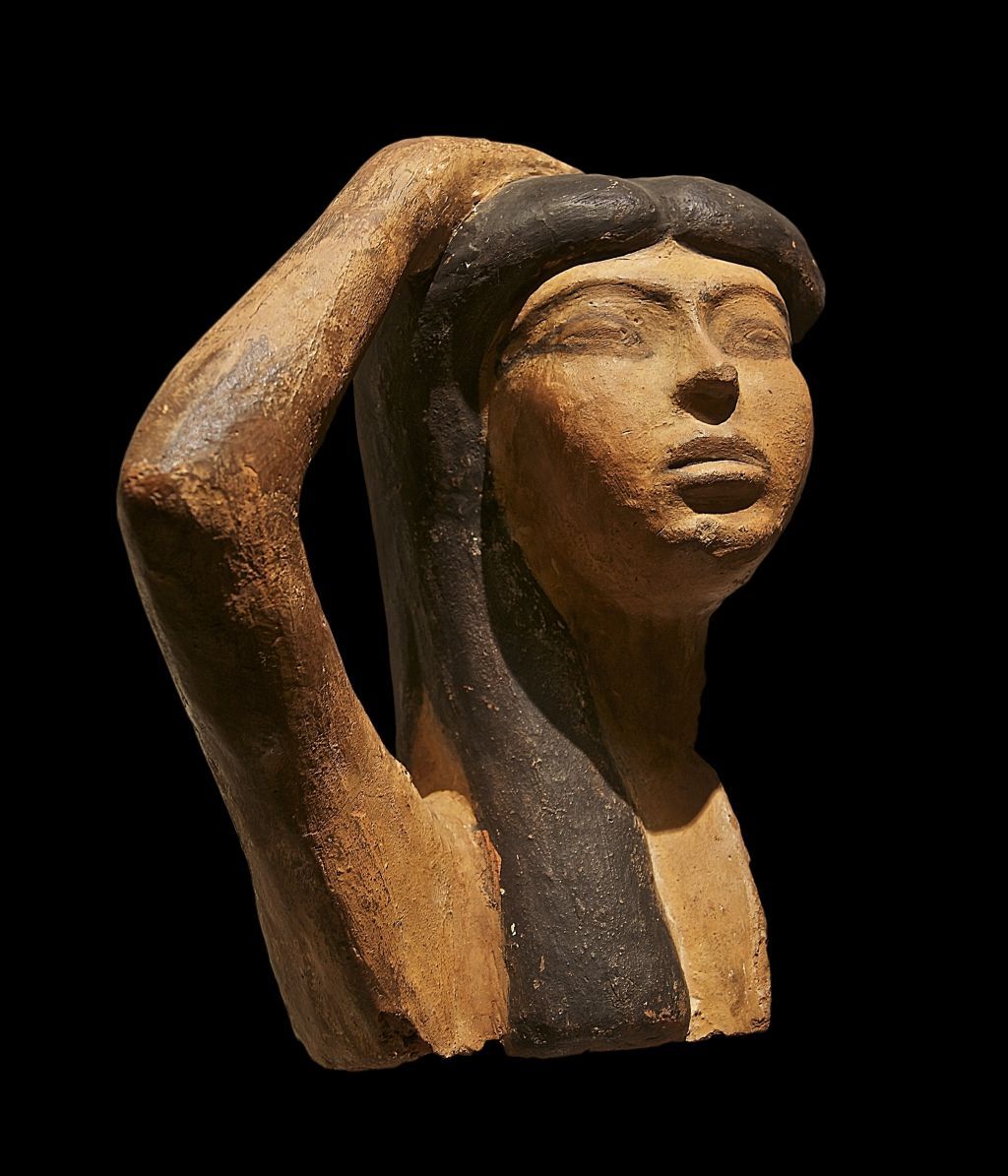 Mourner. Could be Isis mourning Osiris
Horus, who was the son of Osiris and Isis, later defeated Set in a great battle and became king of the earth.
Local Gods
From this myth of creation came the conception of the ennead, a group of nine divinities, and the triad, consisting of a divine father, mother, and son. Every local temple in Egypt possessed its own ennead and triad. The greatest ennead, however, was that of Ra and his children and grandchildren. This group was worshiped at Heliopolis, the center of sun worship. The origin of the local deities is obscure; some of them were taken over from foreign religions, and some were originally the animal gods of prehistoric Africa. Gradually, they were all fused into a complicated religious structure, although comparatively few local divinities became important throughout Egypt. In addition to those already named, the important divinities included the gods Amon, Thoth,