Spanking is one of the most controversial discipline methods. On one side of the debate are parents who believe it is all right to spank their children. On the other side are those who think that children should never be spanked. Somewhere in the middle are parents who believe that spanking should only be used in particular instances such as when the child runs into the street. Part of the reason for the debate is that parents and experts often define spanking differently. To some, spanking means "slapping a child on the buttocks" (Straus, 1995, p. 5), while others consider spanking a generic term for any corporal punishment that does not cause an injury, such as slapping a child's hand for touching something forbidden or dangerous.
The purpose of this is to explore some of the reasons for spanking to examine the effectiveness of spanking and why we should still enforce spanking children today.
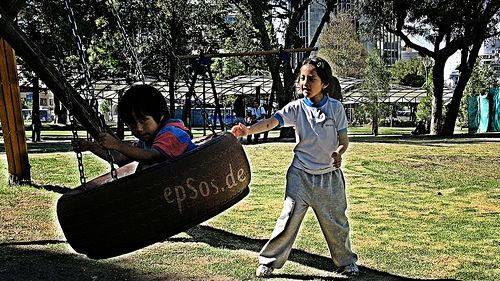 Latino Children Play Swing
 A thin, flexible cane designed for corporal punish...
 Political cartoon from 1860 depicting Stephen A. D...
While many adults would argue that hitting people is wrong, spanking children continues to be used as an acceptable form of discipline because many parents think spanking will teach children not to do things that are forbidden, stop them quickly when they are being irritating, and encourage them to do what they should. Some parents also believe that the nonphysical forms of discipline, like time-out, do not work. Spanking is also a practice used more in some areas of the country than others, primarily in the southern United States, and in some cultures more than others.
Now let's look at the people that are against spanking and what they say as their argument. Hitting is wrong. To hit someone is a violent thing to do. Violence is a thing one person does to make another person hurt. We want to treat children in ways...
Great
This is a great essay, concise, structured and you put across both arguments well. It was an interesting read.
I got plenty of good skelps when I was wee and it didn't do me any harm, or make me feel the need to hit anyone else. I think children recognise that the person hitting them has authority, and usually, if their parent is a good parent, their judgement on whether or not a child's act deserves a skelp should be respected. I KNEW that i'd done something very wrong if I got hit and I made sure not to do it again. Similarly, If i had already done something I knew was wrong I was already regretting it at the thought of getting a skelp and vowing to myself not to do it again!
There has been an anti-spanking law passed in Scotland recently which I think is just political correctness gone mad. There is a difference between a skelp and physical abuse.
Great essay - really thought-provoking!
2 out of 4 people found this comment useful.