'The Victorian prison was a more 'civilized' method of punishment than hanging'
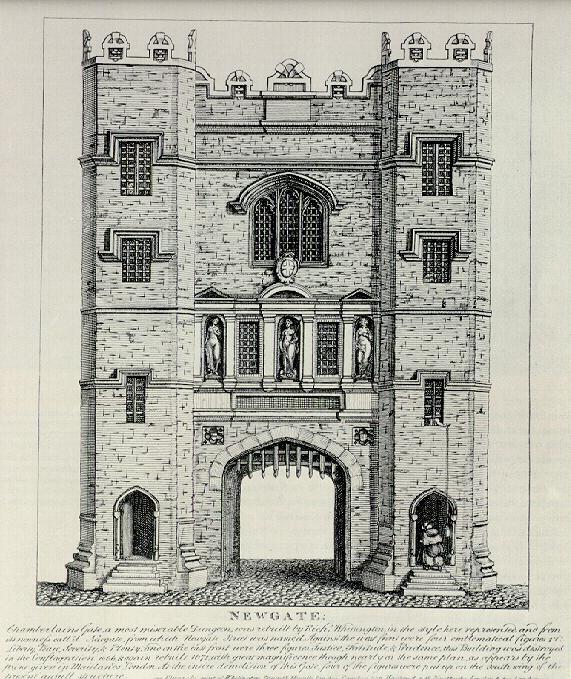
In this essay, an argument will be shown that will make it apparent that Victorian prisons were indeed a more civilized way of dealing with criminals, as opposed to subjecting them to a public hanging. There could have been better ways of dealing with Victorian prisoners, such as rehabilitation schemes and re-education schools, however a prison sentence was still a more humane option than the alternative of being publicly hanged and up to 1793 burned afterwards. Although the regimes inside Victorian prisons were harsh at times, they also offered the inmate a way to embrace the ethics of a hard days work, which was very much a part of the day-to-day lives of a worker in the new industrialised society of 19th century Britain. Tasks such as crank-labour and tread-wheel walking were designed to make a prisoner work to a set goal or time period and were monotonous and repetitious. Another activity that was used in penal institutions was oakum picking, which required the prisoner to sit and pick apart a length of tarred naval rope into its various strands. The preciseness of this labour was so much so 'that the strands of the rope had to be pulled apart till they were as fine as silk' . The very aims of these tasks were to break the spirit of the convict and to reinforce the idea that this was a punishment. Although some tasks were monotonous and without point, other work projects such as weaving were done by the prisoners in their cells and would have allowed them to learn a trade, that if they wished, could be used to their advantage once released into the general population.
The main downside to hanging for a convicted felon is in its state of permanency. Convicts of the 19th century, given...
Reviews of: "'The Victorian prison was a more 'civilized' method of punishment than hanging'"
:
Glad that my work is appreciated.
Very well written, it kept me engaged
More European History
essays:
"European Civilization : Created by the masses" --19th Century ideologies,1920's -1930's dictatorships,aftermath of the World Wars.
... reviews 19th century ideologies (political and economical). Reviews France and Britian during the French and Industrial Revolution periods. Talks ... radical, which was attempting to abolish class conflict by stripping working class institutions of their unions, and strikes. A National Labor Front was ...
Why did the "Bloody Code" come into such force in the 18th century, and then was largely abolished in the early part of the 19th century?
... his own benefit. The court was also willing to give prisoners a life sentence as opposed to the death penalty if they were literate ... even centuries. Changes occurred infrequently and tended to occur over extended periods of time. The ...
Spain's Pre-War Years, speaks of why the years before the Spanish Civil War of 1936 so confusing and unstable, resulting in the need for a totalitarian leader?
... this period, but not necessarily change for the better. The many governments of the 19th Century reflects ... assassinations, terrorism, in short: typical anarchist tactics. Once again the Civil Guard was called in, this time reinforced by the army, and ended the risings with brutal ...
How prostitution became a significant of London's history during the 18th and 19th century.
... and 19th centuries will be a significant part of London's history forever. Work Cited Bartley, Puala. Prostitution: Prevention and Reform in England. London: Routledge, 2000. Fisher, Trevor. Prostitution and the Victorians. New ...
Progress & Poverty:The History of 19th Century Britain .
... the working class people. Works Cited* CHRISP, Peter. On the Trail of The Victorians In Britain. Franklin Watts, 1999. COOK, Chris. Britain in the 19th Century 1815-1914. Pearson Education Inc ...
Account for the distress in Merthyr at the beginning of the 19th century and discuss the significance of the Merthyr rising.
... Lewis hanged at Cardiff. September -Lock-out of union members in Merthyr ironworks. November -Defeat of the union and return to work. Account for the distress in Merthyr at the beginning of the 19th century and ...
How have women's roles changed from the 19th century to the 20th century in Spain?
... over time. In Spain, women contributed a lot during the civil war, the revolutions, and basically they had a very important impact during the nineteenth and twentieth century. Because ...
The process of emancipation of from the 19th century for women
... keep working until they had children. In the middle of the 19th century the average married woman gave birth to six children. Over 35% of all married women had eight or more children. Education of ...
The Victorian Prison
What a lovely, well written essay. Extremely informative and a joy to read.
3 out of 3 people found this comment useful.