WALT DISNEY
Walt Disney was one of the famous motion-picture producers in history. He first
became known in the 1920's and 1930's for creating such cartoon film characters as
Mickey Mouse and Donald Duck. He later produced feature length cartoon films, movies
about wild animals in their natural surroundings, and films starring human actors. Disney
won 32 Academy Awards for his movies and for scientific and technical contributions to
filmmaking. He also gained fame for his development of theme parks.
Walter Elias Disney was born on Dec. 5, 1901, in Chicago, Illinois. His family
moved to Missouri, and he spent much of his boyhood on a farm near Marceline. At the
age of 16, Disney studied art in Chicago. In 1920, he joined the Kansas City Film Ad
Company, where he helped make cartoon advertisements to be shown in movie theaters.
In 1923, Disney moved to Los Angeles to become a film producer or director.
 The Walt Disney Concert Hall, home to the Los Ange...
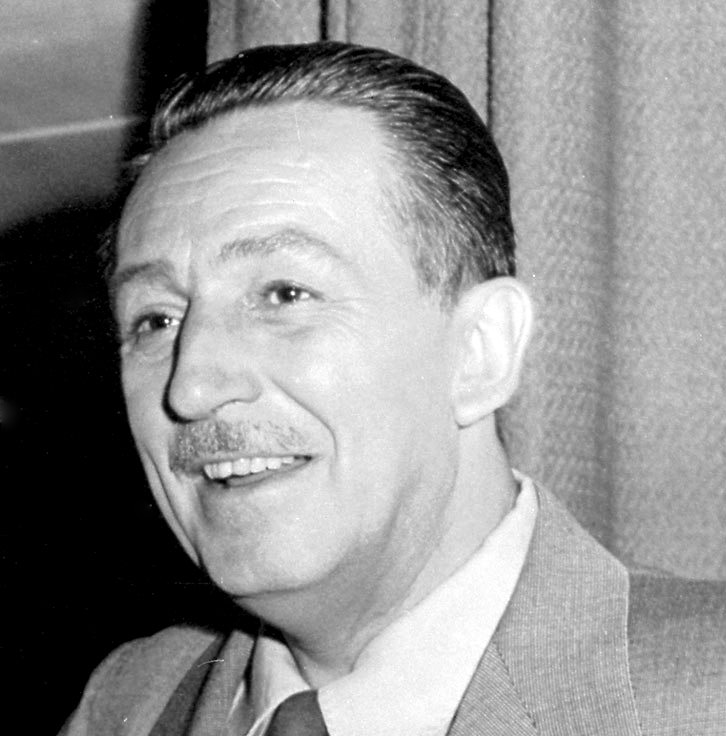 English: Portrait of Walt Disney, 1 January 1954 H...
 Walt Disney introduces each of the Seven Dwarfs in...
When he failed to find a job, he returned to producing cartoons. He set up his first studio
in the back half of a real estate office. For several years, Disney stuggled to pay his
expenses. He gained success in 1928, when he released the first short cartoons that
featured Mickey Mouse. Earlier filmmakers had found that animals were easier to animate
than people. Mickey Mouse, drawn with a series of circles, proved ideal for animation.
In 1927, sound that had been added to motion pictures, and a process for making
movies in color was developed a few years later. Disney and his staff made imaginative
use of sound and color. Disney himself provided Mickey Mouse's voice for Steamboat
Willie (1928), the first cartoon to use synchronized sound. His cartoon Flowers and Trees
(1932) was the first cartoon in full Technicolor.
From 1929 to...
WALT DISNEY
I think you could use a better conclusion. Your essay just cuts off, when throughout your essay you talk about what a great guy he is. You could conclude with the idea that even though he is dead his creations provide original enertainment that will last many generations. or something of that sort
7 out of 9 people found this comment useful.