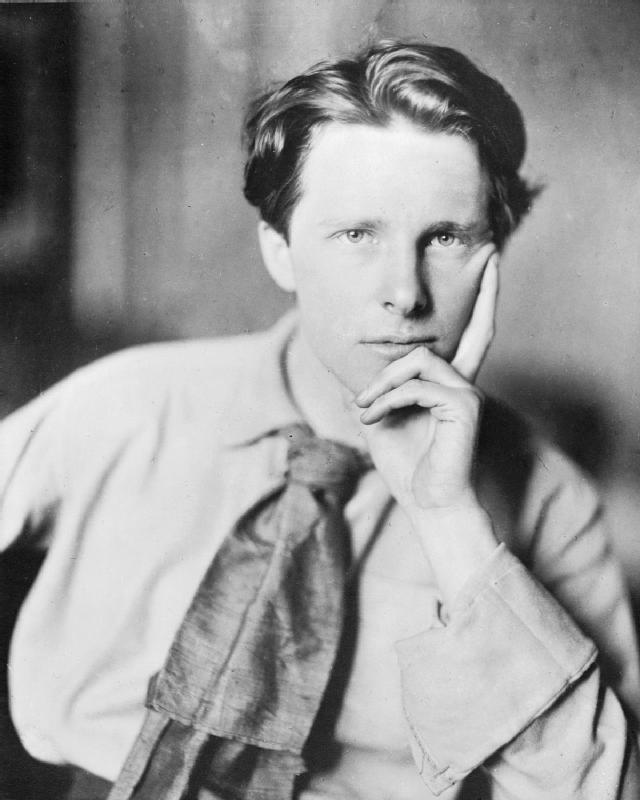
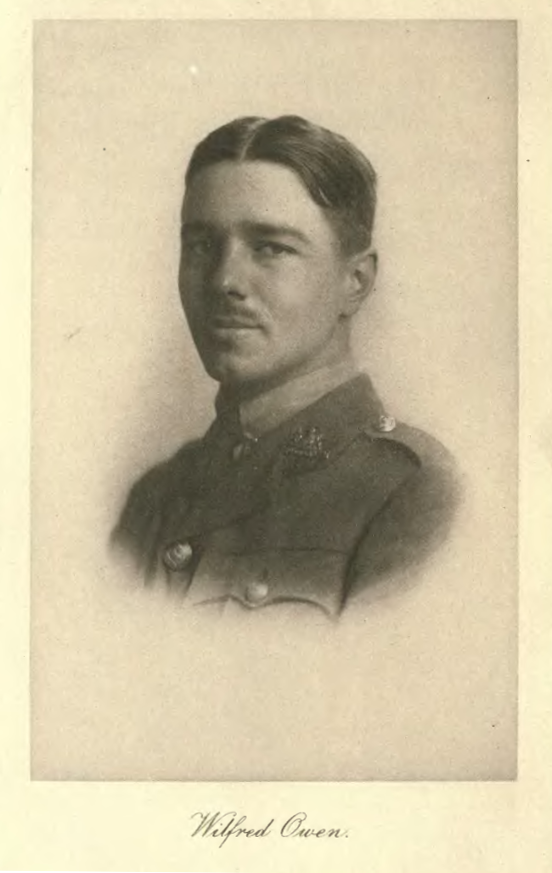
The comparison and contrast of "The Soldier" by Rupert Brooke and "Dulce et Decorum" est by Wilfred Owen.
Although Rupert Brooke and Wilfred Owen both wrote war poems they differ broadly from each other. Despite the fact that both authors' have a totally different opinion concerning war they have certain aspects in common.
In Rupert Brooke's poem The Soldier he develops a glorifying idea of patriotism. He seeks to transmit the message that it is beautiful to die for one's country - it embellishes death - and that no matter where he is buried the soil he is buried within will absorb his English body, acquire English ways and become in its turn, part of England. Brooke had never taken part in war itself therefore he could not comprehend the genuine vileness of war. He conveys no notion of sorrow or loss at the suggestion of the soldier's death. It seems that the soldier does not even fear death; it is more likely that he is more concentrated on the importance of the idea that even through death he will continue to be English.
All through The Soldier Brooke communicates a feeling of bravery, nobility and heroism. It reveals this through flurry and idealistic language - "Wash'd by the rivers, blest by the suns of home" - transforming it into a dramatic reading due to its frequent pauses in the middle of sentences with the use of punctuation - "If I should die, think only this of me:" , "A dust whom England bore, shaped, made aware, Gave, once, her flowers to love, her ways to roam,". This poem makes use of hazy and attractive images using romantic and vague language such as "That there's some corner of a foreign field That is forever England. There shall be in that rich earth a richer dust conceal'd;". England is widely mentioned throughout The Soldier by means of personification. It...
Reviews of: "The comparison and contrast of "The Soldier" by Rupert Brooke and "Dulce et Decorum" est by Wilfred Owen."
:
A very good contrast and comparison. You have a good grip on what to do. Keep up the good work
More Poetry
essays:
The two poems "Dulce et Decorum Est" by Wilfred Owen and "The Soldier" by Rupert Brooke. Compare how the poets have used techniques and ideas to convey there attitudes to war.
... Both poems use imagery. In "The Soldier" Rupert Brooke uses an extended metaphor to set a positive and dignified tone. For example, "A dust whom England bore ...
Critical evaluation of the poem "Dulce et Decorum Est" by Wilfred Owen. "Choose a poem which genuinely shocked you, Explain how the authors techniques aroused this emotion in you"
... hitting and the best at delivering a message. 'Dulce et Decorum Est' by Wilfred Owen is one such poem which genuinely shocked me. Unusually, the author of this poem was actually a soldier in the war. The ...
'Dulce Et Decorum Est' by Wilfred Owen, compared to 'The Charge of the Light Brigade' by Alfred Lord Tennyson.
... the war, and he wrote the poem after reading about the charge in a newspaper. His intention was to make sure the men were never forgotten, and that their valiant endeavor was never forgotten. In his poem, Wilfred Owen describes ...
Poetry Review on "Dulce et Decorum est" by Wilfred Owen.
... by Wilfred Owen. The poem is about the horrors of World War One that the soldiers would have to live though during the war. "Dulce et Decorum est" follows the group of soldiers that the narrator fought and lived ...
Compare and contrast Rupert Brooke's poem, "The Soldier" with Wilfred Owen's,"Dulce Et Decorum Est."
... the poems bring out two different perspectives of war. Rupert Brooke is very serious and patriotic whereas Wilfred Owen ironically ... sounds and dreams of England were. Wilfred Owen also uses imagery in 'Dulce et Decorum Est.' He uses a simile to compare the condition of the exhausted soldiers to ...
This essay compares and contrasts 'Dulce et Decorum est' by Wilfred Owen, and 'Peace' by Rupert Brooke.
... both Wilfred Owen and Rupert Brooke have very different opinions about the war. In the poem 'Dulce et Decorum est,' Wilfred Owen talks about how the war is ... almost like they don't care if they die. The soldiers are described as: "Bent double, like old beggars under sacks ...
"Dulce Et Decorum Est" by Wilfred Owen and "The Hero" by Siegfried Sassoon.
... greatest poems about war, by two of the greatest war poets, Wilfred Owen and Siegfried ... letter to the soldiers mother and how she had accepted his death because he was ... is Siegfried Sassoon. Siegfried Sassoon was born in Weirleigh, Kent, England on September 8, 1886 into a leisurely society of country ...
"Dulce et Decorum est" by Wilfred Owen.
... Wilfred Owen's "Dulce et Decorum est" clearly portrays the true identity of war. "Dulce et Decorum est" being a war time poem tries to show its readers the reality of the war, and to show the world that the war ...
War poetry
Many of the 'pro-war' poets were actually commissioned by the governemnt as a form of propaganda, but that would mean a whole new angle. As it is, the essay is well structured and quotes validate your arguments well. A good analysis.
3 out of 3 people found this comment useful.