Evaluation of Protein Assay Procedures
The aim of the following the report is to evaluate four different protein assay procedures and by investigating their advantages and disadvantages, find out which of the assays, if any, is the best. The use of the standard calibration curve is incorporated for this purpose.
The three proteins used in this experiment were,
1. Bovine Serum Albumin (BSA)
2. Chicken Egg Albumin
3. Chicken Egg Lysozyme
Each of the three proteins was assayed under the four following assay procedures,
1. Ultraviolet Absorption Assay
2. Folin-Lowry Method
3. Bradford Assay
4. Biuret Assay
1. Ultraviolet Absorption
The UV absorption assay is based on the fact that the aromatic amino acids residues of tyrosine and tryptophan in a protein exhibit an absorption maximum at a wavelength of 280 nm. Due to the variance in the proportions of the aromatic amino acids in proteins, the extinction coefficients for individual proteins also vary.
 A fried egg, sunny side up.
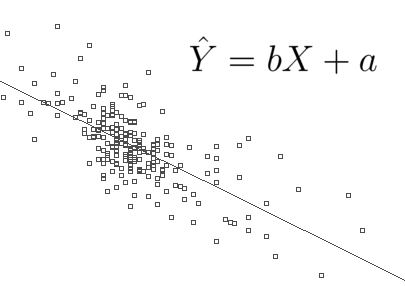 Linear regression scatterplot with formula
 Linear-regression
This method is quite sensitive, as it is possible to measure protein concentrations as low as 10 ìgcm-" and unlike calorimetric methods, is non-destructive. But this method is subject to interference by the presence of other compounds that absorb at 280 nm. These compounds include nucleic acids which have absorbance as much as 10 times that of the proteins at this wavelength. Therefore, the presence of only a small percentage of nucleic acid can greatly influence absorbance at this wavelength. But fortunately, is possible to apply a correction factor if the absorbance at both 280 nm and 260 nm are measured.
Protein (mgcm-") = 1.55 A280-0.76 A260
2. Folin-Lowry Method
Once a very commonly used method as it can detect down to 10ìgcm-" of protein and its sensitivity is a moderately constant from one protein to another. When the Folin reagent together with a...
Good!!
The lab consisted of four procedures, which is very good to check the variance in results and draw conclusions. The Bradford Assay was the best as the results resounded accuracy. I of course like anything to do with spectroscopy...especially UV...it is a good method and the absorbance of different wavelengths by different substances is remarkable!
Anyways..Good methods, good writeup, and excellent discussion.
0 out of 0 people found this comment useful.